


A lit residential street at dusk featuring large two-story brick houses with glowing windows, mature trees, and a street lamp.

Furnace Repair in Eureka, IL

Tell us about the job

Takes about a minute. No obligation.

Step 1 of 3: Equipment

Furnaces in Eureka run from October through May, about eight months of the year. Overnight lows average 19°F in December, January and February, and the furnace has to make up that difference every night it drops that low. That kind of stretch adds up faster than people expect. An igniter or blower motor that would last longer somewhere milder is working through more cycles here, year after year. When something starts acting up, it's usually not out of nowhere. Getting it looked at properly means the fix holds instead of just masking the next breakdown.

8 months
October through May, your furnace is on duty
19°F
the average winter night it heats against
66%
of homes here heat with gas, so most furnaces here burn gas
10 winter storms
in ten years, the nights a failure hurts most
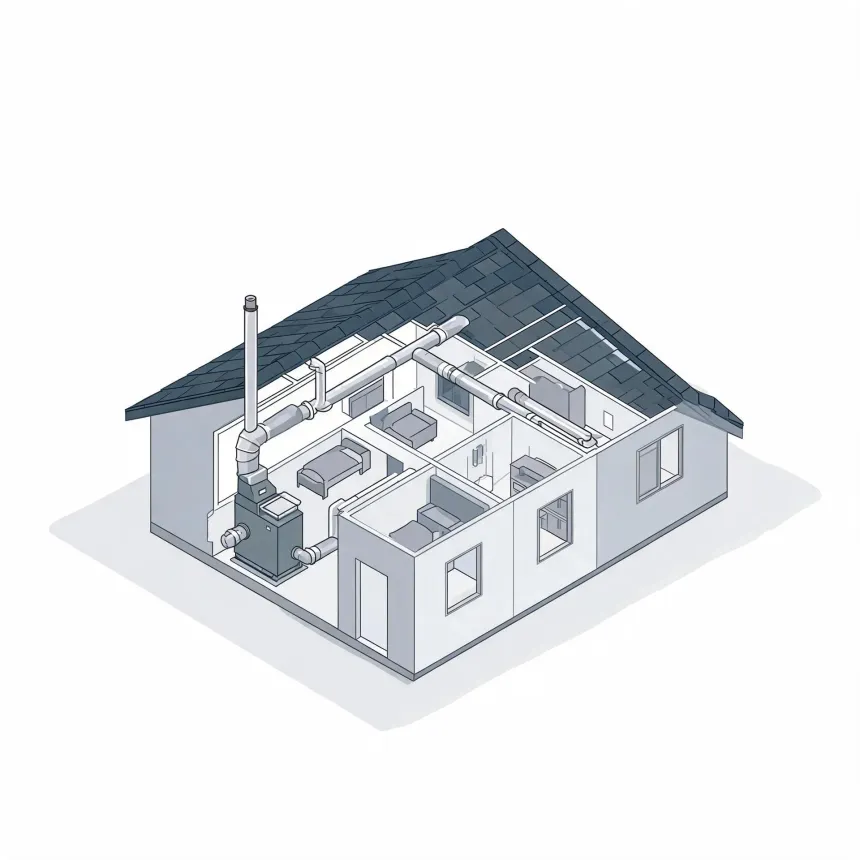
Isometric cutaway illustration of a single-story house showing interior rooms with furniture, ceiling ductwork, a furnace unit with a tall flue pipe, and a dark shingled roof.
Your furnace works hardest from November through March.

NOAA nClimDiv, 1991–2020 normals

Furnaces in Eureka start running in October.

September is the month to get a weak igniter or blower motor looked at, before the first cold week finds it.

Half the homes in Eureka were built by 1972, and so was the furnace in some of them

Half the homes here were built by 1972
Heat runs October through May
Winter nights average 19°F

Ask what shape your furnace is in, not just what's wrong today

If the furnace is as old as the house, a repair might buy a few months or it might not be worth paying for. Before you pay for the fix, ask the tech how much life is left in the unit.

Find a contractor
A man in a cap, dark shirt and tan work pants walks up stone steps toward a dark blue front door, carrying a canvas tool bag, with a potted shrub beside the entry.
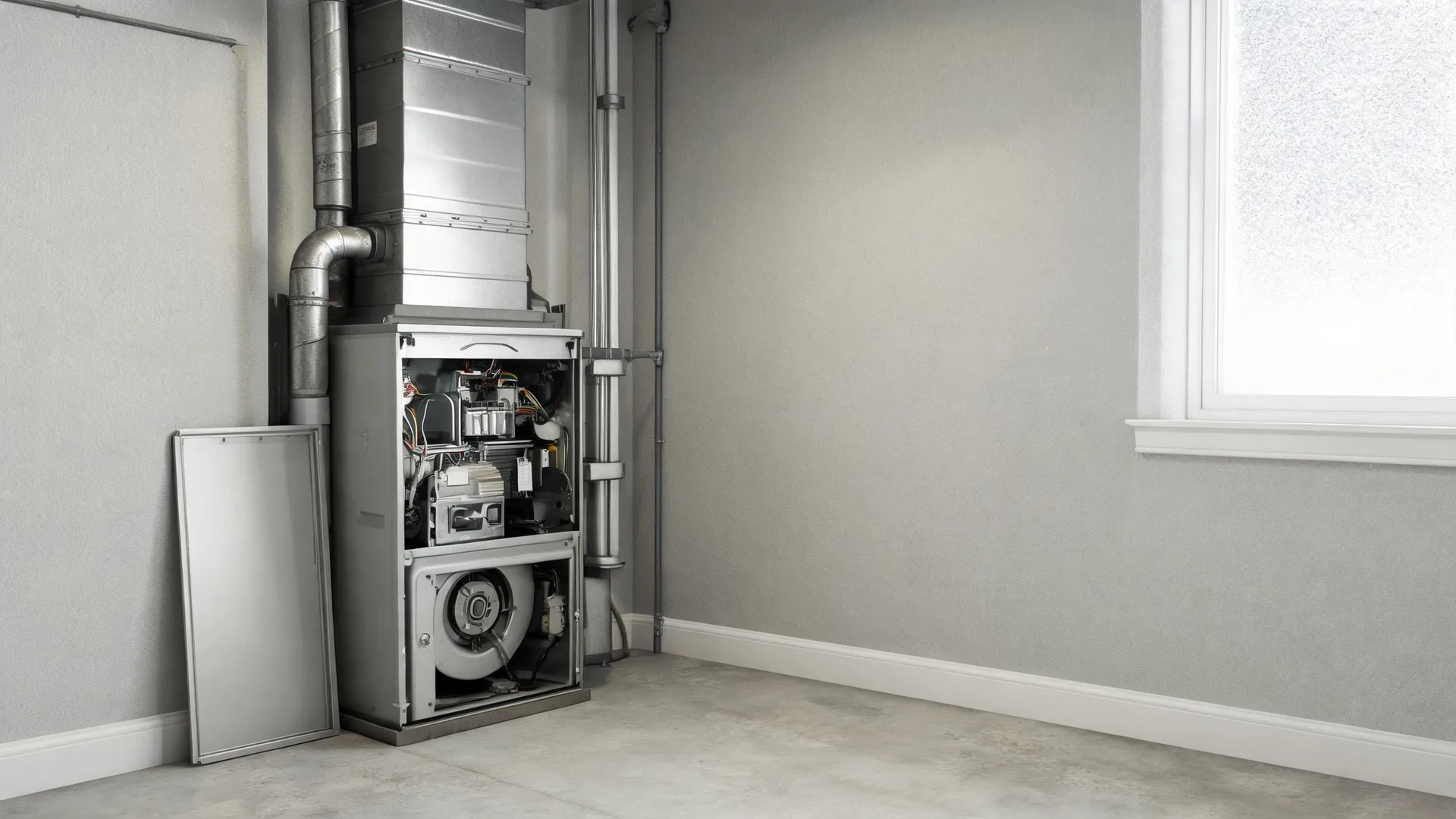
A gas furnace with attached ductwork, gas piping, and condensate lines installed in a concrete-block basement.

The furnace usually warns you before it quits

A furnace usually gives some warning before it quits. Short cycling is one of the clearest signs. It fires up, runs a few minutes, shuts off, then starts again without ever finishing a full run. That's often a dirty flame sensor or a filter choked with dust, cutting off the airflow the furnace needs to keep going. Warm air that never feels warm enough, a faint burning smell when it first kicks on for the season, or a blower that keeps running after the burners shut off are all worth a call rather than a wait. Banging at startup is usually just the ductwork expanding as it heats. A screech from the blower motor is different. That's a bearing wearing down, and it won't quiet down on its own.

Check the filter first

Pull the filter and hold it up to a light. If you can't see light through it, air can't get through it either, and the furnace will struggle, overheat, or shut itself off partway through a cycle. A clean filter rules out the simplest cause before anyone comes out.

Look at the thermostat and the switch

Make sure the thermostat is set to heat and the temperature is actually above room temperature, not just close to it. Check that the furnace's power switch, usually a light switch on or near the unit, hasn't been bumped off. Both take a few seconds to rule out and both get missed more than people think.

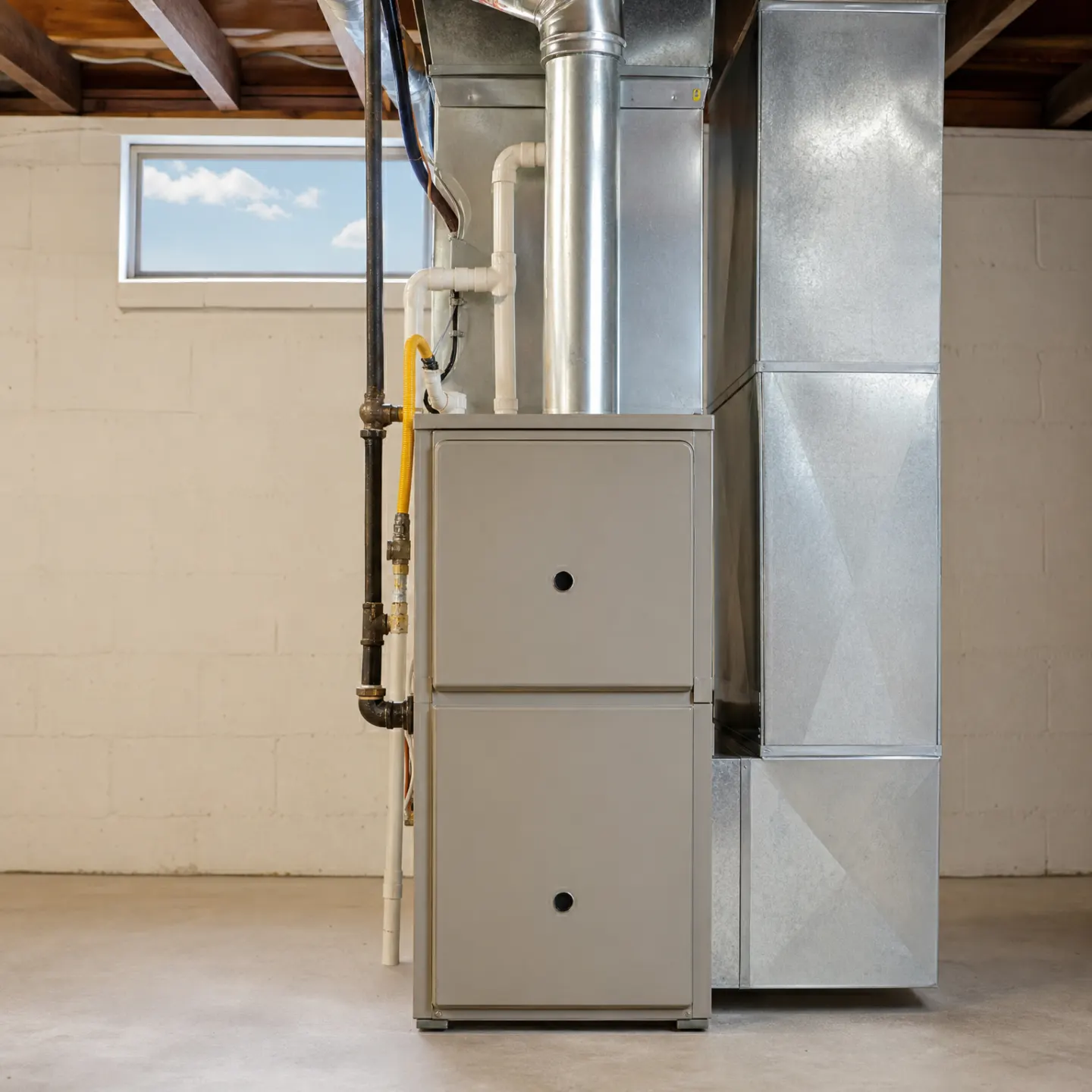
An unfinished basement containing a gray HVAC furnace with ductwork, exposed wooden joists, a concrete floor, and miscellaneous clutter in one corner.

A new furnace would cut about $130 a year off heating for a typical Woodford County home.

  • A new high-efficiency furnace$560 a year
  • An older furnace$690 a year

Estimates for a typical Woodford County home, compared with an older unit built to the previous federal minimum, from EIA household energy data, Illinois fuel prices and NOAA climate normals. Your home will differ.

Repair makes sense when one part has failed and the heat exchanger is sound.

Replacement makes sense when the heat exchanger is cracked or the furnace keeps needing parts.

A repair is worth paying for when it fixes one part and leaves the rest of the furnace alone. A new igniter, a new flame sensor, a new capacitor, these fail on their own, and fixing one doesn't say anything about the heat exchanger or the blower motor behind it. The question changes when the repair calls for opening up the cabinet in a way that points at more trouble underneath. A cracked heat exchanger isn't something to patch and move on from, since that's the part keeping exhaust out of the air the furnace pushes into the house. If a tech has already been out for a different problem recently, that matters too. A furnace that keeps needing attention for new reasons is telling you something about its age, even if no single repair looks expensive on its own.