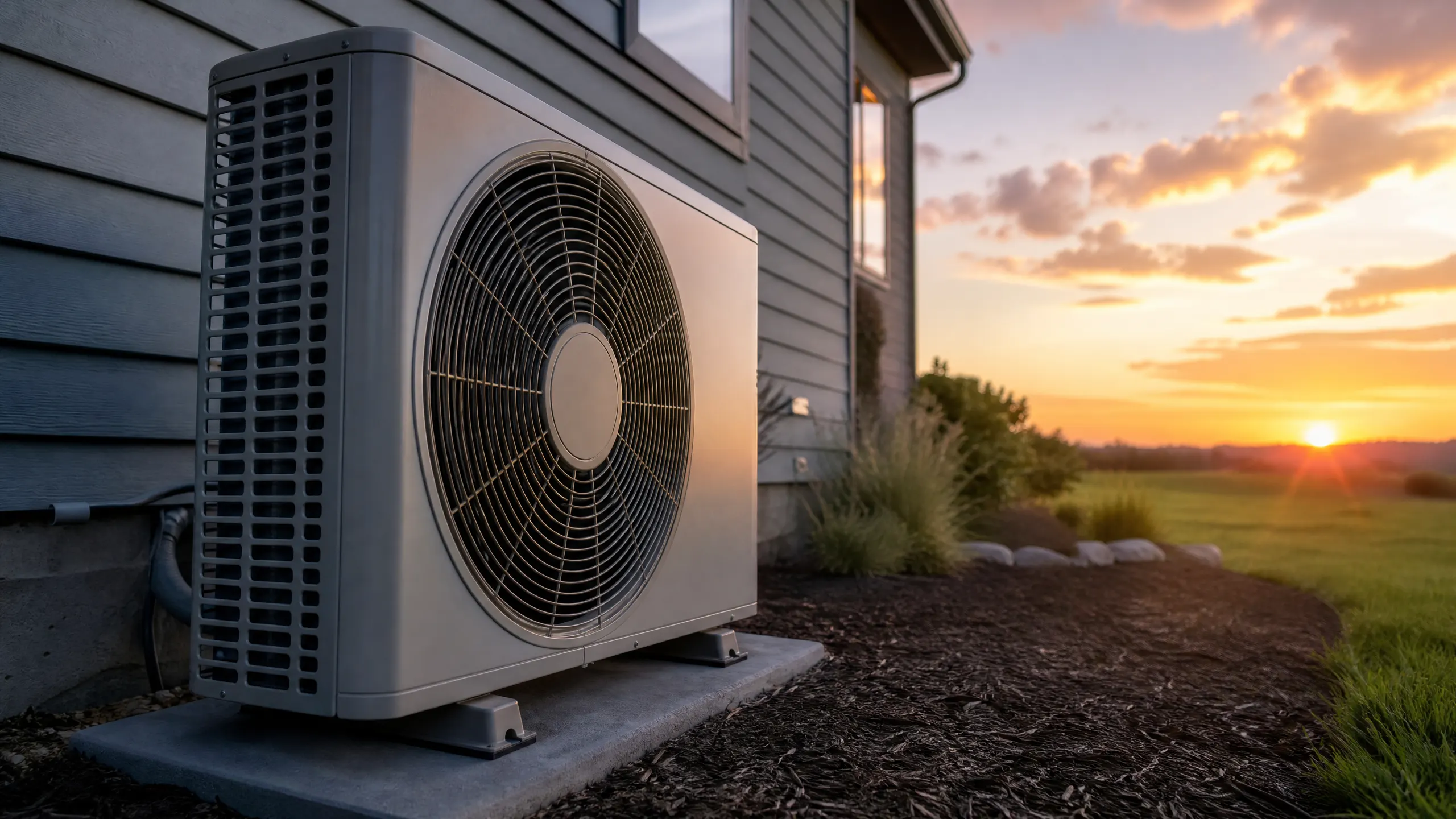




A grey residential air-conditioning condenser unit mounted on a concrete pad beside a house, photographed at sunset.

Heat Pump Installation in Pekin, IL

Tell us about the job

Takes about a minute. No obligation.

Step 1 of 3: Equipment

Electricity in Tazewell County runs 17.94 cents per kilowatt-hour on average, higher than in most US counties. A heat pump runs on electricity for both heating and cooling, so that rate touches every bill it shows up on, all year round. Two systems can move the same amount of heat and cost noticeably different amounts to do it, because one pulls less electricity to get the job done. Where power costs this much, that gap between an efficient unit and a middling one adds up fast.

8 months
October through May, your system heats
4 months
June through September, it cools
20°F
the average winter night it heats against
84°F
the average summer afternoon it cools against
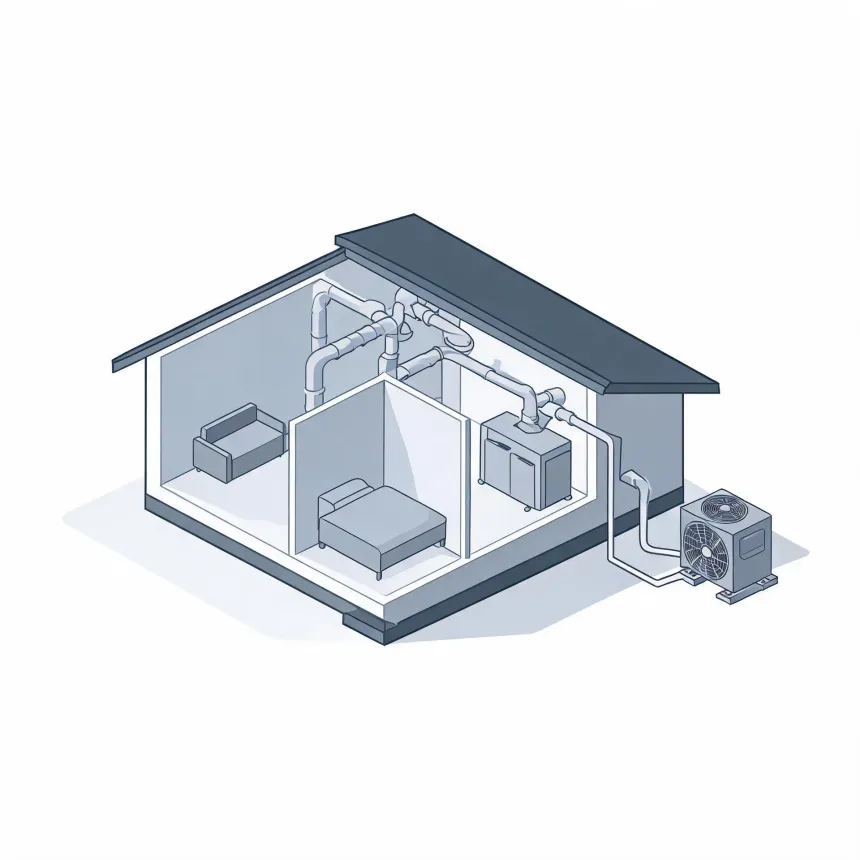
Isometric cutaway illustration of a small house showing interior rooms with furniture, an indoor air handler with ductwork, and lines running to an outdoor condenser unit beside the building.
Your system heats October through May and cools June through September.

NOAA nClimDiv, 1991–2020 normals

Half the houses in Tazewell County were built in 1969 or earlier.

A heat pump installer has to size and design around the house you have, not a new one.

Most of this county already runs on gas

73.2% of homes heat with gas
154 damaging wind events from 2015 to 2024
82 hail events from 2015 to 2024
Timed right, or timed in a panicHeat runs October through May here, so September is when a new system should go in, not October.

Tazewell County saw 261 severe weather events between 2015 and 2024, and 154 of those were damaging wind. Hail showed up 82 times in that same stretch, and an outdoor heat pump unit sits outside year round taking whatever comes. Where the installer places it matters: clear of the drip line, away from falling branches, somewhere it won't take a direct hit from wind-blown debris. Power loss is the other side of it. Statewide, 16% of Illinois households lost power for a day or more in 2024, and a heat pump needs electricity to heat or cool anything. If the power's out, so is your heat, unless you have a backup plan in place.

The unit you pick decides what that rate costs you

That rate on the bill isn't going anywhere, so the unit doing the work matters. An efficient heat pump pulls less power to move the same heat, and in a place where electricity costs what it does here, that difference shows up on every bill it touches, all year. Picking the right one now is how that rate works for you instead of against you.

Find a contractor
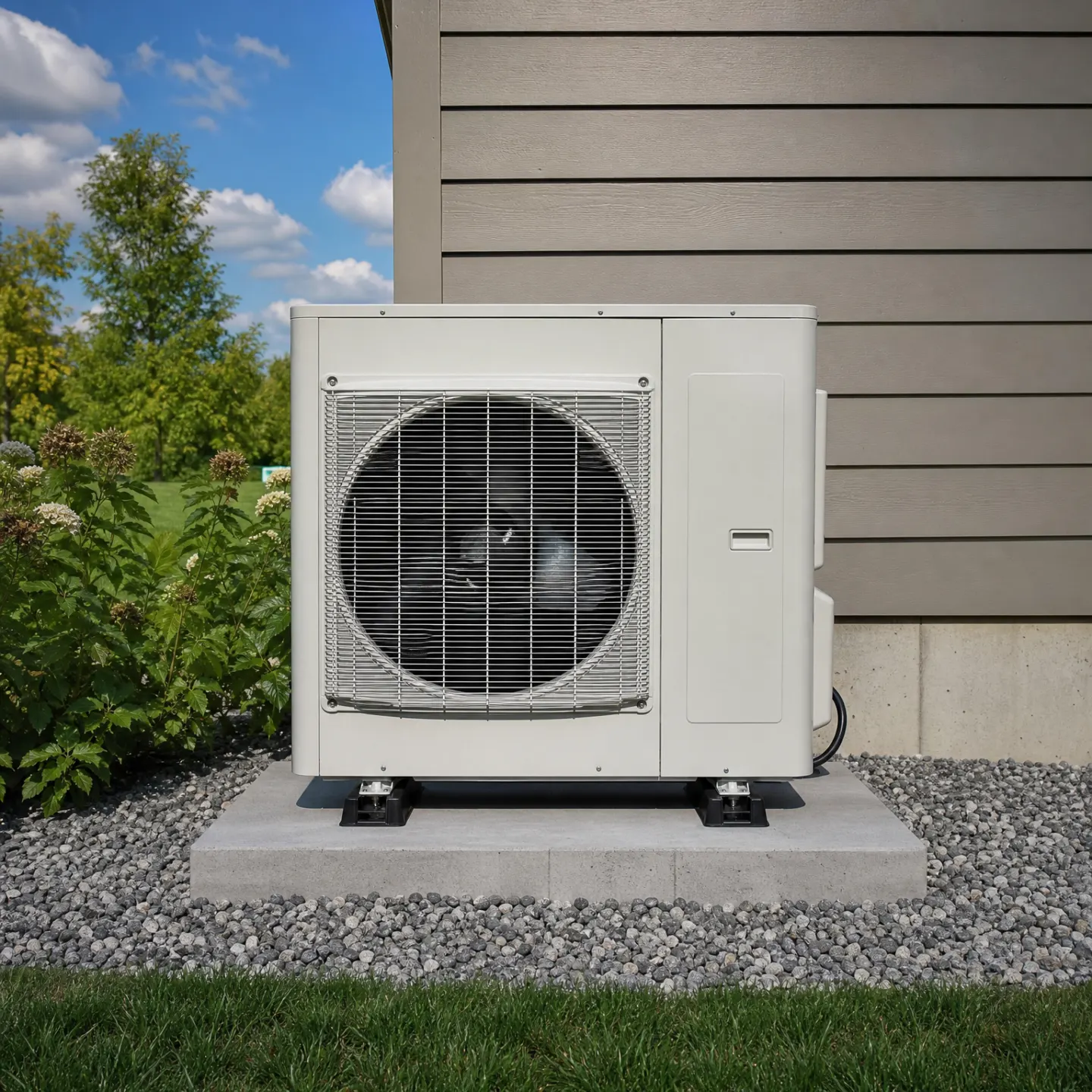
A white mini-split heat pump outdoor unit mounted on a concrete pad beside a gray-sided house, surrounded by gravel and green shrubs.

A machine that barely gets a break

Zone 5A means heating is the bigger job here, but summer doesn't let up either. The dew point averages 64°F across June, July and August, and air that heavy means a heat pump is pulling moisture out along with the heat, which is extra work the compressor carries beyond just dropping the temperature. Between a heating season that runs long and a summer that's humid the whole way through, this unit cycles on and off most months of the year. No long stretch where it just sits. More running hours means parts hit their wear points sooner than they would somewhere milder. A system sized for this load from the start holds up to that schedule. One sized for an easier climate wears into trouble faster.

What the number on the label actually measures

A heat pump's efficiency rating compares how much heat it moves against how much electricity it pulls to move it. A higher rating means the unit gets more heating and cooling out of the same power draw. It says nothing about how big a system you need. A unit with a strong rating that's too small or too large for the house still won't do the job right.
Why that rating has to match the install

A heat pump only hits its rated efficiency when the ductwork, the refrigerant charge, and the airflow across the coil are all set up the way that unit needs. Undersized ducts or a short charge drag the real-world number below what's on the sticker. The rating tells you what the equipment is capable of. Getting there depends on how it's installed, not just which unit gets chosen.

Sizing a heat pump starts with a load calculation, not a guess based on square footage or whatever the old equipment was rated for. The installer works out how much heat the house loses on a cold day and gains on a hot one, looking at the actual walls, windows, and air leaks in that specific house. Too big and the unit short cycles, hitting the thermostat setting fast and shutting off before it finishes pulling moisture out of the air, so rooms feel clammy even at the right temperature. Too small and it can't keep up on the coldest or hottest days, leaning hard on backup heat strips that pull a lot more power than the compressor does. Either mistake wears the equipment harder than running one sized right from the start. That same load calculation sets the duct design too, since moving the right amount of air depends on ducts built to carry it.

Tazewell County falls under zone 5A in the 2021 energy code, a cool zone where heating counts as the bigger load. That classification sets a floor for any split-system heat pump installed here. Equipment built from 2023 onward has to deliver at least 7.5 Btu of heat for every watt-hour it uses over the winter, and remove at least 14.3 Btu of heat per watt-hour over the summer. Those are federal minimums, not local extras, but they narrow what an installer can legally put in. A unit rated below that line isn't an option here regardless of price. On top of the federal credit available for qualifying equipment, that floor means the baseline choice already leans toward the efficient end of what's on the market.