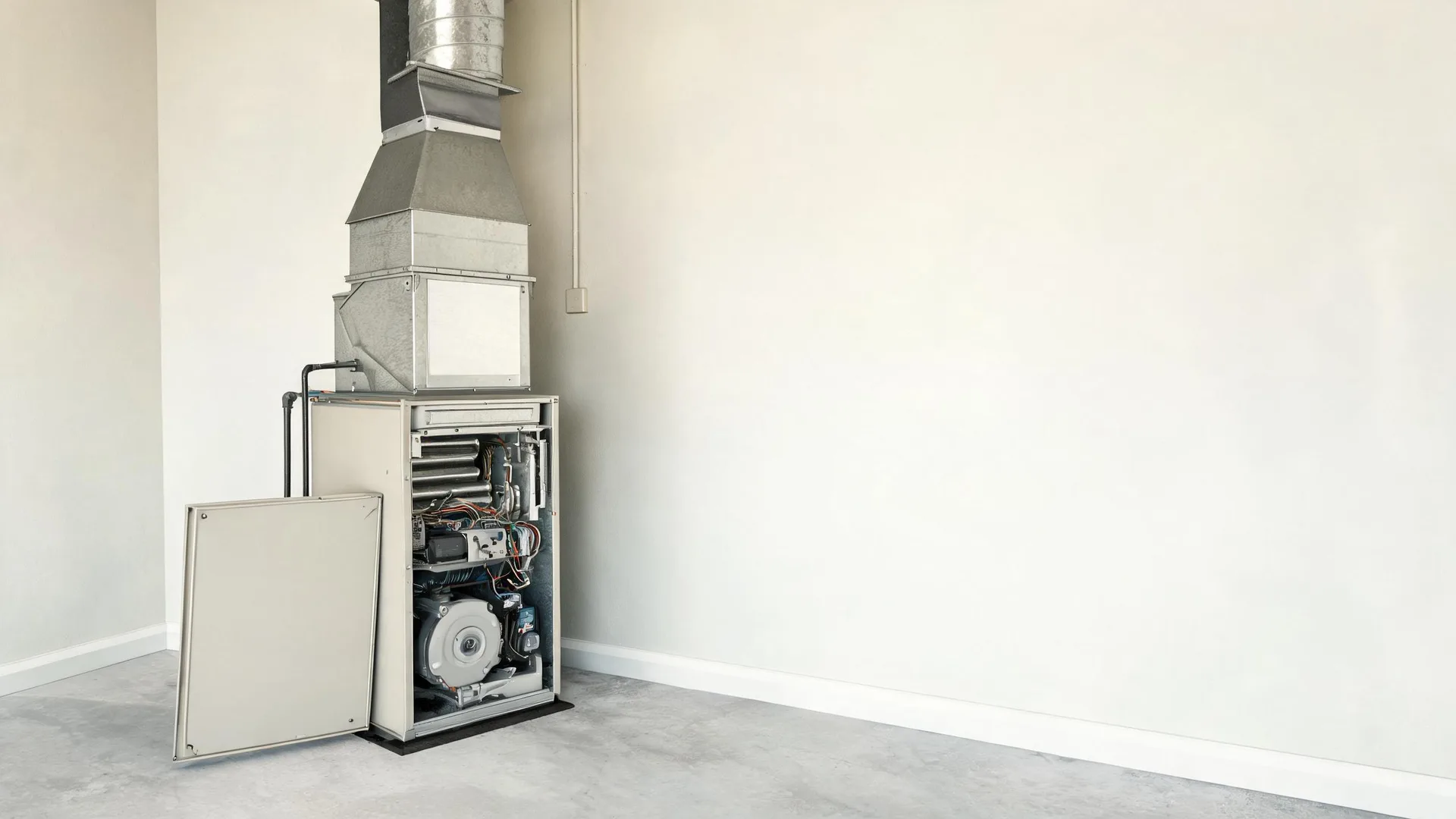
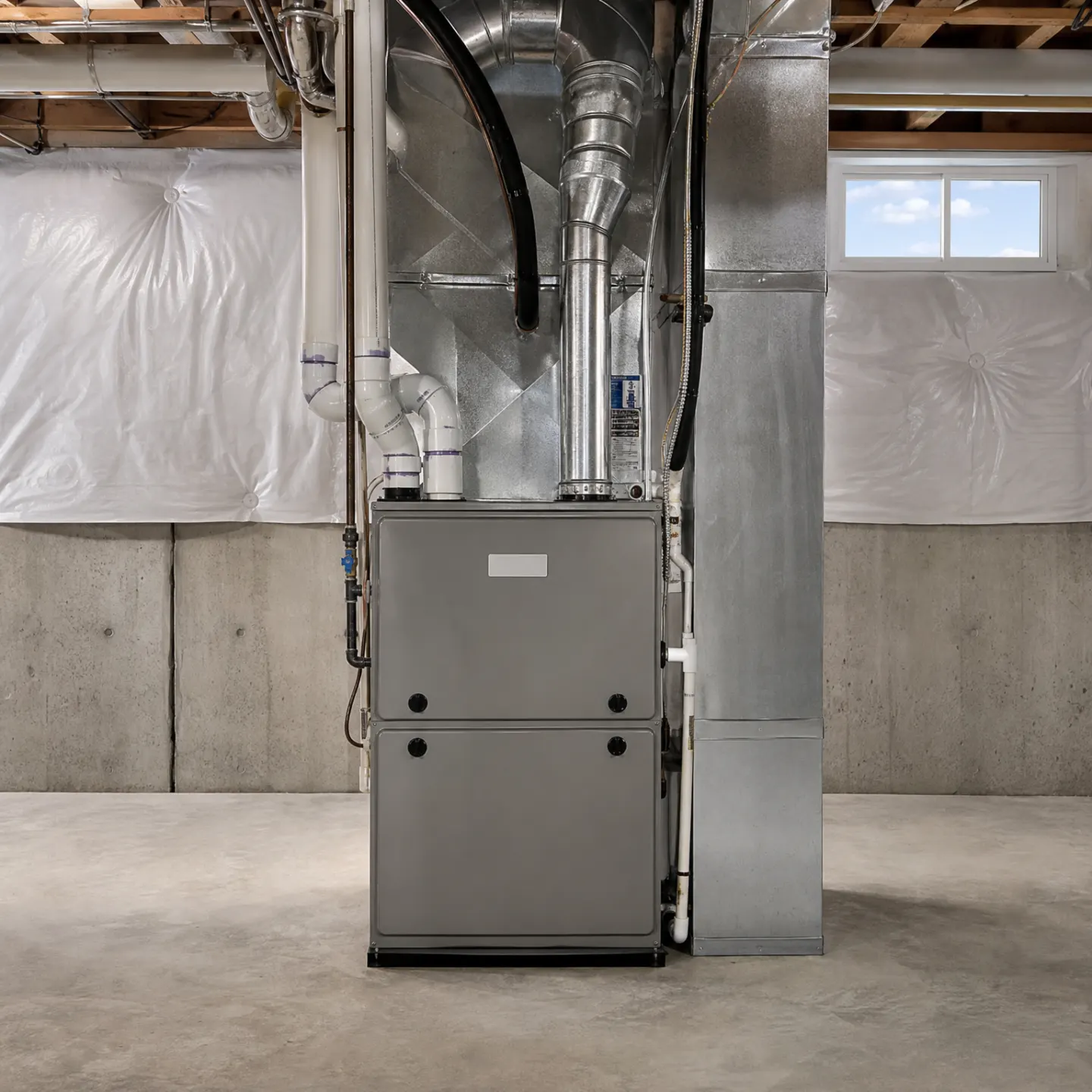
September is when to get ahead of it
Furnaces here sit unused from spring until October. A weak igniter or a failing inducer motor often doesn't show itself until the first cold morning asks the furnace to run.
Takes about a minute. No obligation.
Furnaces here sit unused from spring until October. A weak igniter or a failing inducer motor often doesn't show itself until the first cold morning asks the furnace to run.
Once a furnace is running daily, whatever was already marginal tends to fail fast. Getting it looked at early in October, before eight straight months of use, is better than waiting for it to quit.
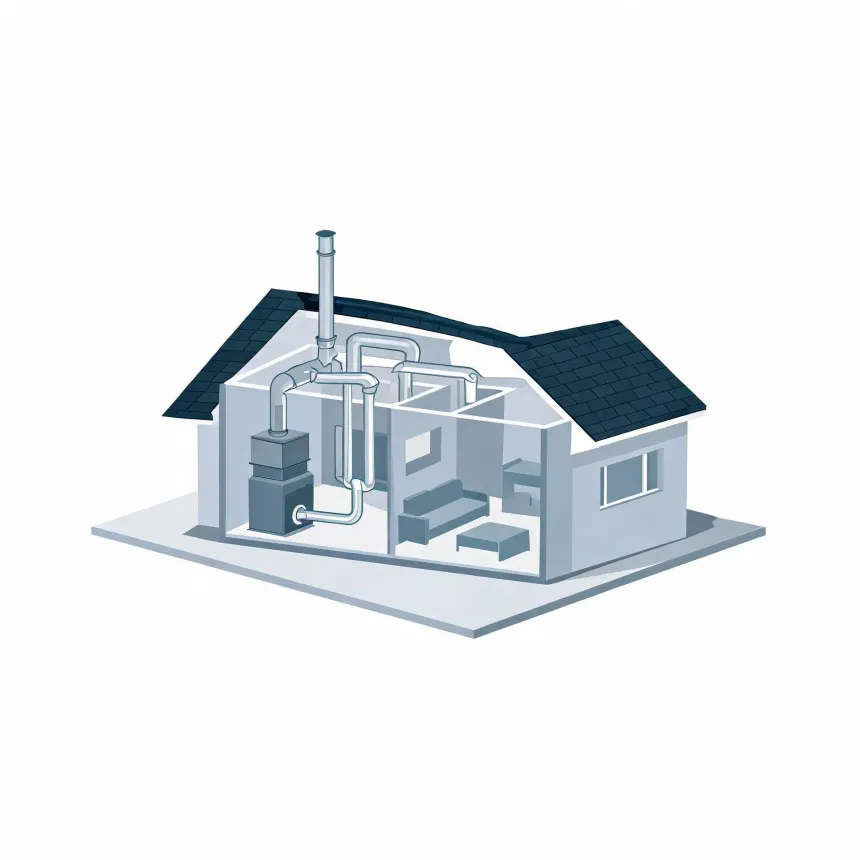
NOAA nClimDiv, 1991–2020 normals
Furnaces in McLean County run about eight months straight, October through May.
A furnace that's been struggling along since October usually isn't getting better by January.

Half the homes in McLean County were built in 1981 or later. If yours is one of them, the furnace inside it is probably not some worn-out original. A newer furnace with a bad igniter or a failed inducer motor is usually worth repairing. It still has years of working life ahead of it. That's worth asking the technician directly, since they can tell you how the unit looks beyond just the one part that failed.
Problems tend to show up in the first weeks of the season, when the load hits a part that was already weak.
Find a contractor
A furnace that's starting to fail doesn't usually just quit outright. It gives some warning first. It might take a few tries to light, or light with a bang instead of a steady whoosh. The blower might kick on and run longer than it used to, or short cycle, shutting off a few minutes after it starts. You might notice the air coming out of the vents isn't as warm as it should be, or one room stays cold no matter what the thermostat says. A burner flame that should burn blue and steady can start flickering yellow, which points at a dirty burner or a venting problem, not something to ignore. Rattling, scraping or a new buzz when it starts up usually means a part is loose or wearing out, not that the whole unit is going. The longer it runs in that condition, the more that one bad part tends to drag down whatever's near it.
The igniter is the part that gives out most often. It's a thin strip that heats up to light the gas, and that filament gets more fragile every time it cycles. A cracked igniter either won't glow hot enough to light the burners or stops working altogether. Flame sensors fail the same slow way, coated with a layer of residue until the furnace can't tell the flame is lit and shuts itself down as a safety measure.
The inducer motor and the blower motor both run on bearings, and bearings wear. Before a motor quits for good, it usually gets loud first, a grinding or whining that wasn't there before. Capacitors that help start those motors weaken over time too, so a motor that hums but doesn't spin is often a bad capacitor rather than a dead motor. Either one left alone tends to take the other part down with it.
Estimates for a typical McLean County home, compared with an older unit built to the previous federal minimum, from EIA household energy data, Illinois fuel prices and NOAA climate normals. Your home will differ.
Repair makes sense when one part has failed and the heat exchanger is sound.
Replacement makes sense when the heat exchanger is cracked or the furnace keeps needing parts.
A repair decision really comes down to what broke and what it sits inside. A cracked igniter or a failing flame sensor is a small, self-contained fix. It doesn't tell you anything bad about the rest of the furnace. The heat exchanger is different. That's the part that cracks from age and metal fatigue rather than from simple wear, and once it's cracked it's not something anyone patches. A technician checking it isn't being cautious for no reason, a cracked exchanger is a safety problem, not a performance one. So the real question isn't just what failed, it's whether that part is a wear item or the core of the unit. Ask directly which one you're dealing with before deciding anything.