




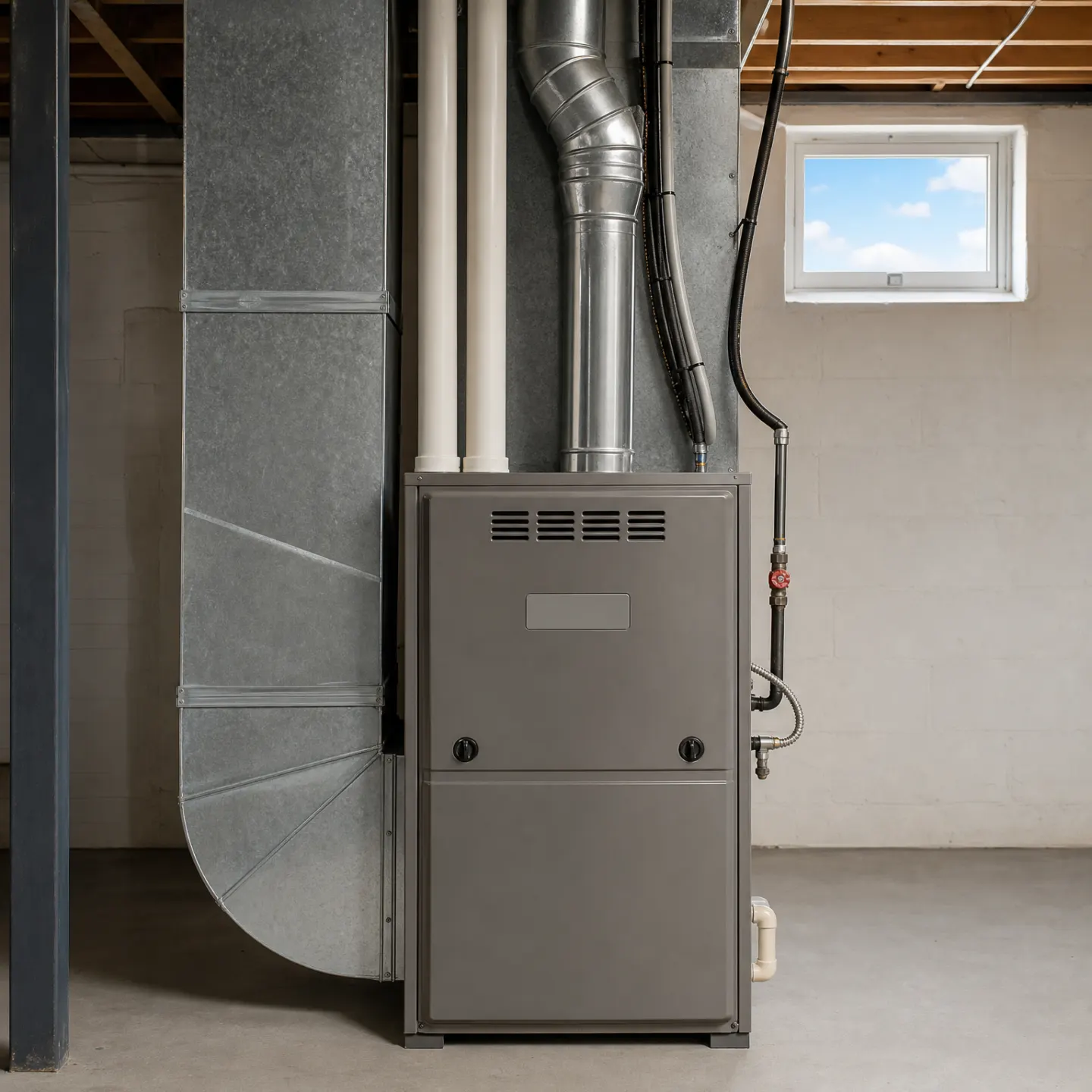
A bare concrete basement containing a gray gas furnace with metal ductwork and a vertical flue pipe, lit by a single hanging bulb.

Furnace Repair in Sterling, IL

Tell us about the job

Takes about a minute. No obligation.

Step 1 of 3: Equipment

Furnaces in Whiteside County run from October through May, about eight months of the year. That's most of the year spent cycling on and off to keep a house warm. A furnace carrying that kind of stretch wears differently than one that only has to get through a short cold snap. When something finally acts up, it's usually not out of nowhere. It's a part that's been working since fall. Worth having someone find the actual cause instead of just resetting it.

8 months
October through May, your furnace is on duty
17°F
the average winter night it heats against
73%
of homes here heat with gas, so most furnaces here burn gas
21 winter storms
in ten years, the nights a failure hurts most
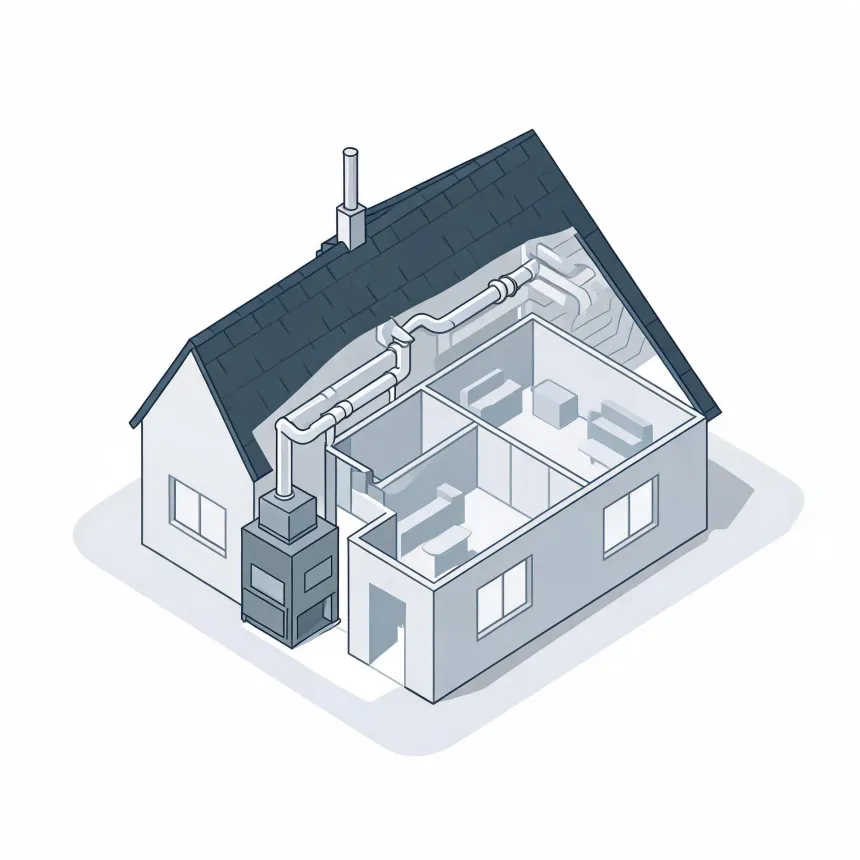
Isometric line illustration of a cutaway single-story house with a dark shingled roof, showing interior rooms and ductwork connected to a gray furnace unit with a flue pipe.
Your furnace works hardest from November through March.

NOAA nClimDiv, 1991–2020 normals

A cracked heat exchanger gets worse every time the furnace fires.

Shutting it down until a tech looks at it costs nothing but comfort for a night or two.

Half the furnaces in this county are running in a house built in 1961 or earlier

Half the homes here were built by 1961
Heat runs October through May
Winter nights average 17°F

September is when a furnace here sits idle, waiting for the first cold night to ask something of it. That first real test comes fast once October hits and heat runs for the next eight months straight. A part that was already weak doesn't ease into that load, it fails against it. If the furnace struggled last winter, whatever caused that is probably still sitting there unfixed. Having someone look at it in September means it gets found on a tech's schedule, not in the middle of the first cold night that needs it to work.

Before you pay for the repair, ask what it's buying you

A repair can fix what's wrong tonight. It doesn't tell you how much the furnace has left in it. If yours came with a house built in that era, ask the tech doing the repair for a straight read on its condition before you pay for the part.

Find a contractor
A man in a cap, dark jacket and tan work pants carries a canvas tool bag up white porch steps toward a dark blue paneled front door, with a potted shrub beside the entry.
A gray residential gas furnace installed in an unfinished basement, surrounded by ductwork, a metal flue pipe, and a gas supply line.

Eight months a year of work

Eight months of heat means a lot of starts and stops, and every start puts a small strain on the igniter and the parts that get it burning. Get the repair done, but ask the tech what they're seeing while they're in there. If the same part is wearing again or something else looks tired, that's worth knowing before the next cold stretch asks more of it.

The sounds tell you where to look

A boom at startup usually means gas is building up before it catches, often a dirty burner. A screech points to the blower motor bearings or belt. Rattling can be a loose panel or something worse coming loose inside the cabinet. None of these fix themselves, and most get louder and more expensive to ignore.

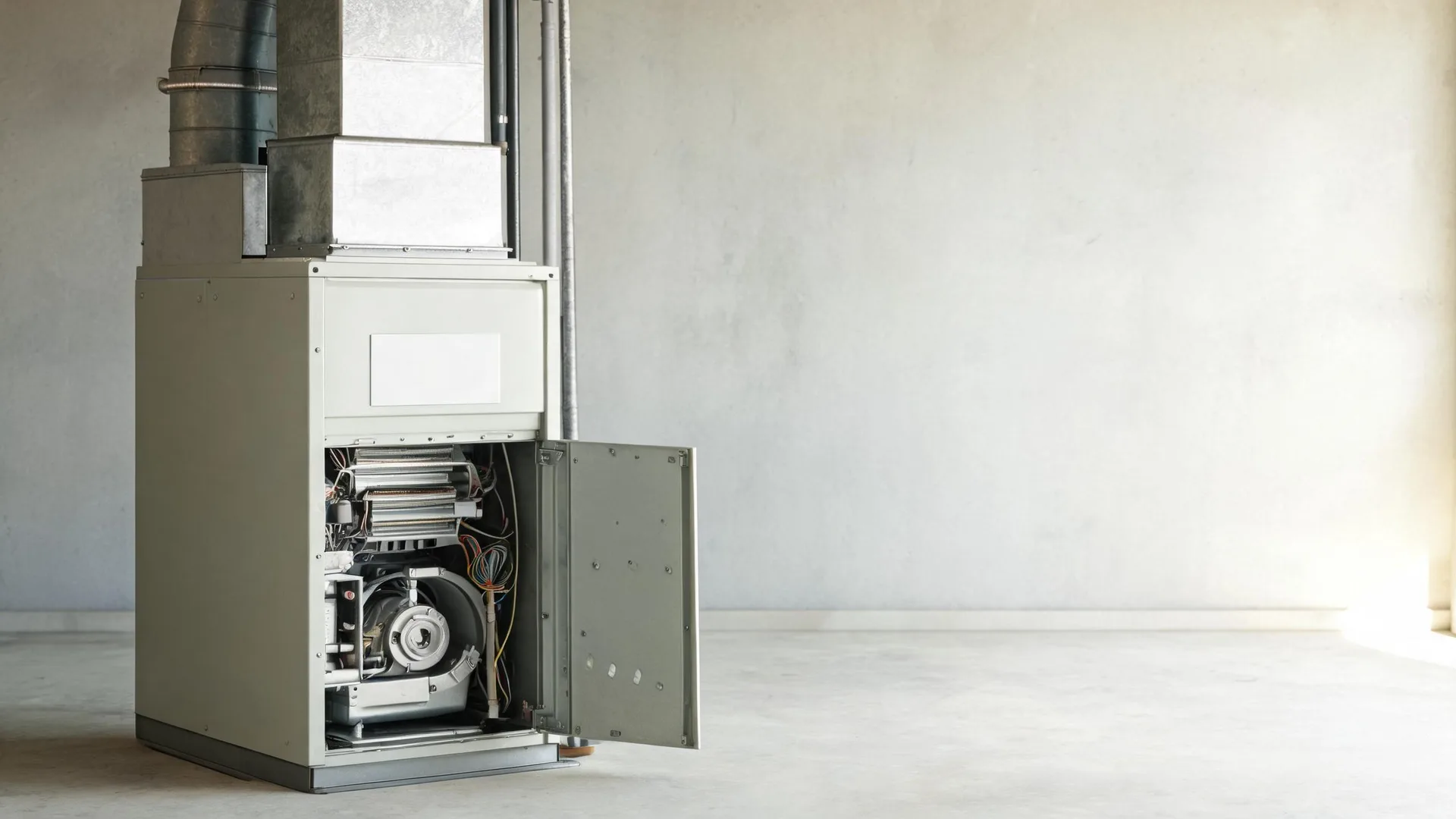
Short cycling wears out the parts that start it

A furnace that fires up, runs a few minutes, and shuts off again is usually fighting a dirty flame sensor, a clogged filter, or a cracked heat exchanger tripping a safety switch. Every one of those short cycles puts another load on the igniter. The fix is finding why it's shutting off early, not just resetting it and waiting for the next one.

An unfinished basement featuring a forced-air furnace, exposed wooden ceiling joists, bare concrete walls, and miscellaneous items including cardboard boxes and coiled cables on the floor.

A new furnace would cut about $150 a year off heating for a typical Whiteside County home.

  • A new high-efficiency furnace$600 a year
  • An older furnace$750 a year

Estimates for a typical Whiteside County home, compared with an older unit built to the previous federal minimum, from EIA household energy data, Illinois fuel prices and NOAA climate normals. Your home will differ.

Repair makes sense when one part has failed and the heat exchanger is sound.

Replacement makes sense when the heat exchanger is cracked or the furnace keeps needing parts.

A diagnostic visit starts before any panel comes off. A tech asks what the furnace is doing, when it started, and whether it's one thing or a few things at once. That history narrows down where to look. From there it's a set sequence: check the thermostat call, check for power at the board, check the flame sensor and igniter, check the pressure switch, check the exchanger. Each step rules something out. A tech isn't guessing and swapping parts until something works. They're following the sequence until it points at the actual cause, then showing you what they found before anything gets replaced.