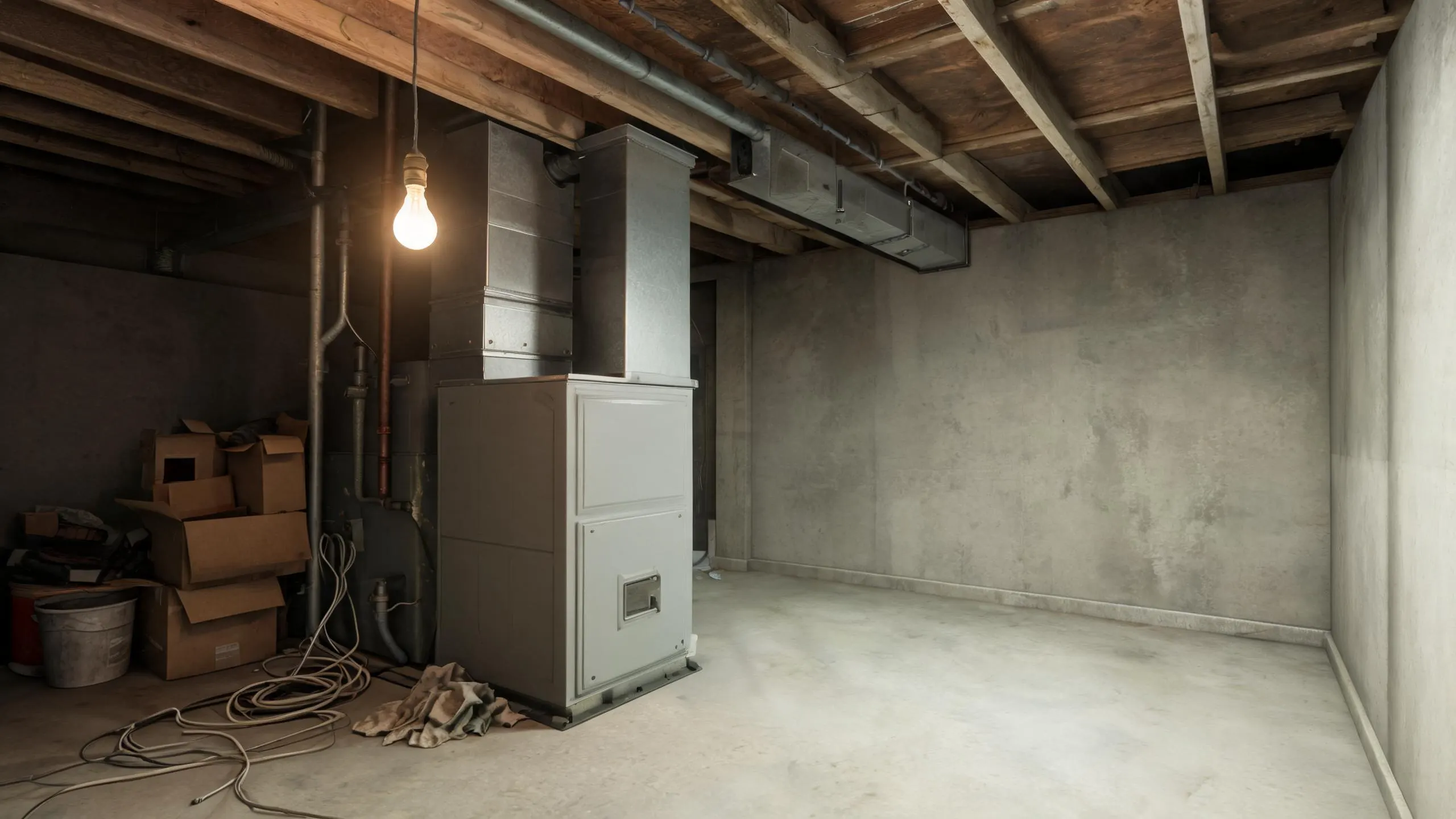
An unfinished basement containing a metal furnace with ductwork, exposed wooden joists on the ceiling, cardboard boxes, a coiled cable, and a single hanging incandescent bulb.

Furnace Repair in Ottawa, IL

Tell us about the job

Takes about a minute. No obligation.

Step 1 of 3: Equipment

Half the homes here were built in 1963 or earlier

That's the midpoint for LaSalle County. A furnace in a house that old has likely been replaced at least once already, maybe more than once, and whatever is running now has its own age separate from the house.

A repair call is the moment to ask that question

Before paying to fix what's broken, find out how much is left in the furnace overall. A repair that makes sense on a newer unit can be money toward a machine that's already most of the way done.

8 months
October through May, your furnace is on duty
19°F
the average winter night it heats against
76%
of homes here heat with gas, so most furnaces here burn gas
19 winter storms
in ten years, the nights a failure hurts most
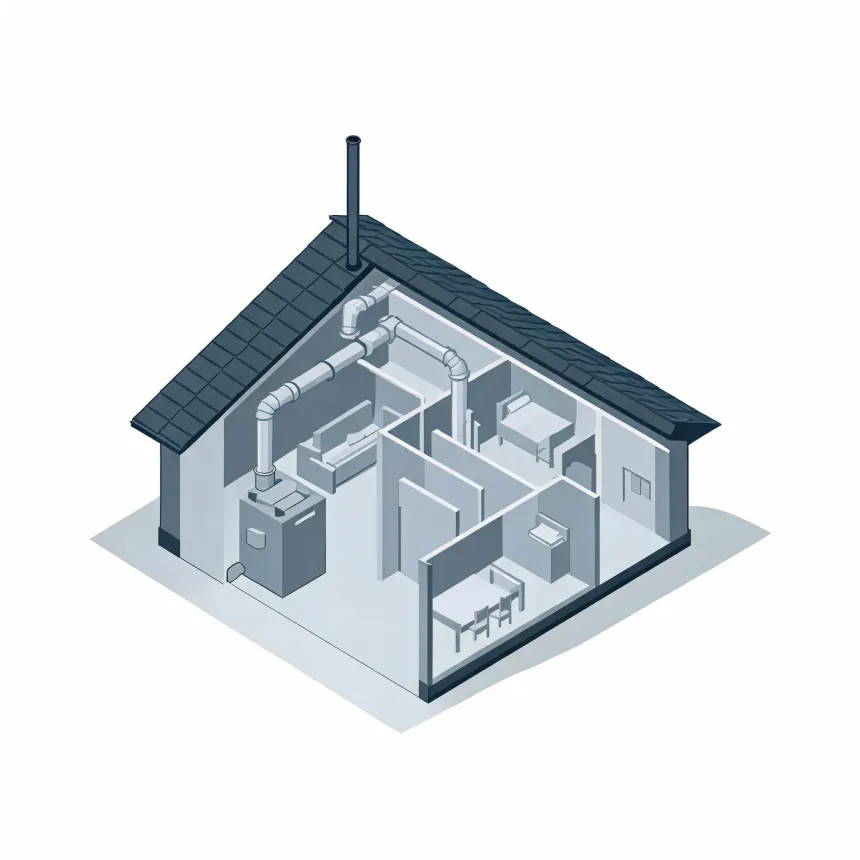
Isometric cutaway illustration of a small single-story house showing interior rooms with furniture, a furnace unit with attached ductwork running to a roof flue, and a dark shingled roof.
Your furnace works hardest from November through March.

NOAA nClimDiv, 1991–2020 normals

The heat exchanger cracks from years of expanding and contracting, not from one bad night.

Once that part goes, the rest of the furnace doesn't matter anymore.

Eight months of heat a year wears a furnace down early

Heat runs October through May
Winter nights average 19°F
Climate zone 5A

Furnace here starts up in October and keeps running into May. September is the quiet month, the one before the load hits. A furnace that made it through last winter with a weak part usually shows it in the first cold snap, not in the middle of January. Overnight lows average 19°F across December, January and February, and that's the kind of cold that finds whatever was already marginal. If something felt off last season, October is when it fails again, not when it gets better on its own.

Have it diagnosed before October asks more of it

Eight months of run time a year doesn't leave much room for a weak part to hide. Get the furnace looked at before the next cold snap finds it.

Find a contractor
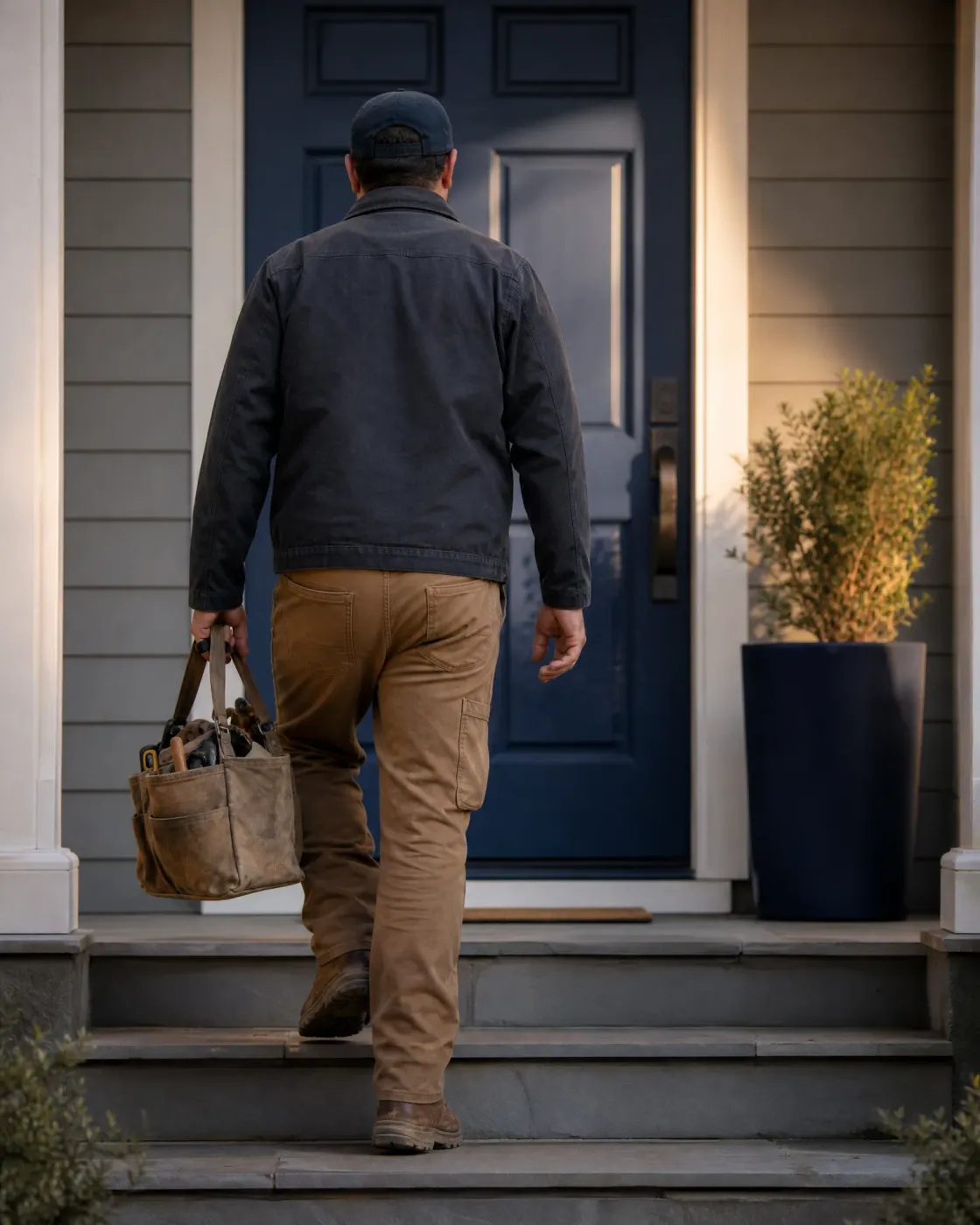
A man in a dark jacket, cap and tan work pants carries a canvas tool bag up stone steps toward a navy front door, with a potted shrub beside the entry.
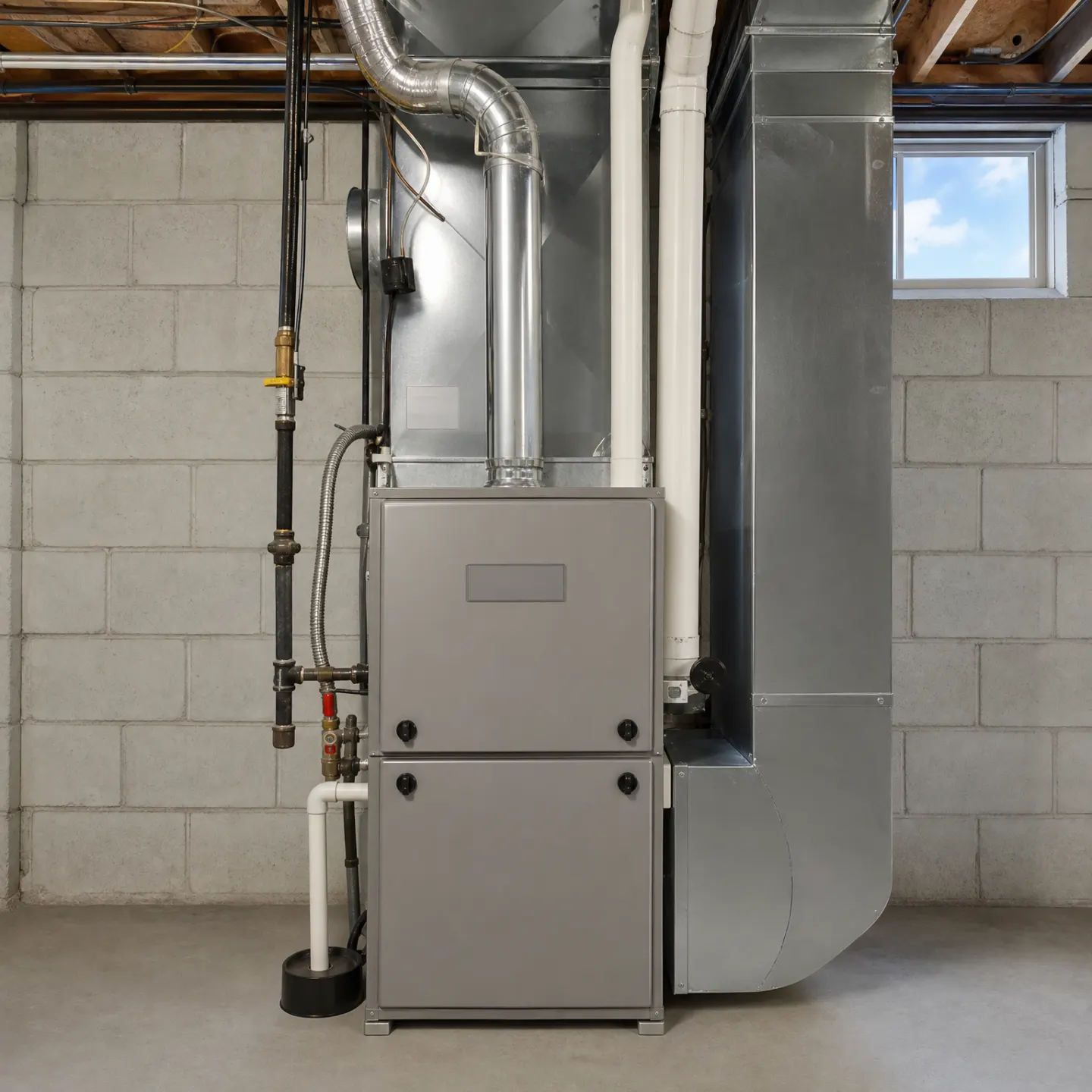
A gray high-efficiency gas furnace installed in an unfinished basement, surrounded by gas lines, a condensate drain, and sheet-metal ductwork.

The furnace has its own clock, not the house's

The technician on the call can tell you the age of the furnace itself, separate from the house. If it's old enough that the repair is a big one, ask what a new furnace runs before you commit. A furnace nearing the end of its life rarely fails once and stops. It fails again, in a part you haven't paid for yet.

What the furnace is telling you

A burner that won't light on the first try, a flame that looks yellow instead of blue, short cycles where it shuts off before the house warms up. These aren't things to watch and wait on. They point to a dirty flame sensor, a failing igniter, or a limit switch tripping because airflow is restricted somewhere in the system.

Sound and smell matter as much as heat

A bang when the burners light means gas is pooling before ignition instead of catching right away. A burning dust smell that doesn't clear after a few minutes, or any smell of gas at all, means the furnace needs attention now, not after the weekend. Rattling or a screech from the blower usually means a motor bearing or a loose panel, not something that fixes itself.

An unfinished concrete basement containing a metal HVAC air handler, exposed wooden ceiling joists with sheet-metal ducts, a hanging bare bulb, copper pipes, and stacked cardboard boxes.

A new furnace would cut about $140 a year off heating for a typical LaSalle County home.

  • A new high-efficiency furnace$580 a year
  • An older furnace$720 a year

Estimates for a typical LaSalle County home, compared with an older unit built to the previous federal minimum, from EIA household energy data, Illinois fuel prices and NOAA climate normals. Your home will differ.

Repair makes sense when one part has failed and the heat exchanger is sound.

Replacement makes sense when the heat exchanger is cracked or the furnace keeps needing parts.

Every repair on a furnace is really the same question. Is this part failing on its own, or is it the first of several because the unit is old enough that everything is wearing out at once. A cracked heat exchanger or a failed control board is worth replacing the furnace over, no matter what else looks fine. A dirty flame sensor or a blower capacitor is worth fixing on almost any furnace, because that part failing doesn't say much about the rest of the machine. The difference is whether the broken part is incidental or whether it's just the one that happened to go first. A technician who's opened the cabinet can usually tell which one you're looking at.