


A tall trimmed hedge in the foreground borders a mown lawn beside a row of dark single-story houses with shingled roofs, surrounded by large leafy trees under an overcast sky.

Heat Pump Installation in Bloomington, IL

Tell us about the job

Takes about a minute. No obligation.

Step 1 of 3: Equipment

Electricity here runs 17.61 cents per kilowatt hour, more than most of the country pays. A heat pump moves heat instead of burning gas to make it, and that work comes straight off your electric bill, so the price you pay per kilowatt hour matters more here than somewhere with cheaper power. Summer adds to the load. The dew point in McLean County averages 64°F across June, July and August, and pulling that moisture out of the air takes more work than cooling dry air does. A heat pump sized right for the house handles both jobs without wasting the power you're paying extra for.

8 months
October through May, your system heats
4 months
June through September, it cools
20°F
the average winter night it heats against
84°F
the average summer afternoon it cools against
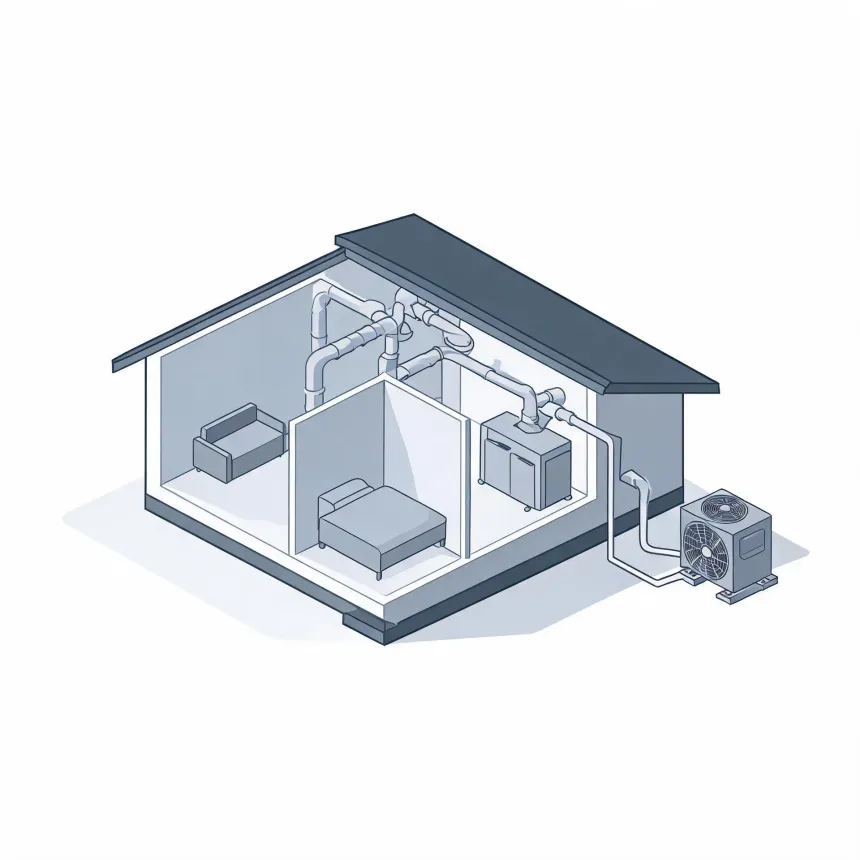
Isometric cutaway illustration of a small house showing interior rooms with furniture, an indoor air handler with ductwork, and lines running to an outdoor condenser unit beside the building.
Your system heats October through May and cools June through September.

NOAA nClimDiv, 1991–2020 normals

Heat here runs from October through May, eight months out of twelve.

Get the new system in before September and it's doing the job on day one of the cold, not mid-install.

Most homes here run on gas, so a heat pump is usually the second system, not a swap

70.6% of homes heat with gas
136 damaging wind events from 2015 to 2024
47 hail events from 2015 to 2024

McLean County sits in climate zone 5A, a cool zone where the furnace or heat pump carries more of the year than the air conditioner does. Any split-system heat pump sold new has to clear a federal floor to be installed at all: at least 14.3 Btu of cooling for every watt-hour it uses, and at least 7.5 Btu of heat for every watt-hour in winter. That floor went into effect for units built from January 1, 2023 on, so it already shapes what's on the market. A contractor sizing a system for this zone is working with that minimum as the starting point, not the ceiling. Beyond it, there's usually a federal tax credit for systems that beat the minimum by enough, worth checking before you settle on a model.

Pick the system that works with your rate, not against it

The rate you pay per kilowatt hour is already set. The only thing left to control is how much the system uses to do the job, and that comes down to the model and the sizing. Settle those before the install, not after.

Find a contractor
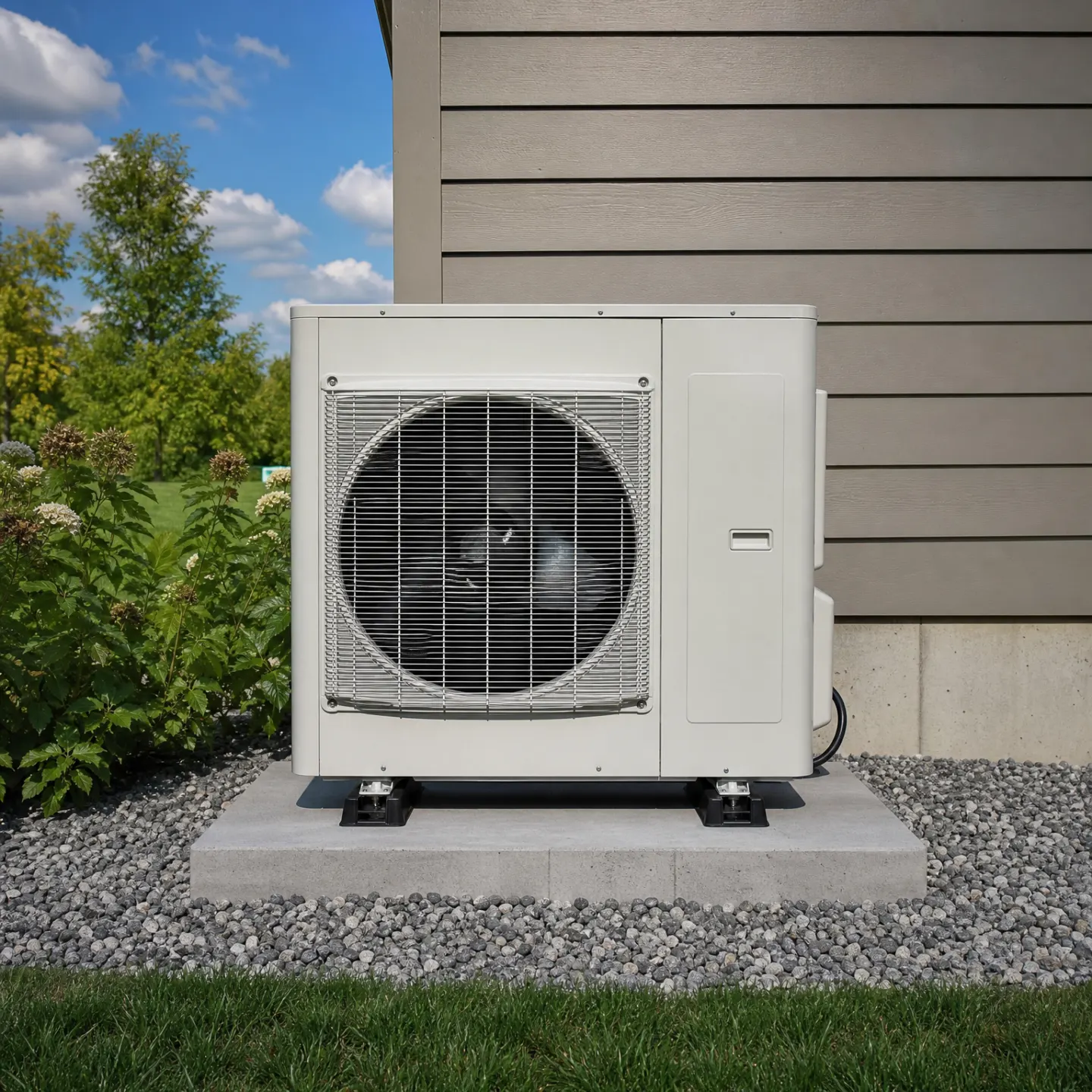
A white mini-split heat pump outdoor unit mounted on a concrete pad beside a gray-sided house, surrounded by gravel and green shrubs.

This runs every month, not just the hot ones

A heat pump run on year after year wears like any other piece of equipment, but the parts that take the hit are specific. The outdoor unit cycles on in both directions now, heating and cooling, so its compressor works through every month you keep the system instead of sitting idle half the year. Ask how the compressor is covered on its own, separate from the rest of the parts warranty, since that's the part replacing it costs the most. Ask about the defrost cycle too. In cold weather a heat pump has to melt frost off its outdoor coil every so often, and how that's controlled affects both comfort and how hard the unit works through the winter. A system that defrosts on a timer regardless of conditions runs that cycle more than one that senses frost buildup and only runs it when needed. Ask which kind you're being sold. Also ask about the backup heat source and how the system decides to switch over to it, since that switchover point gets set during install and affects how much the compressor carries versus the backup.

Sizing comes from a heat loss and heat gain calculation, not the old unit's size

A contractor measures the walls, windows, insulation and layout of the house and works out how fast it loses heat in winter and gains it in summer. That number, not the square footage and not whatever system is already out there, is what sizes the replacement. A unit sized off the old equipment just repeats whatever mistake was made the first time it was installed.
Oversized and undersized both cost you, in different ways

A heat pump too big for the house blasts the space to temperature fast, shuts off, and starts again soon after. That short cycling means it never runs long enough to pull much moisture out of the air, and the compressor sees more starts than a unit sized to run in longer, steadier stretches. A heat pump too small runs constantly and still can't keep up on the coldest or hottest days, leaning on backup heat more than it should. The right size means the hours the compressor already has to put in across the year go toward steady runs instead of short, frequent cycling on top of them.

Whoever installs the new heat pump has to deal with what's already there, usually a furnace or an old air conditioner and sometimes both. If the gas furnace stays on as backup heat, the contractor has to make sure the two systems talk to each other instead of fighting for control of the thermostat. If an old AC condenser is coming out, that unit gets disconnected and hauled off, along with its refrigerant, which has to be recovered properly rather than vented. The line set running between indoor and outdoor units often gets replaced rather than reused, since it's sized and rated for the refrigerant the old system ran, not necessarily what the new one needs. Old electrical disconnects and pads sometimes get reused if they're still in good shape, but a contractor should check the breaker and wiring can handle what the new unit draws before calling it done.

Install day starts with the walkthrough, confirming where the outdoor unit sits and where the indoor coil and air handler or furnace tie in. The old equipment comes out first if it's being replaced, refrigerant recovered, line set disconnected, electrical pulled. Setting the outdoor unit means a level pad and enough clearance around it for airflow, since a unit crowded by fencing or shrubs has to work harder to pull air through the coil. Running new line set and pulling it down to vacuum comes next, clearing out moisture and air so only refrigerant is moving through the system once it's charged. The electrical hookup gets tested under load, not just connected and left. Before anyone leaves, the system should run through both a heating and a cooling cycle so the contractor can check refrigerant charge, airflow at the registers, and that the thermostat is actually controlling the unit the way it's supposed to. A system that only gets checked in one mode can hide a problem that shows up the first time it switches over.