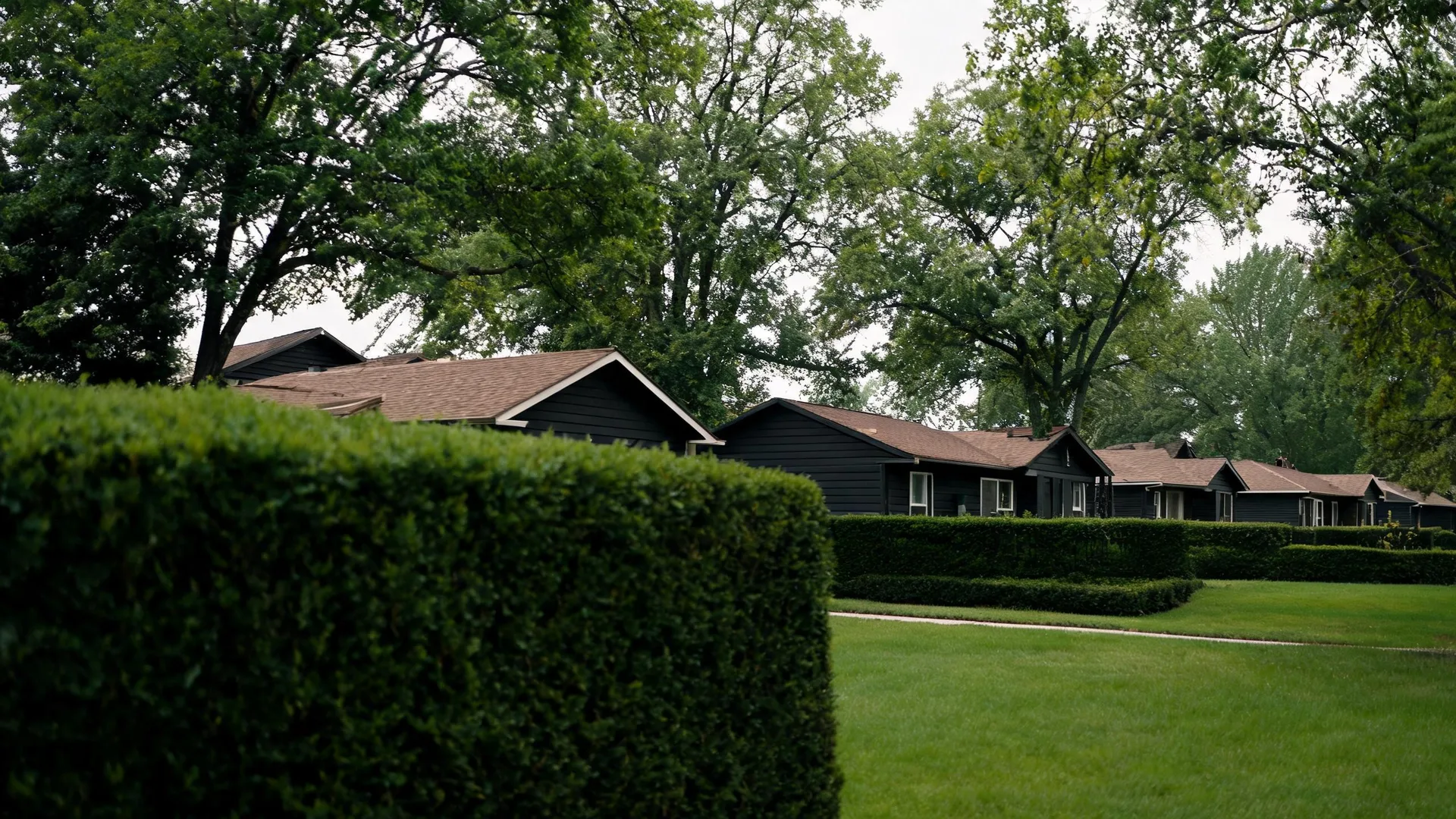





A row of dark-sided single-story cottages with brown shingled gable roofs behind trimmed hedges, mown lawn and a light-colored path, surrounded by large deciduous trees under an overcast sky.

Heat Pump Installation in Rochelle, IL

Tell us about the job

Takes about a minute. No obligation.

Step 1 of 3: Equipment

Electricity in Ogle County runs 16.90 cents per kilowatt-hour on average, higher than most of the country pays. A heat pump moves heat instead of burning gas to make it, so every degree of comfort runs through that electric rate. Summers here add their own load. A dew point averaging 62°F across June, July and August means the air stays heavy, and the system works to wring that moisture out as it cools the house. Two efficient units can keep a home at the same temperature and land on very different bills, and in a county paying this much per kilowatt-hour, that gap matters more than it would somewhere power is cheap.

8 months
October through May, your system heats
3 months
June through August, it cools
16°F
the average winter night it heats against
82°F
the average summer afternoon it cools against
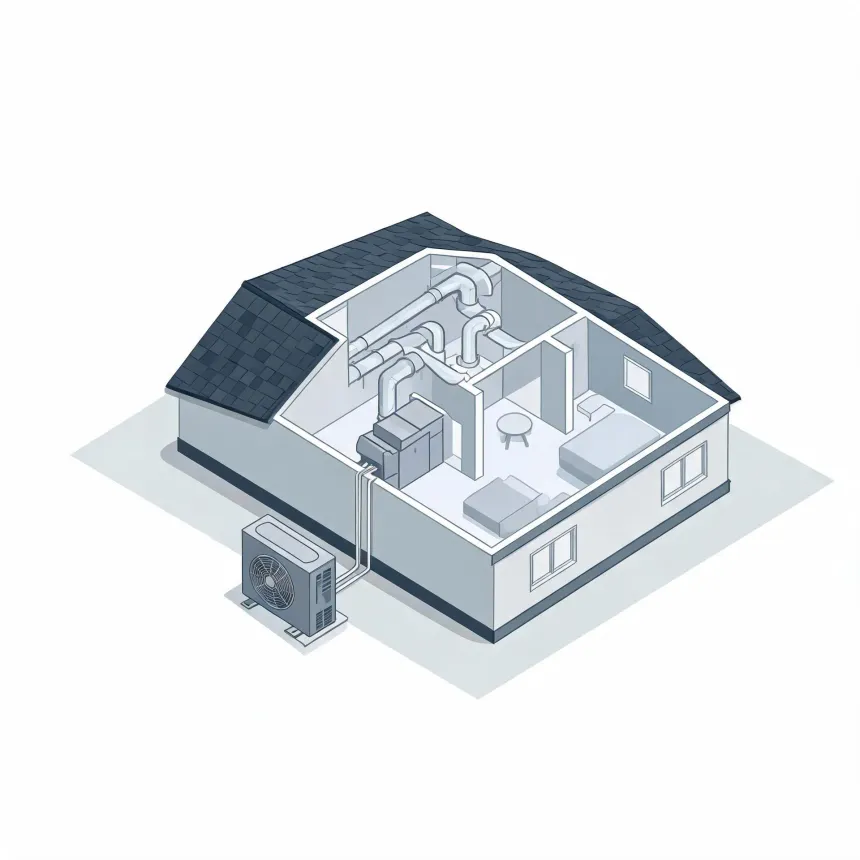
Isometric cutaway illustration of a single-story house showing interior rooms with furniture, an attic duct system connected to an indoor air handler, and an outdoor condenser unit linked by lines along the exterior wall.
Your system heats October through May and cools June through August.

NOAA nClimDiv, 1991–2020 normals

Half the homes in Ogle County were built in 1972 or earlier.

A heat pump going into a house that old has to match the ductwork and the space it's actually getting, not a standard size off a chart.

Eight months of heat, three of cooling: this unit works most of the year

Cooling runs June through August
Heat runs October through May
76 damaging wind events from 2015 to 2024
Most homes here already run on gasGas heats 66.5% of homes in Ogle County. Electricity heats 14.6%.

Ogle County falls under zone 5A in the 2021 energy code, a cool zone where the heating load counts for more than the cooling load. Any split-system heat pump installed here, if manufactured from 2023 onward, has to clear federal minimums built for that split: at least 14.3 Btu of heat moved per watt-hour over the summer, and at least 7.5 Btu per watt-hour over the winter. That second number carries more weight in a zone like this one, because the system leans on heating most months. Not every unit on the market is built to hit both numbers well. A contractor sizing a system for this county has to work from that floor, not from what's cheapest to stock.

Picking the right unit now is what keeps that rate from working against you

Power here costs more than in most places, and a heat pump runs on it for every degree of comfort it makes. That gets decided at installation, when the contractor picks the equipment and sizes it for your house. Get that part right and the rate stops being something you just have to live with.

Find a contractor
A man in a cap, long-sleeve shirt and work pants climbs porch steps toward a dark blue front door, carrying a worn canvas tool bag, with a small potted evergreen beside the entry.
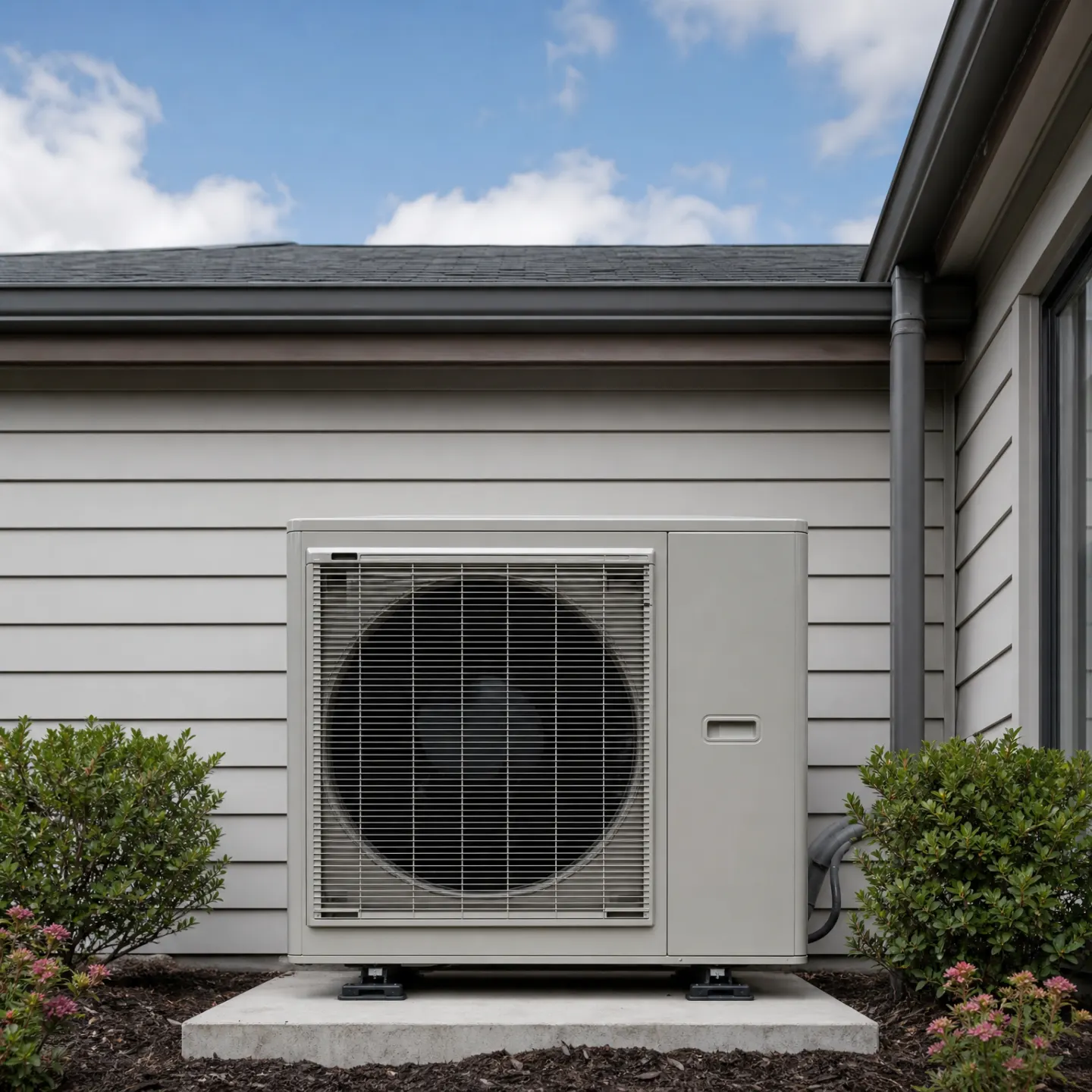
A gray heat pump condenser unit mounted on a concrete pad against the gray lap-siding exterior wall of a house.

An older home needs a system sized to it, not to a chart

If your home is on the older side, ask the contractor for a load calculation on your house, not a number pulled from a size chart. That means measuring the actual rooms, the windows, the duct runs you have. If the ductwork was put in for a gas furnace, it needs checking too, since a heat pump doesn't move air the same way a furnace does. A system sized to your house is what makes the electric rate here worth paying.

The rating on the label is two numbers, not one

A heat pump carries a cooling rating and a separate heating rating. The cooling number tells you how it performs pulling heat out of the house. The heating number tells you how it performs pulling heat in from outside air, which gets harder as that air gets colder. A unit can be strong on one and average on the other, so the label is really two grades, not a single score.
The rating is measured at mild conditions, not the worst day

The heating rating gets tested across a range of outdoor temperatures, weighted toward the milder ones a system sees most often. It is not a measure of what the unit can do on the coldest morning of the year. Some systems hold their output as the temperature drops, others fall off hard, and two units with similar ratings can behave very differently once it's actually cold out. That's worth asking the contractor about directly, since the label alone won't tell you.

Sizing a heat pump starts with a load calculation, not a guess based on square footage. A contractor works out how much heat the house loses on a cold day and how much it gains on a hot one, factoring in the windows, the insulation, the ceiling height, even which way rooms face. Too big and the unit short cycles, running in quick bursts that cool or heat the air but never run long enough to pull moisture out or settle into a steady temperature. Too small and it runs flat out without ever catching up, especially on the coldest and hottest days. Either mistake wears on the compressor, since it's cycling more or straining harder than it should. The right size is the one matched to how the house actually loses and gains heat, not the one that fits a rule of thumb.

Installation starts before anyone touches the old equipment. The contractor walks the site, confirms where the outdoor unit will sit and where the indoor coil and air handler go, and checks the electrical panel, since a heat pump often draws on a different circuit than a gas furnace did. Old refrigerant lines usually come out rather than get reused, because a line set sized for one system rarely matches what the new one needs. Once the equipment is set, the crew connects the refrigerant lines, wires the system to the panel and the thermostat, and ties it into the existing ductwork or runs new lines if the layout calls for it. After everything is connected, the system gets charged with refrigerant and run through a startup check, testing airflow, pressures, and temperature split before anyone calls the job done. A heat pump also needs a way to drain condensate and clearance around the outdoor unit for airflow, so part of the day is making sure the unit has room to breathe, not just a place to sit.