A two-story black house with a covered porch, framed by large deciduous trees and trimmed hedges, photographed from a low angle across a lawn with blurred grass in the foreground.

Heat Pump Repair in Rochelle, IL

Tell us about the job

Takes about a minute. No obligation.

Step 1 of 3: Equipment

September matters for a heat pump

Heat here starts in October, so September is when a heat pump should get looked at if something's been off. The first cold mornings put real load on the system for the first time since spring, and a weak part usually shows itself right then.

A breakdown in October is a timing problem, not bad luck

When heat season starts and a heat pump that was limping along in September finally gets pushed hard, that's when it fails. Getting the cause found before the load hits it is what keeps a repair from turning into a cold week waiting on parts.

8 months
October through May, your system heats
3 months
June through August, it cools
16°F
the average winter night it heats against
82°F
the average summer afternoon it cools against
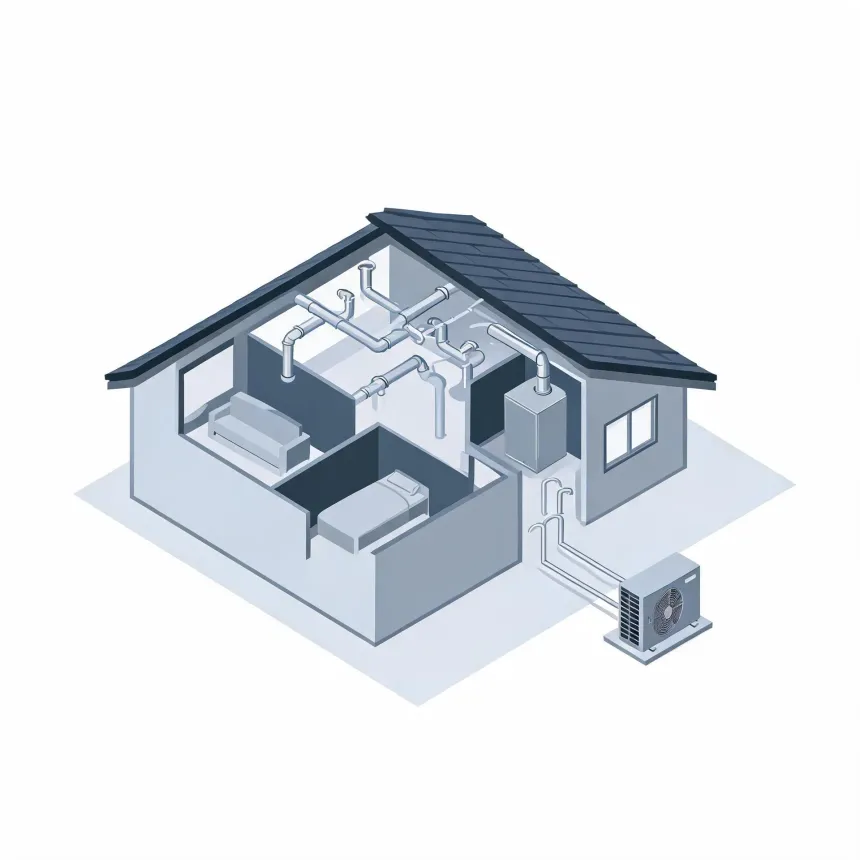
Isometric cutaway illustration of a small house showing ducted air distribution, an indoor air handler, and an outdoor condenser unit connected by lines, with a sofa and bed in the rooms.
Your system heats October through May and cools June through August.

NOAA nClimDiv, 1991–2020 normals

Winter mornings in Rochelle sit around 16°F, nothing extreme for this part of Illinois.

A heat pump that struggles on an ordinary cold morning has a real problem, not a weather problem.

Ogle County gets its share of weather, but that's not why your heat pump is down

123 severe weather events from 2015 to 2024
16% of homes statewide lost power a day or more in 2024
76 damaging wind events from 2015 to 2024

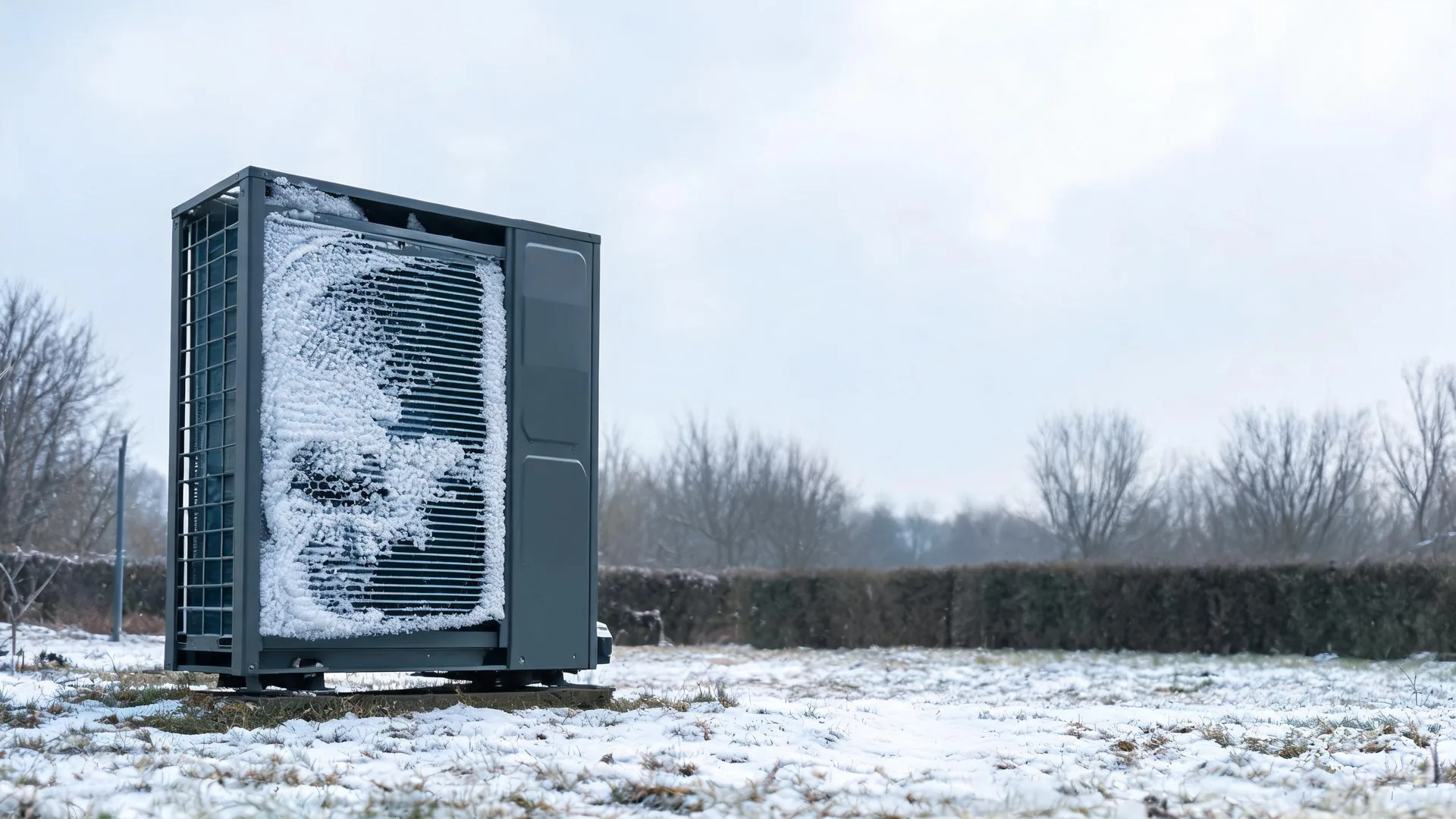
A tech starts outside, at the unit itself. Frost on the coil is normal in defrost mode, but ice that won't clear points to a stuck reversing valve or a low charge. Next comes the refrigerant pressures and the electrical readings, the capacitor, the contactor, the readings off the compressor itself. Inside, the air handler gets checked too, because a heat pump that's low on charge or losing airflow will often throw a fault code that points right at the problem. If there's no code, the tech works it the old way, checking temperature split across the coil and listening to how the compressor sounds on startup. Most of what's wrong with a heat pump shows itself in that hour, before anything gets opened up or replaced.

A heat pump running wrong is costing you every month it stays that way

Electricity in Illinois runs 15.87 cents per kilowatthour, on the higher side for this part of the country. A heat pump that's low on charge or struggling to defrost works harder than it should to hold a temperature, and that shows up on the bill every month it runs that way. Getting the cause found now is cheaper than paying for it all winter.

Find a contractor
A man in a cap, dark jacket and tan work pants carries a canvas tool bag up concrete steps toward a dark blue front door, with a potted shrub beside the entry.
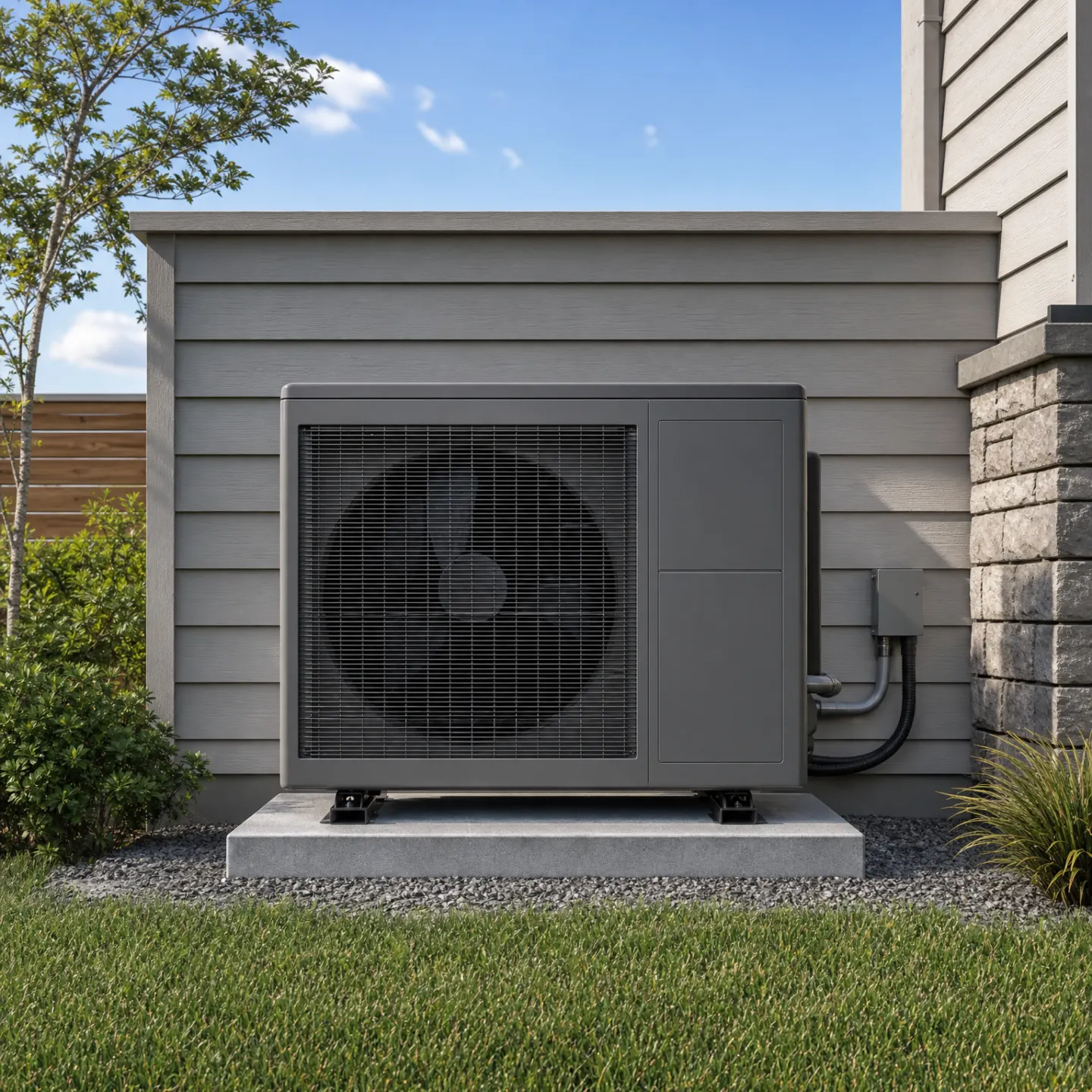
A gray heat pump outdoor unit mounted on a concrete pad next to a residential house with lap siding and stone accents.

How old is the system, not just the house

Half the homes in Ogle County were built in 1972 or earlier. A heat pump doesn't last that long, so if yours came with the house, it's not on its original system, but it may be closer to the end of its current one than you think. That matters for a repair decision. A unit near the end of its life is still worth fixing if the failure is minor, but a major part failure on an old system is a different call than the same failure on a five-year-old one. Worth asking the tech straight out how many years they'd expect to get from it before you pay for anything big.

What you'll actually notice first

Rooms that used to feel even now have cold spots, or the air coming out of the vents feels barely warm. The system runs longer than it used to, or it never seems to shut off at all. Sometimes you'll hear it switch on, run a minute, then stop and start again. Any of that means the heat pump is working harder to do less, and that gap usually gets worse, not better, on its own.

What's worth a call versus what's an emergency

A unit that's noisier than usual or taking longer to warm the house is worth getting looked at soon, but it can probably wait a few days. A heat pump that's blowing cold air with no warm-up at all, tripping its breaker, or caked in ice that doesn't clear on its own needs a tech out right away. Left alone, a stuck reversing valve or a failing compressor can turn into a full system replacement instead of a repair.

Before calling anyone, there are a few things worth checking yourself. Go to the thermostat and make sure it's set to heat, not auto, and that the temperature you want is actually above room temperature. Check the breaker box, because a tripped breaker will shut the whole unit down and give you cold air with no warning. Look at the outdoor unit and clear away any leaves, snow or debris stacked against it, since blocked airflow around the coil makes a heat pump work harder and can bring on the exact symptoms that feel like a bigger failure. Check the air filter too, if you can get to it without taking anything apart, because a filter clogged with dust chokes off airflow the same way. None of this takes tools or know-how, and if the system still isn't warming the house after that, you've at least ruled out the easy stuff before a tech shows up.

Repair versus replacement comes down to what failed and what else is close behind it. A capacitor, a contactor, a blown fuse, those are cheap, quick fixes on a system of any age, and they don't say anything bad about the rest of the unit. A failed compressor or a reversing valve stuck in one position is a different question, because those parts cost real money to replace and a heat pump with one of them gone has usually got other parts wearing out close behind. The other thing to weigh is refrigerant. Older systems run on a refrigerant that's being phased out, and a leak that needs a recharge can turn into a search for a part or a refrigerant type that's getting harder to find. If a tech finds a second problem while fixing the first, or says the type of refrigerant this unit uses is on its way out, that's worth factoring in before paying for the repair in front of you.