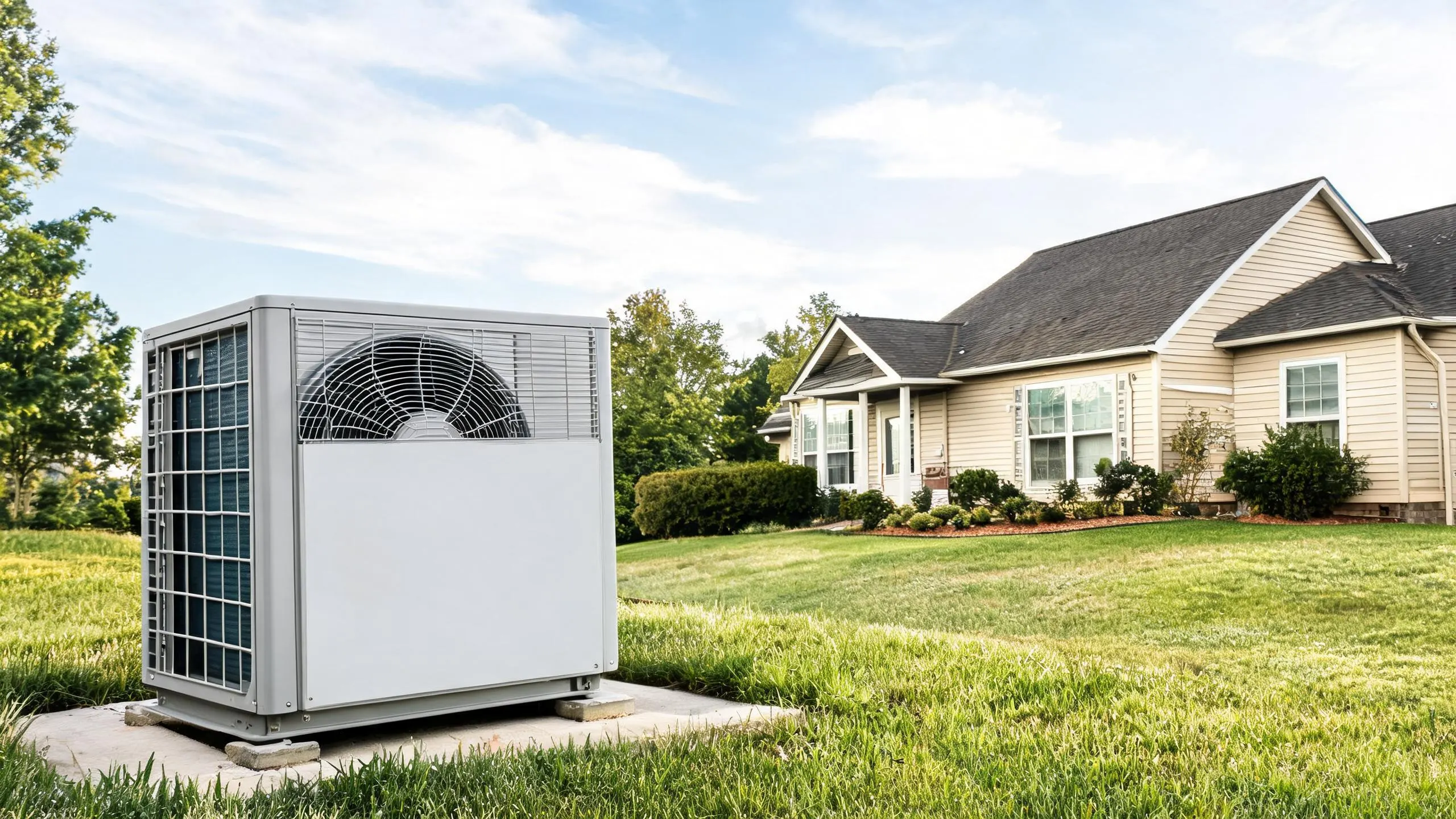




An outdoor heat pump unit mounted on a concrete pad in front of a single-story suburban house with beige siding.

Heat Pump Repair in Eureka, IL

Tell us about the job

Takes about a minute. No obligation.

Step 1 of 3: Equipment

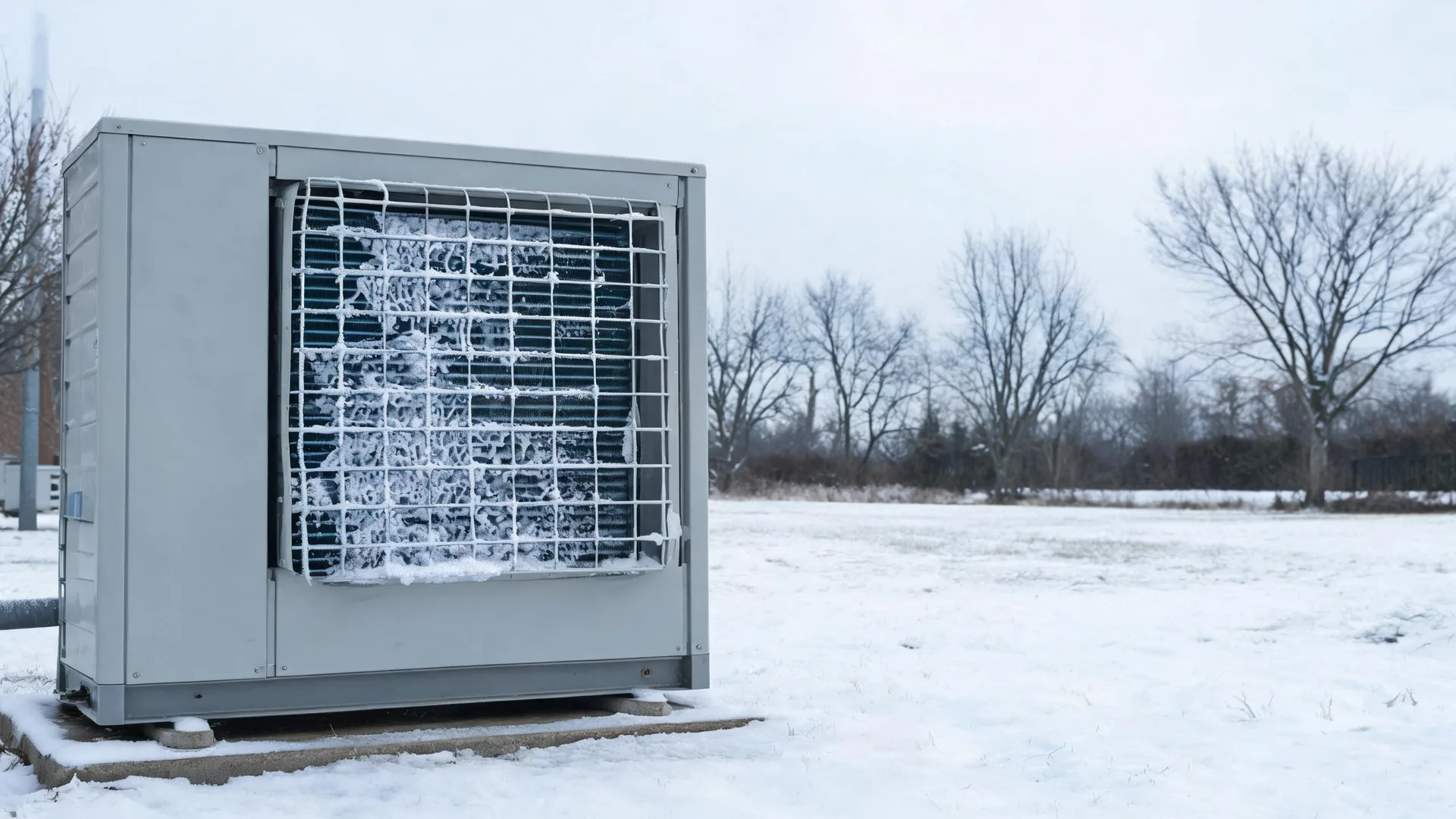
Winter nights in Eureka average 19 degrees, and that's when a heat pump works hardest and shows its weak points. If yours is icing up and not clearing itself, running constantly without catching up, or blowing air that's gone noticeably cooler, that's the system telling you something specific is wrong, not just the cold doing its normal work. Nothing about this county's weather pushes a heat pump harder than what it's built for. A technician checking refrigerant charge, the reversing valve, or the defrost control will usually find a straightforward cause behind it.

8 months
October through May, your system heats
4 months
June through September, it cools
19°F
the average winter night it heats against
84°F
the average summer afternoon it cools against
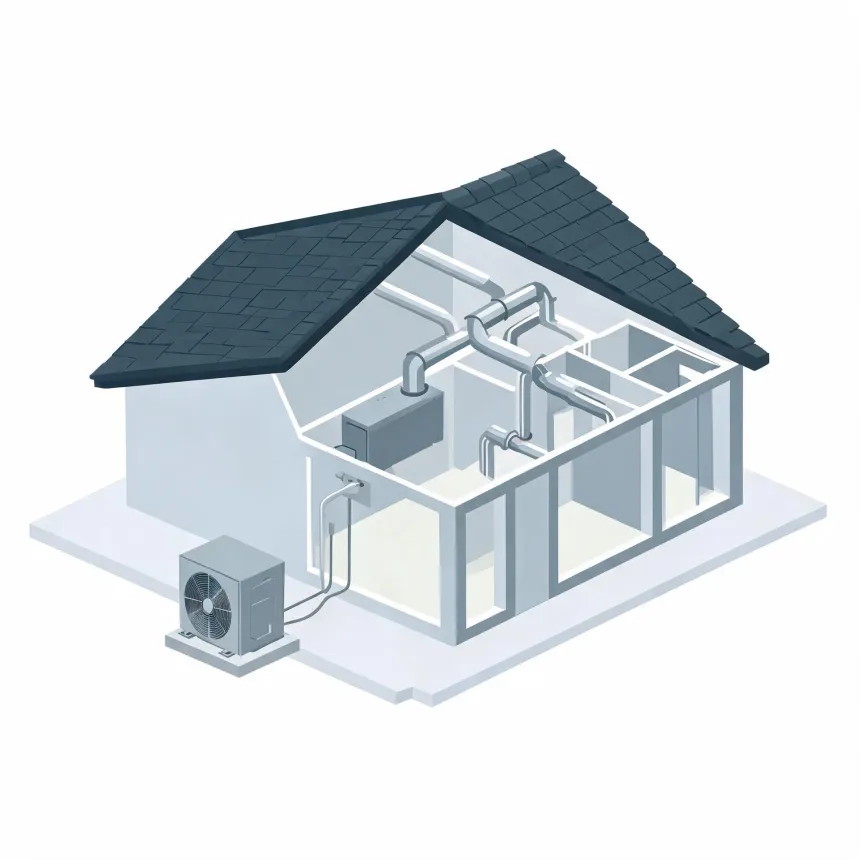
Isometric cutaway illustration of a small house showing interior ductwork and an air handler connected by lines to an outdoor condenser unit on a pad beside the building.
Your system heats October through May and cools June through September.

NOAA nClimDiv, 1991–2020 normals

October is the first full month of heat here, after September warms it up.

A heat pump that limped through last winter will show the same weak spot again in the first cold snap.

At 15.87 cents a kWh, a heat pump running wrong keeps billing you for it

Power costs 15.87 cents a kWh statewide
70 damaging wind events from 2015 to 2024
41 hail events from 2015 to 2024

Half the homes in Woodford County were built in 1972 or earlier. A heat pump doesn't last as long as the house around it, so if yours came with a home that old, it's probably not original, but it may still be older than you'd guess. An older unit has had more winters to wear down the same parts a younger one has, the compressor, the reversing valve, the defrost control. That doesn't mean the cold is harder on it here than anywhere else. It means more years have passed for ordinary wear to catch up with it. Worth asking the technician straight out how much life is likely left before putting much money into it.

Your heat pump's problem has a cause, not just a cold snap

Woodford County sees its share of wind, hail and winter storms, but none of it is out of the ordinary for a heat pump built to run through Illinois winters. So when yours is icing up, running nonstop, or blowing cool air, that's a specific part wearing out or falling out of adjustment, not the weather asking too much of it. A technician can usually trace it to one cause and fix that.

Find a contractor
A man in a navy shirt and tan trousers, seen from behind, carries a canvas tool bag up wooden porch steps toward a dark blue front door, with shrubs and a large planter nearby.
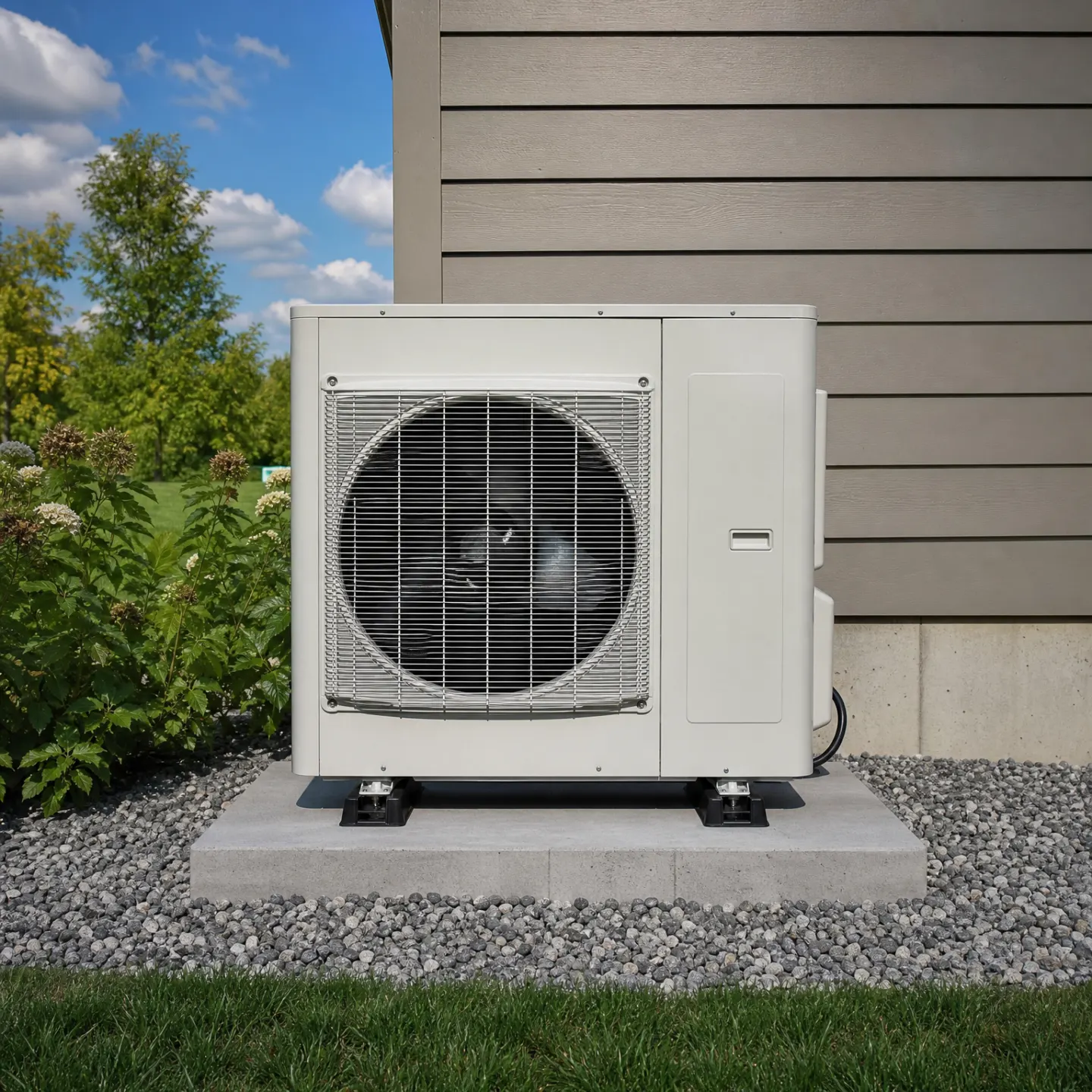
A white mini-split heat pump outdoor unit mounted on a concrete pad beside a gray-sided house, surrounded by gravel and green shrubs.

Ask what it's worth fixing into

A technician looking at an older unit can usually tell you where it stands. Ask before the work starts, not after. If the compressor or reversing valve is what's failing, that answer is worth having first.

The sound changes before the air does

A heat pump in trouble often tells you through the outdoor unit first. Listen for a hard clicking when it tries to start, a hum with no fan movement, or a grinding that wasn't there before. Short cycling, where it kicks on and off in quick bursts instead of running a steady stretch, points to a pressure or electrical problem, not a thermostat setting.
Short cycling wears out the parts faster

Every time a heat pump starts, the compressor draws a hard jolt of current. A unit that's short cycling is doing that over and over instead of settling into a normal run, and that kind of start-up stress is what takes out a compressor early. The sooner a tech sees it, the more likely the fix is a part upstream of the compressor instead of the compressor itself.

Most heat pump failures trace back to a handful of parts, and the reversing valve is high on that list. It's what switches the system between heating and cooling, and when it sticks, you get a unit that runs but blows the wrong temperature of air, or won't switch modes at all. The defrost control is another common point of failure. It's supposed to melt off the frost that builds on the outdoor coil in cold weather, and when the sensor or the board behind it fails, ice just keeps building until the unit can't pull heat from the air anymore. Low refrigerant charge, usually from a slow leak at a fitting or coil, shows up as reduced heating and a compressor that runs longer than it should to make up for it. And the capacitor that gets the compressor and fan motors started wears out with age and heat cycling, which is often behind a unit that hums but won't start, or clicks and shuts back off.

A diagnostic visit starts outside at the unit itself, not with a clipboard of questions. A technician checks the refrigerant charge with gauges, looks at how the compressor is drawing current, and watches whether the reversing valve actually shifts when it's told to. Electrical connections get checked too, since a loose or corroded wire can look like a failing part when it isn't one. Expect the panels to come off the outdoor unit and the indoor coil to get a look as well, since a problem can show up in one place but start in the other. Most of this is done with the system running, because a reversing valve or defrost control often only shows its fault under load, not sitting still. By the end, the cause should be narrowed to one part, not a guess at several.