




An unfinished basement interior showing a gray furnace unit beneath a bare incandescent bulb, surrounded by exposed joists, concrete walls, cardboard boxes, and utility pipes.

Furnace Installation in Eureka, IL

Tell us about the job

Takes about a minute. No obligation.

Step 1 of 3: Equipment

Half the homes in Woodford County were built in 1972 or earlier. A furnace going into one of these has to work with what's already there, not some ideal setup. Older homes often have ductwork sized for a different furnace than what's sold today, and a unit that doesn't match it will run poorly no matter how good the equipment is. Before installing anything, a contractor needs to check what your ducts and venting can actually handle. That matters more in a house built in 1972 or earlier than in one built since.

8 months
October through May, your furnace is on duty
19°F
the average winter night it heats against
66%
of homes here heat with gas, so most furnaces here burn gas
80% AFUE
the federal minimum any new unit must meet
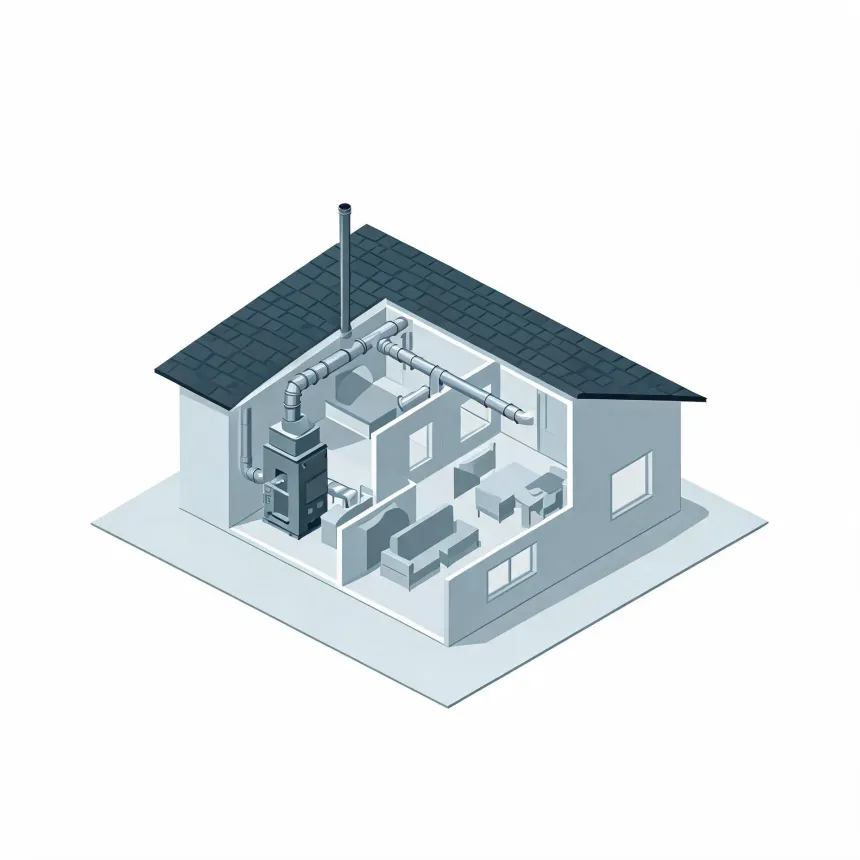
Isometric cutaway illustration of a single-story house with a dark shingled roof, showing a furnace with a flue pipe and branching ductwork running through interior rooms furnished with a sofa, table and chairs.
Your furnace works hardest from November through March.

NOAA nClimDiv, 1991–2020 normals

Furnaces in Woodford County run eight months a year, October through May.

A furnace sized wrong here won't just underperform in a cold snap, it'll do it eight months straight.

Eight months of heat is why September beats mid-winter for a new furnace

Heat runs October through May
Winter nights average 19°F
Climate zone 5A

Woodford County falls in climate zone 5A, a cool zone where the furnace carries more of the year's work than the air conditioner does. Any non-weatherized gas furnace installed today has to hit at least 80 percent AFUE, the federal minimum. That floor is changing. Furnaces built starting in December 2028 will need to reach 95 percent AFUE, which will push the low-efficiency models off the market. A furnace installed now under the current minimum will still be well inside its service life when that change hits.

Most homes here already run on gas

Gas heats 65.6% of the homes in Woodford County. A gas furnace here is the common choice, not an unusual one, and it's what most contractors in this area size and vent every week.

Find a contractor
A man in a gray shirt and tan work pants, seen from behind, climbs porch steps toward a dark blue front door while carrying a canvas tool bag, with a potted shrub to the right.
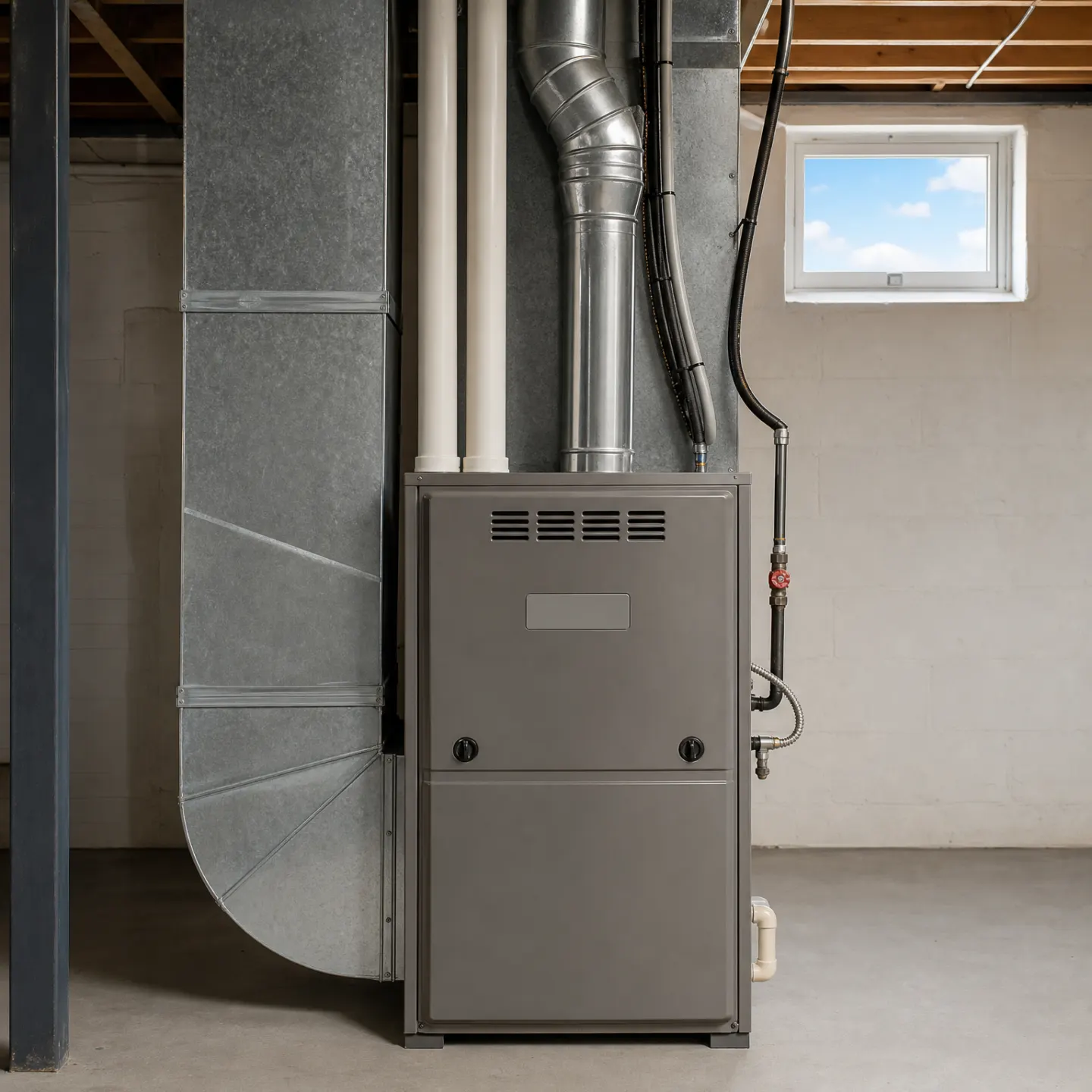
A gray residential gas furnace installed in an unfinished basement, surrounded by ductwork, a metal flue pipe, and a gas supply line.

Size it to the house, not the catalog

A contractor sizing a new furnace for one of these older homes has to measure what's there before writing up a quote. Duct size, vent run, the return path, all of it. Ask for that walkthrough before you ask for a recommendation.

Too big causes its own problems

A furnace that's oversized reaches temperature fast, then shuts off. That short cycle doesn't let the system run long enough to warm the house evenly or move air through the ducts properly. Rooms farther from the furnace stay cold while the thermostat reads satisfied. The furnace also wears faster, since the ignition and blower cycle on and off more than they would in a properly sized unit.

Sizing is a calculation, not a guess

A contractor works out the right size using a heat loss calculation, which accounts for square footage, window area, insulation, ceiling height and how much outside wall the house has. It's not based on the old furnace's rating or a quick look at the house from outside. Homes that look alike from the street can call for different furnaces depending on how they're built, which is why the calculation gets done for that house, not pulled off a chart.

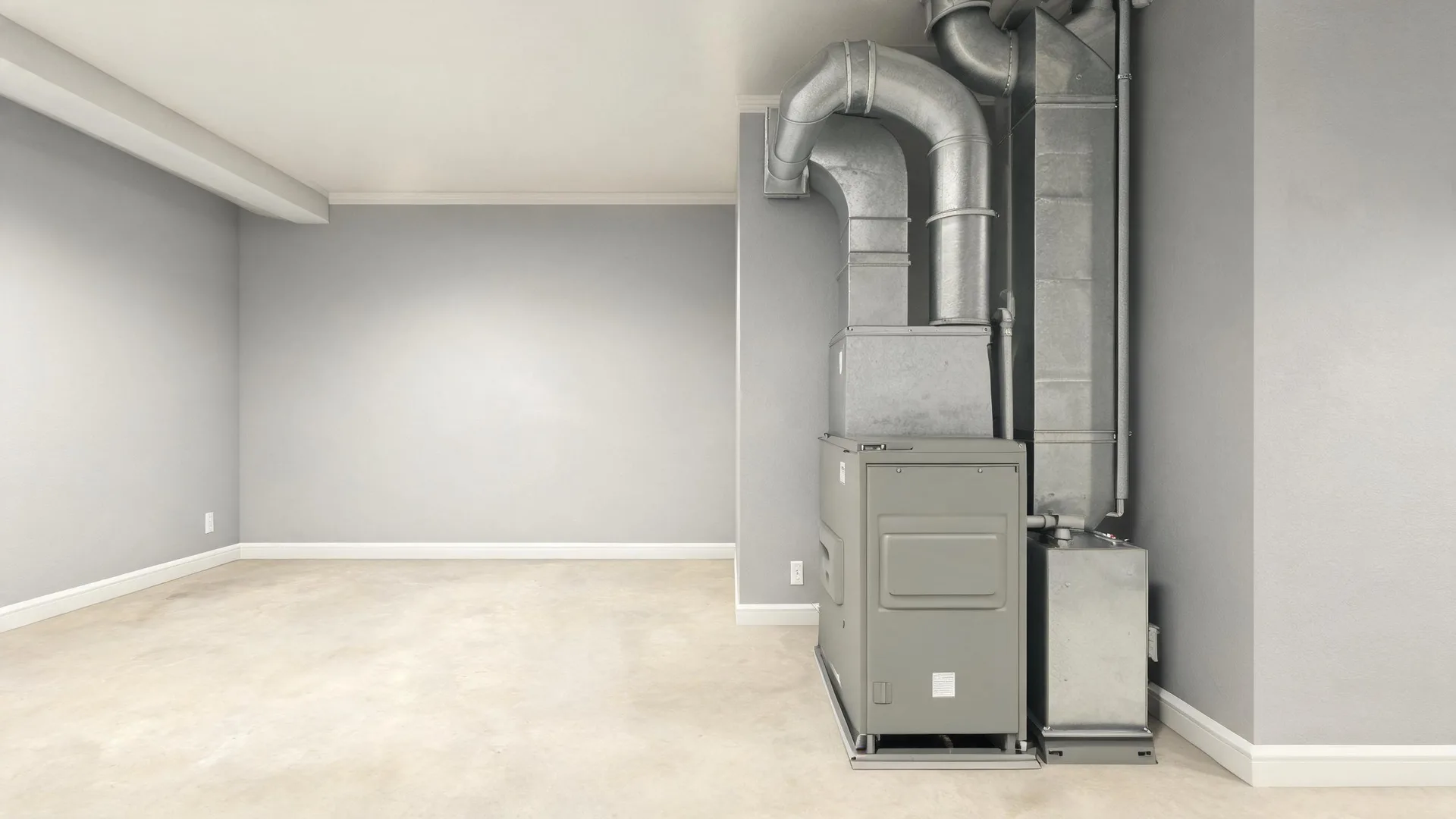
A gray forced-air furnace with ductwork stands in an unfinished concrete basement surrounded by storage items and clutter.

A high-efficiency gas furnace would save about $120 a year to run in Woodford County compared with a gas furnace.

  • A high-efficiency gas furnace$560 a year
  • A gas furnace$680 a year

Estimates for a typical Woodford County home, from EIA household energy data, Illinois fuel prices and NOAA climate normals. Your home will differ.

Installation day starts with the old furnace coming out, along with any venting or ductwork that doesn't match the new unit. The contractor sets the new furnace, connects the gas line, and runs the venting according to what that furnace needs, which may differ from what the old one used. Ductwork gets sealed where it connects to the furnace, since a loose joint there pulls warm air into the attic or crawlspace instead of the house. The electrical connection and thermostat wiring come next, then the gas gets turned on and checked for leaks before anything fires. Once it's running, the contractor checks the flame, checks for proper draft out the vent, and lets the system cycle a few times to see that it shuts off and restarts the way it should. A combustion analyzer reading at the end confirms the furnace is burning clean and venting correctly, not just that it turns on.