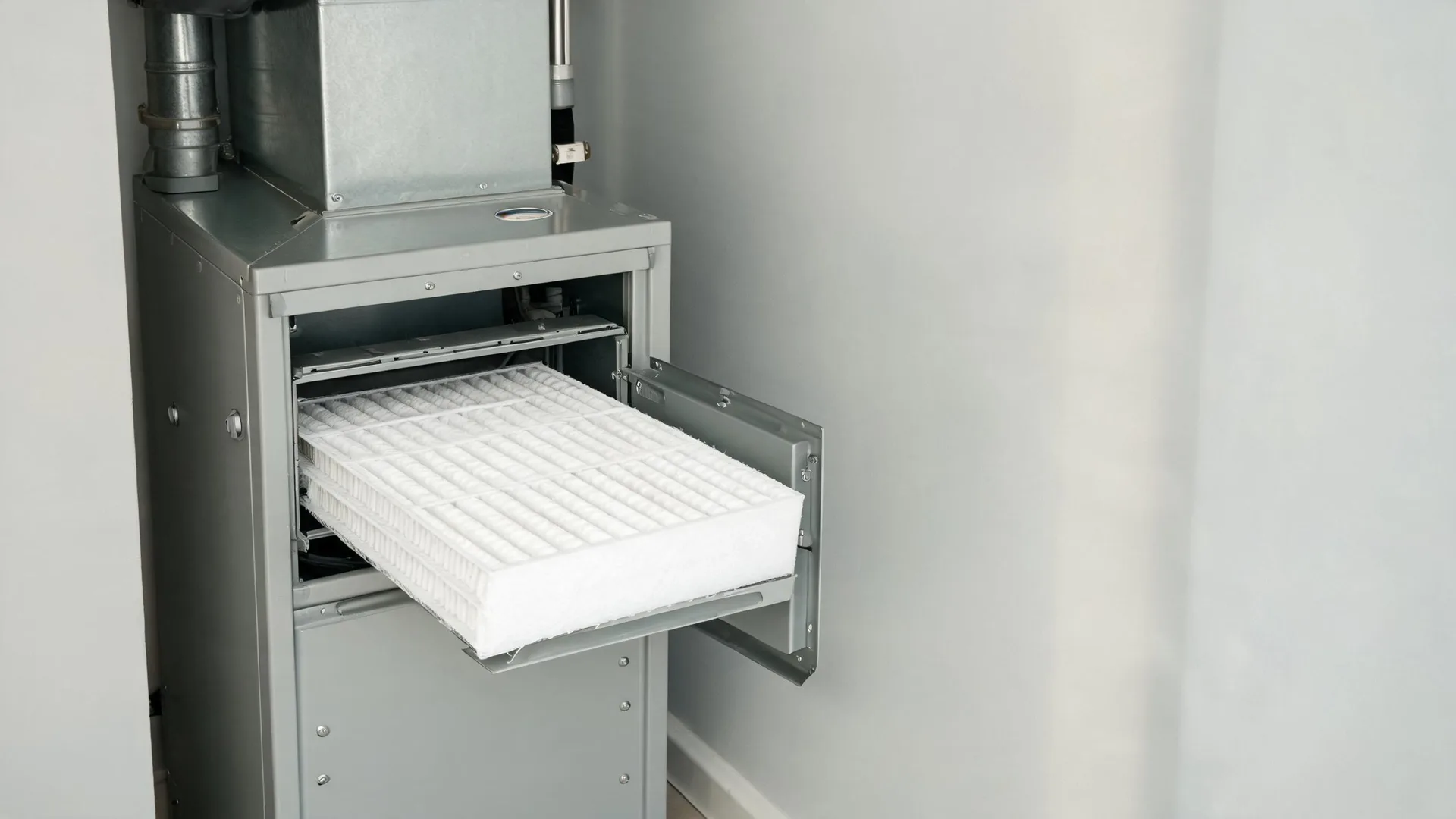
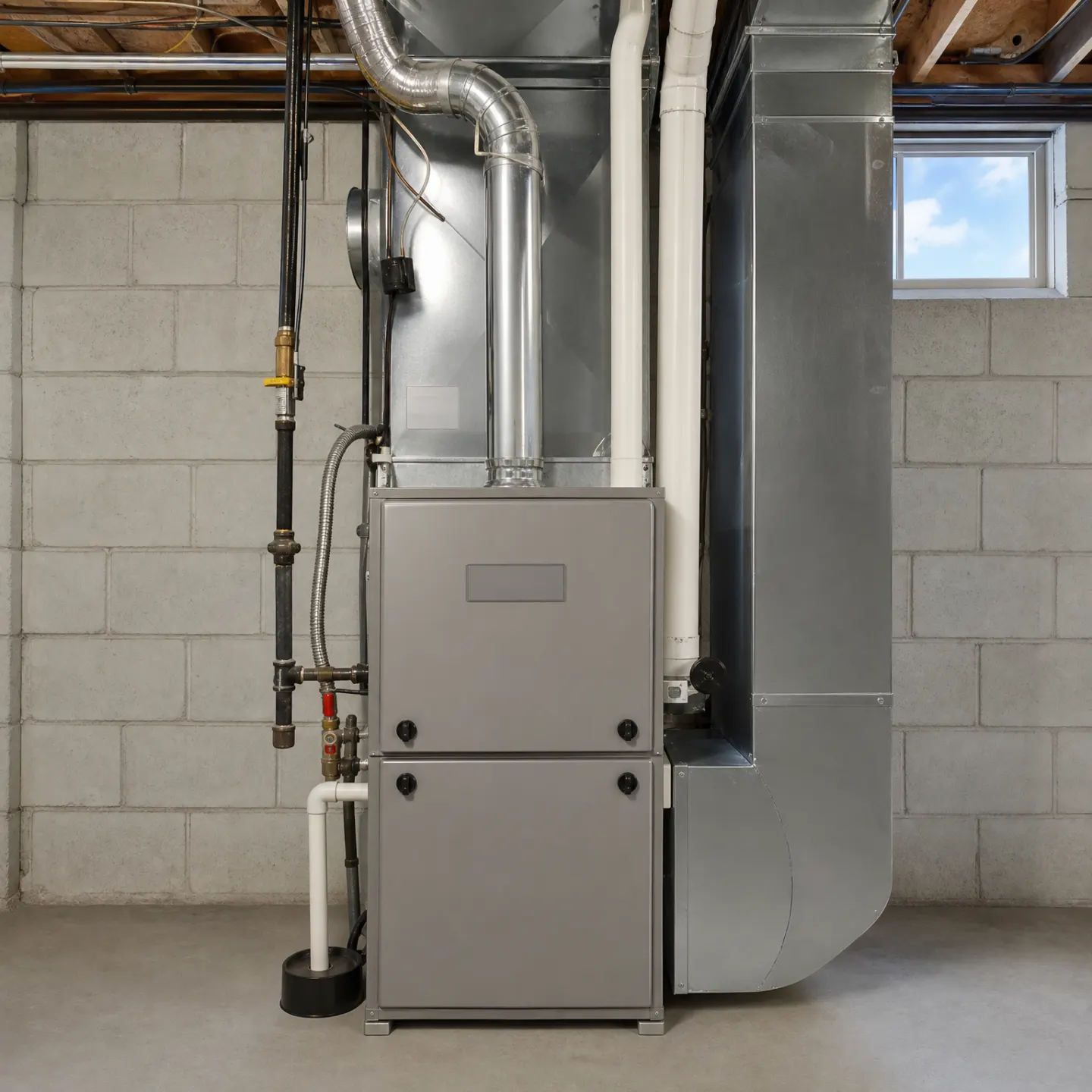
Most furnaces here run on gas
Utility gas heats 80.2% of homes in Cook County. That means a burner, a flame sensor and a flue, not just a motor and a filter.
Takes about a minute. No obligation.
Utility gas heats 80.2% of homes in Cook County. That means a burner, a flame sensor and a flue, not just a motor and a filter.
A gas furnace needs its burner, igniter and venting looked at each year, not only the filter changed. That's what a maintenance visit on a gas system is actually for.
A furnace that never gets looked at still runs, right up until the flame sensor fails or the heat exchanger cracks.
Skipped maintenance doesn't announce itself, it just means nobody caught the cracked exchanger before the furnace quit.



Furnaces here start running in October and keep going through May. That's eight months of straight use. September is the month to get the check done, right before the burner has to light for the season. A furnace that's been sitting idle since spring can have a stuck igniter or a flame sensor that's picked up a film of residue, and you want that caught on a technician's bench, not on the first cold morning when you're relying on the heat actually coming on.
Gas and oil systems need the burner, venting and safety controls checked, not just a new filter.
Find a contractor
A quick visit gets you a new filter and a glance at the thermostat. A thorough one gets the cabinet open. The tech pulls the burner assembly and looks at the flame itself, not just whether it lights. A burner flame should be steady and blue. Yellow or flickering means it's not burning clean, and that's worth tracing back before it turns into a bigger problem. The flame sensor gets cleaned or tested, not just eyeballed. The heat exchanger gets checked for cracks, because a cracked exchanger can let combustion gas mix into the air moving through the house. The inducer motor and the venting get checked too, since a blocked flue or a failing inducer can let that same gas back up instead of carrying it outside. None of that shows up by changing a filter and listening for the blower to kick on.
A dirty filter chokes airflow across the blower wheel and the heat exchanger. The furnace runs harder to push the same air through, and the exchanger runs hotter than it should. That heat has nowhere to go if the filter is clogged, and over time it's the exchanger that takes the damage.
A condensing furnace pulls extra heat out of the exhaust and that process makes water, which has to leave through a drain line. If that line clogs with algae or sediment, the furnace senses it can't drain and shuts itself off rather than let water back up into the cabinet. An older furnace without a second heat exchanger doesn't have this drain at all.
A tune-up turns up things you'd never see from the thermostat. The igniter can look fine and still be weak, drawing less current than it needs to light the burner reliably, and the only way to catch that is testing it, not looking at it. The blower wheel collects dust on its blades over time, which throws it out of balance and makes the motor work harder without ever tripping a fault code. Wiring connections at the control board loosen slightly from the furnace heating and cooling all winter, and a loose connection can cause the furnace to shut down intermittently without any clear pattern. None of this trips an error or makes a noise you'd notice. It just means the furnace is running worse than it should, right up until something fails outright.
A tune-up also includes a draft test, checking that the flue is actually pulling combustion gas out of the house instead of letting it spill back into the cabinet. The tech checks gas pressure at the manifold too, since too high or too low changes how the burner flame behaves, and that's not something you can tell by looking at it. Safety controls get tested as well. The limit switch has to shut the furnace down if it overheats, and the pressure switch has to confirm the inducer is actually moving air before the burner is allowed to light. Those switches can fail in a way that still lets the furnace run, just without the protection doing its job. A tune-up is also when the technician should tighten electrical connections at the furnace itself, not just the control board, since a loose wire at a high-current connection can arc and burn over time.