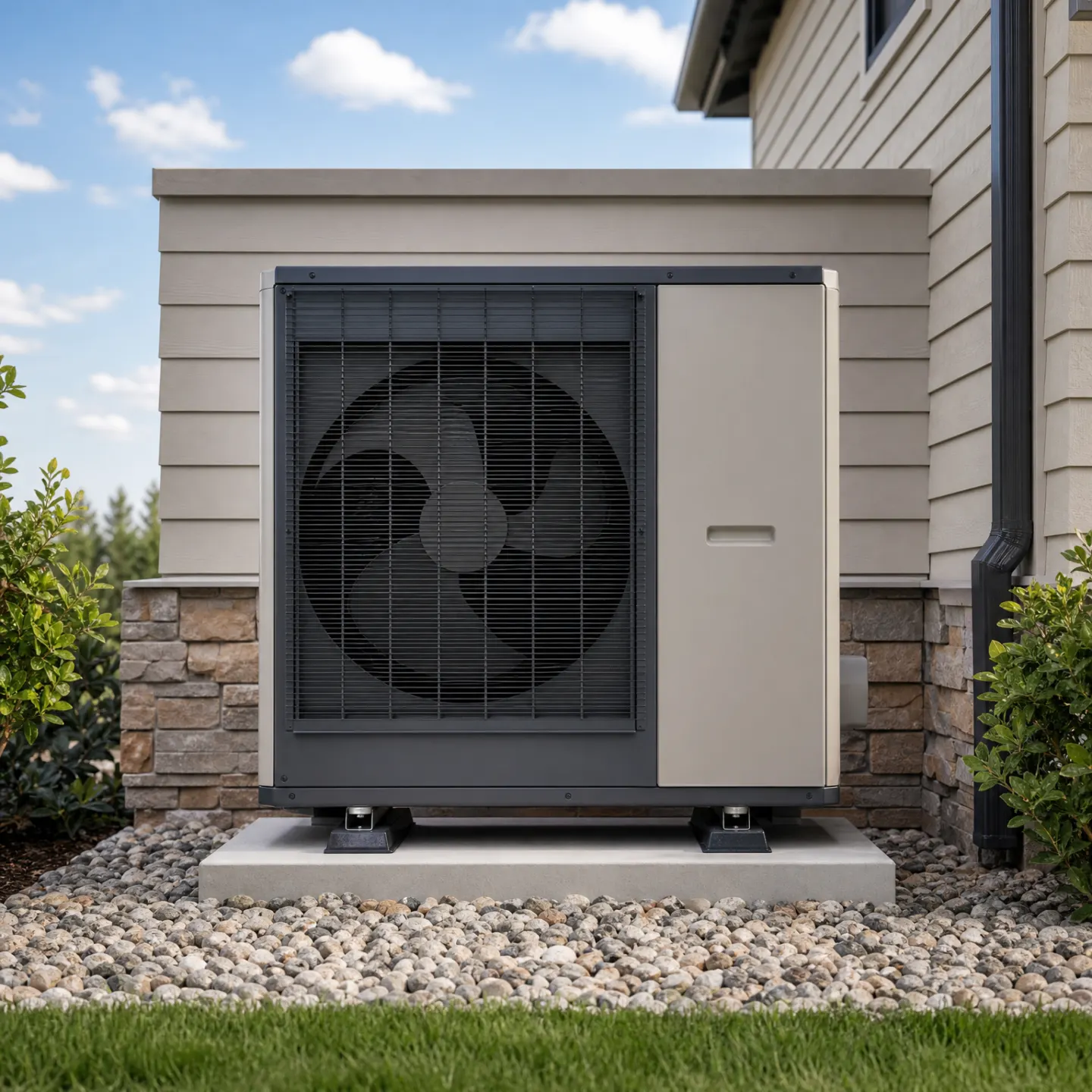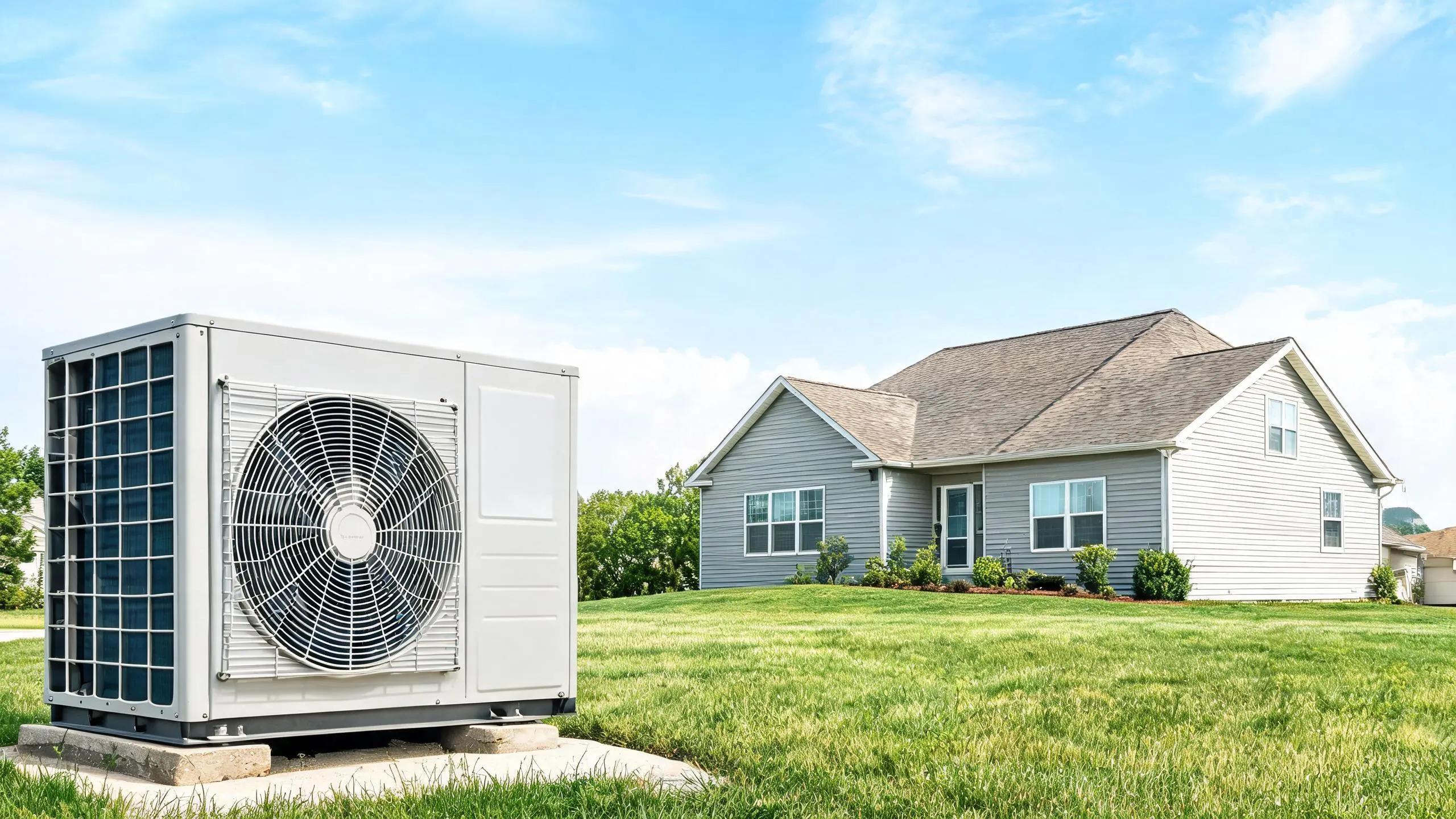
An outdoor HVAC condenser unit on a concrete pad in front of a single-story house with gray siding and a shingle roof.

Heat Pump Repair in Joliet, IL

Tell us about the job

Takes about a minute. No obligation.

Step 1 of 3: Equipment

Storms are frequent here

Will County logged 346 severe weather events between 2015 and 2024, including 202 damaging wind events and 89 hail events. A heat pump's outdoor unit sits outside through all of it, with its coil and fan exposed to whatever comes through.

Outages follow the storms

About 16% of Illinois households went at least a day without power in 2024. A heat pump needs electricity to run, so when the power drops, heating or cooling stops with it until it comes back on.

8 months
October through May, your system heats
3 months
June through August, it cools
20°F
the average winter night it heats against
83°F
the average summer afternoon it cools against
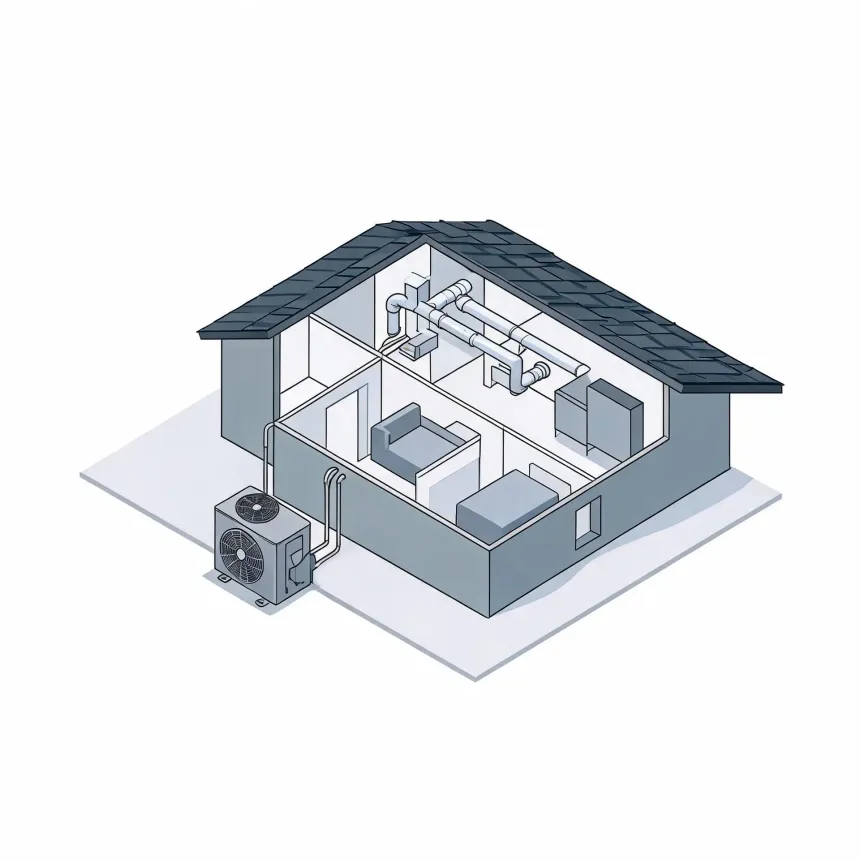
Isometric grey-toned illustration of a cutaway house showing interior rooms, ceiling ductwork and an air handler, connected by lines to an outdoor condenser unit beside the building.
Your system heats October through May and cools June through August.

NOAA nClimDiv, 1991–2020 normals

Will County's outdoor unit takes wind, hail and winter storms straight on, with 202 damaging wind events and 89 hail events logged between 2015 and 2024.

A heat pump that takes that kind of beating needs a real diagnosis, not a guess, so the repair holds.

At 17.91 cents a kilowatt-hour, a heat pump running wrong is a bill you'll notice

Power here costs 17.91 cents per kilowatt-hour
Climate zone 5A
Cooling runs June through August

Half the homes in Will County were built in 1992 or later. If your house falls on that side of the line, the heat pump might not be the original either. A unit that age has plenty of working life left in it, and a breakdown now is more likely a part giving out than the system reaching the end. That makes repair the call most of the time, not replacement. Worth checking when your system went in, especially if you bought the house secondhand and never asked.

After the storm passes, have the unit checked

If your outdoor unit took a direct hit from wind or hail and the system still seems to run fine, that's worth a second look. Damage to the coil or fan doesn't always show up as a breakdown right away. Getting it checked now means a problem gets caught before it turns into one.

Find a contractor
A gray heat pump outdoor unit mounted on a concrete pad next to the stone-accented exterior wall of a house.

Time is on the system's side, not against it

This heat pump has already logged every wind and hail event counted on this page, and every stretch of hard winter cold besides. If the house falls on the newer half, built in 1992 or later, the unit hasn't been at it as long as the wear might suggest. A system still within its working life is worth repairing when something fails, not replacing. Check the install date if you have it, or ask whoever sold you the house. That tells you more about what you're dealing with than the age of the house does.

The system runs but doesn't keep up

A heat pump that's struggling will often run longer cycles and still miss the thermostat setting by a few degrees. It might run constantly without shutting off, or blow air that doesn't feel as warm or cool as it should. That points to a refrigerant charge that's off, a failing compressor, or a reversing valve that isn't shifting the way it should between heating and cooling.

Ice, noise, or short cycling mean call now

Frost building up on the outdoor coil that doesn't clear during the defrost cycle is a sign something's wrong, not normal winter operation. Grinding, clicking, or banging from the outdoor unit usually means a part is failing mechanically. A system that kicks on and off in short bursts instead of running a full cycle is also working harder than it should. None of these fix themselves, and running the system in that condition tends to wear out other parts faster.

Before calling anyone, look at the thermostat first. Make sure it's set to the mode you want, with a target temperature past the current room temperature, and check the batteries if the display is dim or blank. Next, check your breaker panel for a tripped switch tied to the heat pump or outdoor unit. Go outside and look at the unit itself: clear away leaves, snow, or ice piled against it, and make sure nothing is blocking airflow on any side. Check the air filter inside, since a clogged one chokes airflow and can make the whole system struggle even when nothing else is wrong. If the outdoor coil is caked in ice and it's not during a defrost cycle, that's worth noting for whoever comes out, but don't chip at the ice yourself. If none of that fixes it, you've at least ruled out the easy stuff before a tech shows up.

Wind and hail don't just hit the outdoor unit once and move on. Over years, that's 202 wind events and 89 hail events worth of debris, flex, and impact on the same coil and fan blades. Damage like that doesn't always announce itself. A bent fin here, a loosened connection there, and the system keeps running until it doesn't. That's why a repair call after years of this kind of exposure needs an actual diagnosis, someone checking the coil, the refrigerant charge, the electrical connections, not just swapping the part that usually fails. A guess might get the system running again for now. A real diagnosis is what keeps it running.