DuPage County gets hit often
DuPage County logged 275 severe weather events between 2015 and 2024, including 180 damaging wind events, 58 hail events and 21 tornadoes. Fifteen winter storms with heavy snow, ice or blizzards hit the same stretch.
Takes about a minute. No obligation.
DuPage County logged 275 severe weather events between 2015 and 2024, including 180 damaging wind events, 58 hail events and 21 tornadoes. Fifteen winter storms with heavy snow, ice or blizzards hit the same stretch.
In 2024, 16% of Illinois households lost power for 24 hours or more. A furnace with a damaged outdoor unit or a worn part is a bad combination with an outage on a cold night.
Furnace in DuPage County run about eight months a year, October through May.
That long a stretch wears parts down fast, so trouble tends to show up early in the season.




A tune-up before October is worth scheduling on its own, but it matters more once a storm knocks the power out. A furnace with a cracked heat exchanger or a failing igniter is not something you want to discover on the night a line goes down and the temperature drops. A technician checking the furnace now can catch a part that's already struggling, before an outage forces the system to work through a cold stretch without any slack left in it. Get it looked at while the weather is still mild enough that a problem found is a problem fixed on a normal schedule, not an emergency call.
A furnace that's already struggling has less to give when the power goes out and the house gets cold fast. Have it looked over now, while a weak part is still just a weak part.
Find a contractorDust builds up on the burners first, and a dirty burner doesn't flame the way it should. That throws the heat exchanger off, heating unevenly, cracking sooner than it would otherwise. A flame sensor coated in residue stops reading the flame at all, so the furnace shuts itself down as a safety measure, sometimes a few minutes after it starts. The igniter is next. It's built to take a lot of on and off cycles, but not an endless number, and nobody can see it wearing thin from the outside. A clogged filter forces the blower motor to pull harder for the same airflow, and a motor working against resistance like that runs hotter and tires faster. None of this announces itself. The furnace still lights, still blows warm air, right up until the part that was already failing finally gives out, usually on the day it's working hardest.
Looking at a furnace from across the room tells you almost nothing. A technician pulls the burner assembly apart to check flame pattern, tests the flue draft with the furnace running, and checks amp draw on the blower motor against what it should be. Flame color alone can hide a burner that's partly clogged, and a furnace can heat the house fine for months with a draft problem that's slowly filling the heat exchanger with soot.
A cracked heat exchanger can sit quiet for weeks and only leak exhaust once the furnace has been running long enough to heat up fully and expand the metal. A technician checks for that with the furnace actually firing, not sitting cold. Pressure switches and limit switches get tested the same way, under a real heat cycle, because a part that reads fine cold can still fail the moment the furnace has to work.
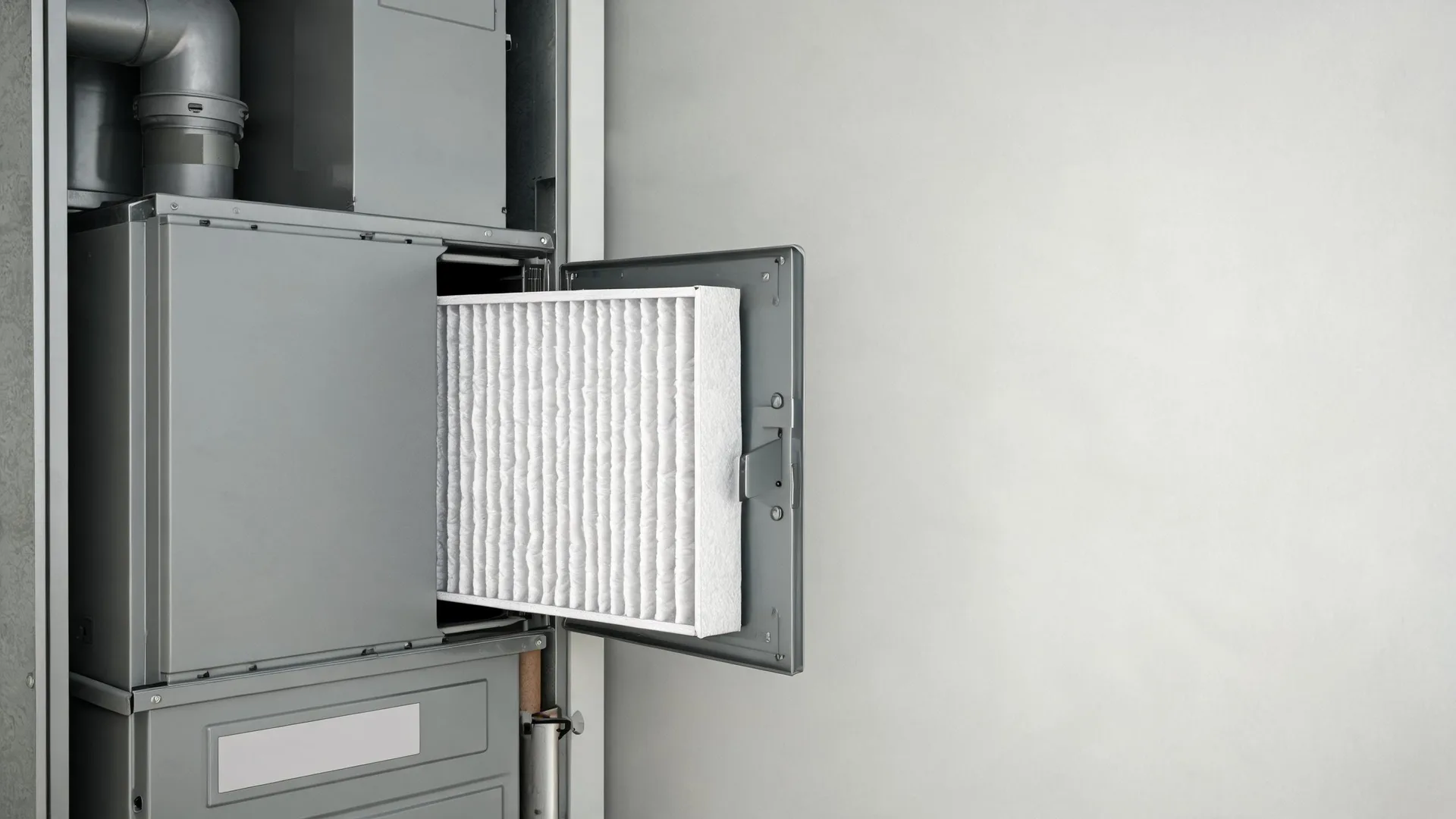
A furnace doesn't have coils or a drain line, that's the air conditioner's job, but the filter belongs to both of them. Airflow runs across that filter before it ever reaches the blower, and a clogged one makes the blower pull harder to move the same amount of air. A blower straining against a dirty filter runs hotter, and the motor bearings wear faster than they would otherwise. Restricted airflow also means less air passing over the heat exchanger, so it runs hotter than it's built for, which shortens the life of the metal itself. A clean filter is the cheapest insurance a furnace has, and it's the one thing a homeowner can check without any tools at all.
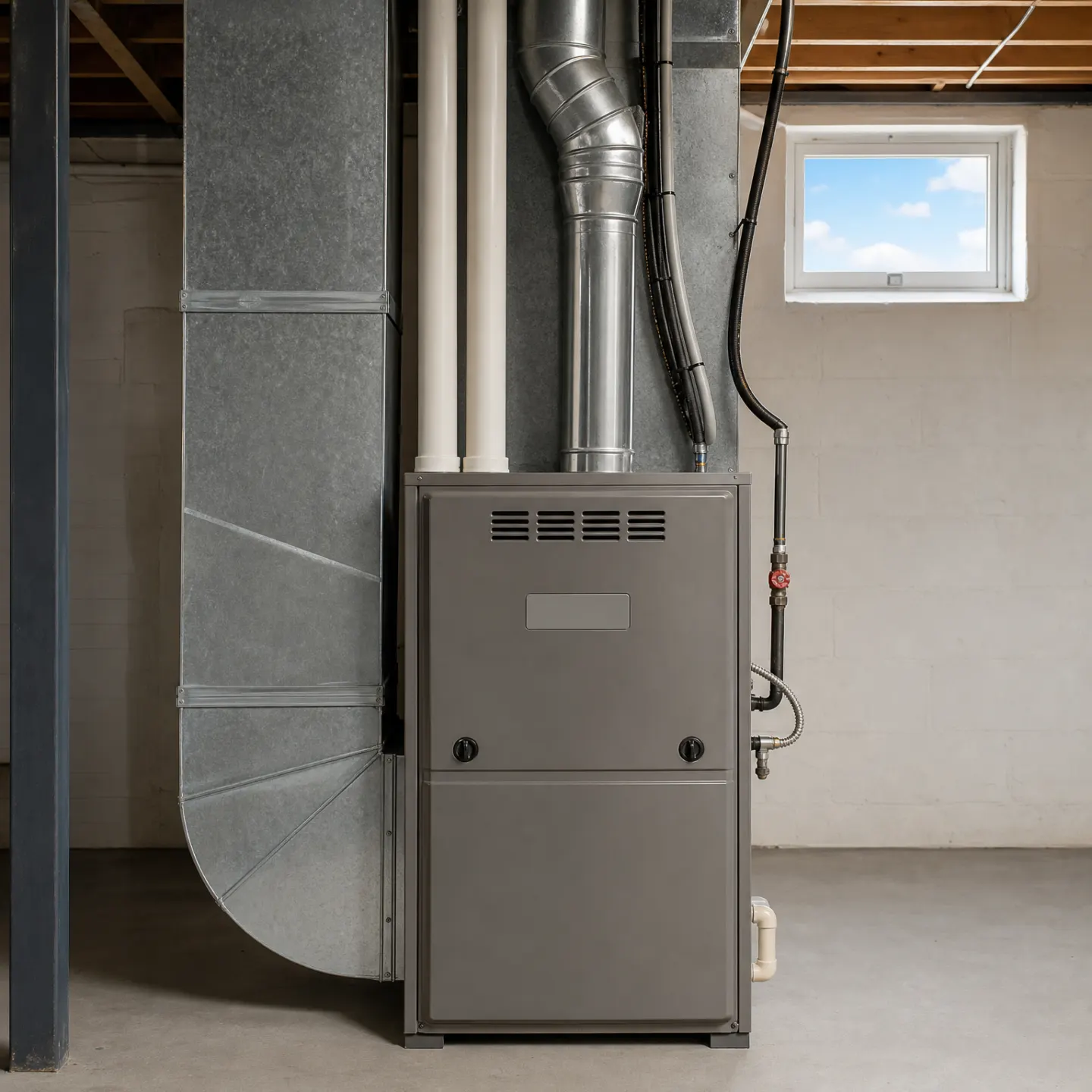
A real tune-up starts with the burners, pulled and cleaned so the flame burns even across every port. The technician checks flame sensor and igniter, since both wear out in ways you can't see from across the room. The heat exchanger gets inspected for cracks, usually with a camera, because a crack can sit hidden behind the metal casing. Gas pressure gets measured and set to spec, not just eyeballed. The blower motor gets tested under load and the belt or bearings checked if it has any. Vent pipe and flue get checked for a solid connection and proper slope, since a furnace that can't vent exhaust properly is a safety problem, not just a performance one. Each of these is a separate check, not a once-over, because a furnace that looks fine sitting still can still have a part close to failing.