Eight months of work a year
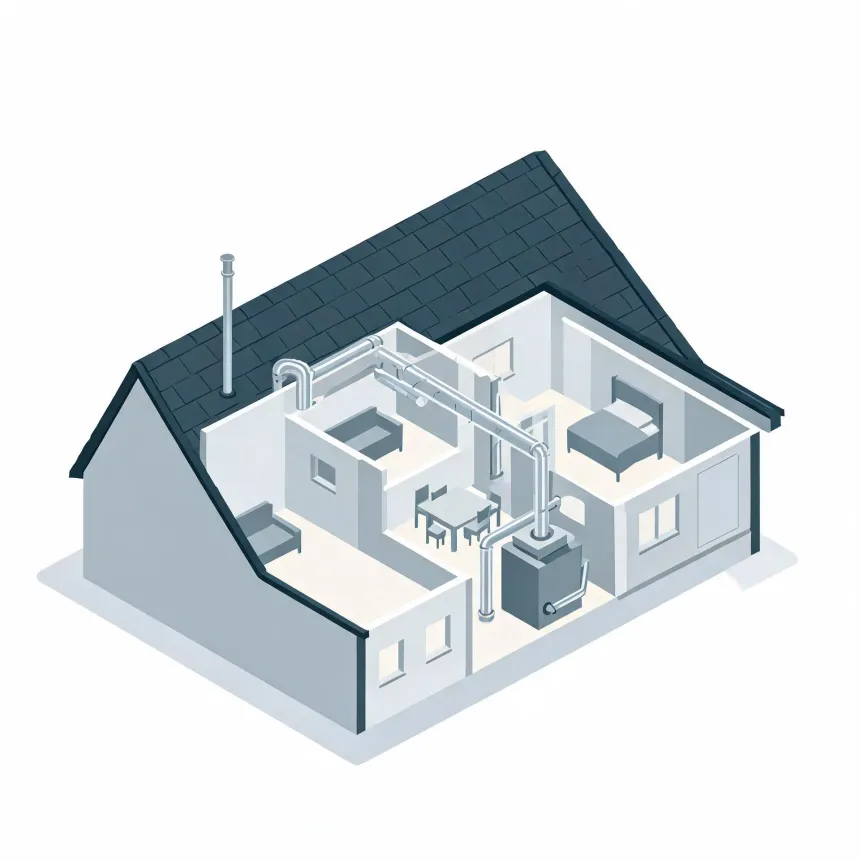
Furnaces in Livingston County run from October through May. That's most of the year asking the igniter, the blower, the heat exchanger to cycle on and off without much of a break.
Takes about a minute. No obligation.
Furnaces in Livingston County run from October through May. That's most of the year asking the igniter, the blower, the heat exchanger to cycle on and off without much of a break.
A furnace that runs this many months a year puts more hours on every part than one that only runs a few weeks of cold snaps. Whatever's acting up in yours is worth having a contractor look at closely, since the cause is often tied to that long stretch of use rather than a one-time glitch.
NOAA nClimDiv, 1991–2020 normals
An igniter cracks or weakens with every cycle it fires.
A furnace that starts and stops this many times a season wears that part down faster than one that barely runs.



September is worth a look before the heat goes on in October. A furnace that sat quiet since spring often has a weak part that the first real cycle finds. The igniter that was already cracked, the flame sensor coated with just enough film, the part that was borderline in May is what fails in week one, not month six. Get a contractor out while it's still mild and they can test it under load with time to order a part if one's needed. Wait for the first cold night and you're calling about a furnace that won't start at all.
If your furnace came with the house, there's a decent chance it's older than the one you'd put in today. Before paying for a big repair, get a contractor to tell you what's left in this one. They can give you a straight answer on whether it's worth fixing or worth replacing.
Find a contractorEight months a year is a long stretch for one part to be weak and still get by. A furnace can limp along on a borderline igniter or a dirty flame sensor during a mild week and then fail outright on a cold one. Have whatever's acting up checked properly rather than reset and hoped past, since the same long runtime that caused it will find it again.
Look at the filter first. Pull it out and hold it up to a light. If you can't see through it, it's restricting airflow and the furnace is working harder than it should. Check that the thermostat is set to heat and the temperature is actually above room temperature, and swap the batteries if it has a blank or dim display. Walk down to the furnace and make sure the switch on the side, the one that looks like a light switch, is flipped on. If it's a gas furnace, check that the gas valve is turned to open. Look at the vent pipe outside where it exits the house and clear away anything blocking it, snow, leaves, a nest.
Don't take the burner compartment apart or try to relight a standing pilot you've never lit before. If the furnace shuts off and a light on the control board is blinking, write down the pattern, the number of flashes and the pause between them, since that code tells a tech what tripped it before they even open the panel. Don't keep resetting the switch or the breaker over and over if it trips again right away. That usually means something is actually wrong, and running it anyway risks turning a small repair into a bigger one.
Estimates for a typical Livingston County home, compared with an older unit built to the previous federal minimum, from EIA household energy data, Illinois fuel prices and NOAA climate normals. Your home will differ.
Repair makes sense when one part has failed and the heat exchanger is sound.
Replacement makes sense when the heat exchanger is cracked or the furnace keeps needing parts.
A repair is worth it when the problem is one part and the rest of the furnace is sound. A new igniter, a new flame sensor, a new capacitor, these are straightforward jobs, and a furnace with a solid heat exchanger and a sound blower can carry on for years after. Replacement starts to make more sense when the heat exchanger is cracked, since that's the part that isn't sold on its own and isn't swapped in alone. It also makes sense when the repairs keep coming, a different part failing every season, because that pattern usually means the whole unit is wearing out at once rather than one piece giving out early. A contractor can tell you which situation you're in by looking at what's failed so far and what shape the rest of the unit is in, not by guessing from the outside.