

A row of dark-sided cottages with brown shingled roofs behind a trimmed hedge, beside a mown lawn and large leafy trees under an overcast sky.

Furnace Repair in Morris, IL

Tell us about the job

Takes about a minute. No obligation.

Step 1 of 3: Equipment

A furnace in Grundy County runs about eight months a year, October through May. That's most of the calendar spent on, cycling the igniter and blower over and over. Parts that would coast through a mild winter somewhere else don't get that break here. By the time something fails, it's usually been working up to it for a while. Worth having someone look at the actual cause rather than just resetting it and hoping.

8 months
October through May, your furnace is on duty
19°F
the average winter night it heats against
77%
of homes here heat with gas, so most furnaces here burn gas
9 winter storms
in ten years, the nights a failure hurts most
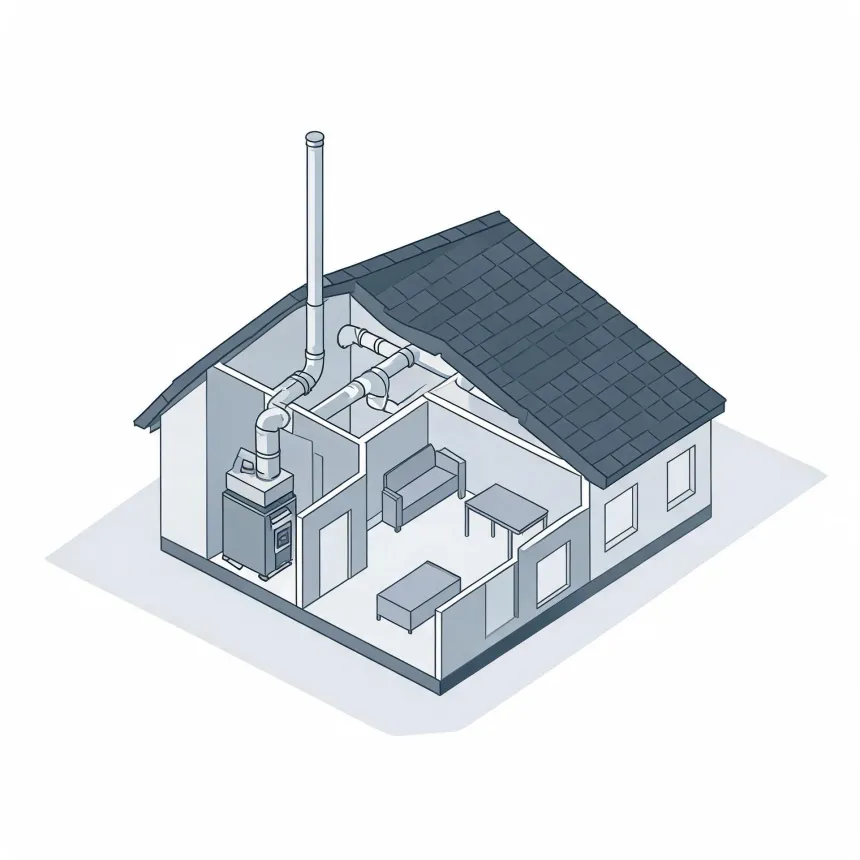
Isometric line illustration of a cutaway single-story house with a shingled roof, showing an interior furnace connected to ductwork and a tall vertical flue pipe, plus simple furniture in the adjacent room.
Your furnace works hardest from November through March.

NOAA nClimDiv, 1991–2020 normals

Furnaces here start running in October.

September is the month to get a weak one looked at, before the first cold night asks more of it than it can give.

If your furnace fits that, call and ask about repair before you ask about replacement

Half the homes here were built by 1990
Climate zone 5A
Heat runs October through May

If your furnace came with a newer house here, that's a point in favor of fixing it rather than replacing it. A furnace a few years into its life is usually dealing with one worn part, not a system on its way out. A tech can tell you which it is without much guesswork. If your house was built in 1990 or earlier, that's worth mentioning when you call, since it changes what they'll check first.

Eight months of running a year catches up with a furnace

Eight months of heat a year doesn't leave much downtime for a furnace to recover between seasons. Whatever is causing the trouble now has likely been building for a while. Getting the actual cause checked beats resetting it and hoping it holds.

Find a contractor
A man in a cap, gray jacket and tan cargo pants, seen from behind, carries a worn canvas duffel bag up steps toward a dark navy front door, with a potted shrub beside the entry.
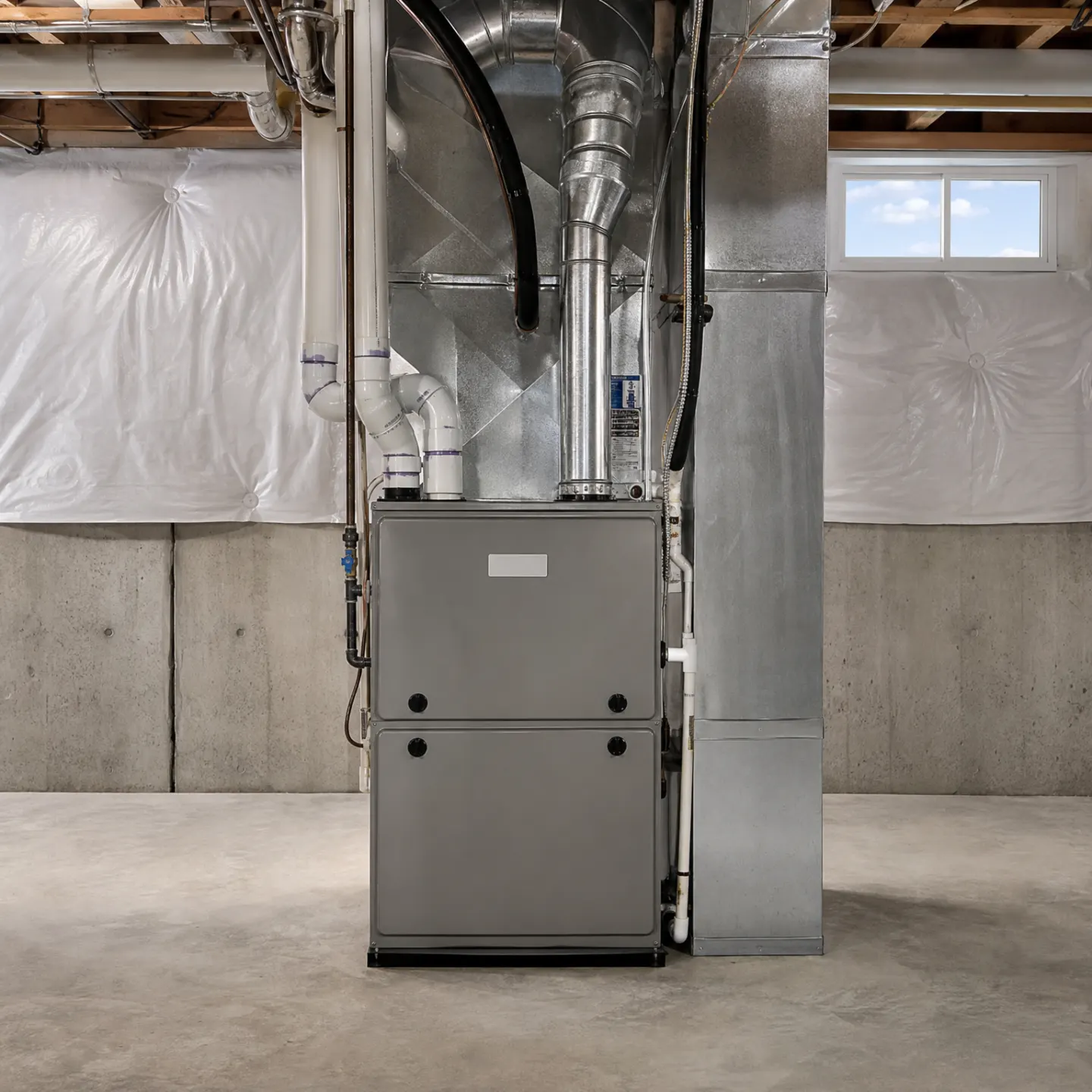
A gray residential gas furnace installed in an unfinished basement, connected to sheet-metal ductwork and PVC pipes.

What a failing furnace sounds and feels like before it quits

A furnace that's starting to fail doesn't usually just quit. It tells you first. Short cycling is one of the clearest signs, where it fires up, runs a few minutes, and shuts off before the house gets warm. That can mean a clogged filter, a cracked heat exchanger tripping a safety switch, or a blower that isn't moving enough air. A furnace that won't stay lit, or clicks and clicks without catching, usually points to the igniter or the flame sensor losing the ability to do its job. Listen for noise too. A screech from the blower motor, a bang when the burners light, a rattle that wasn't there before. None of that is normal, and none of it fixes itself. If the air coming out feels lukewarm instead of hot, or some rooms heat and others don't, something downstream of the burners isn't working right. A yellow flame instead of blue is worth a call the same day, since it can mean the gas isn't burning clean. None of these mean the furnace is done. Most of the time it means one part is failing and the rest of the system is fine, but the part won't fix itself by waiting.

Most failures start with one worn part

A furnace is built around a handful of parts that wear on their own schedule. The igniter weakens after so many cycles. The flame sensor coats with residue until it can't sense the flame anymore. The blower motor bearings wear down and start to whine before they seize. Almost none of these fail out of nowhere. They degrade a little more each heating cycle until one day they cross the line from working to not.

The cause matters more than the symptom

A furnace that won't stay lit could be the igniter, the flame sensor, or a draft problem keeping the flame from catching right. All three look the same to the homeowner and call for different fixes. Replacing a part that wasn't the problem means paying for a repair that doesn't hold. A tech traces the symptom back to the actual part before touching anything, which is what makes the repair stick.

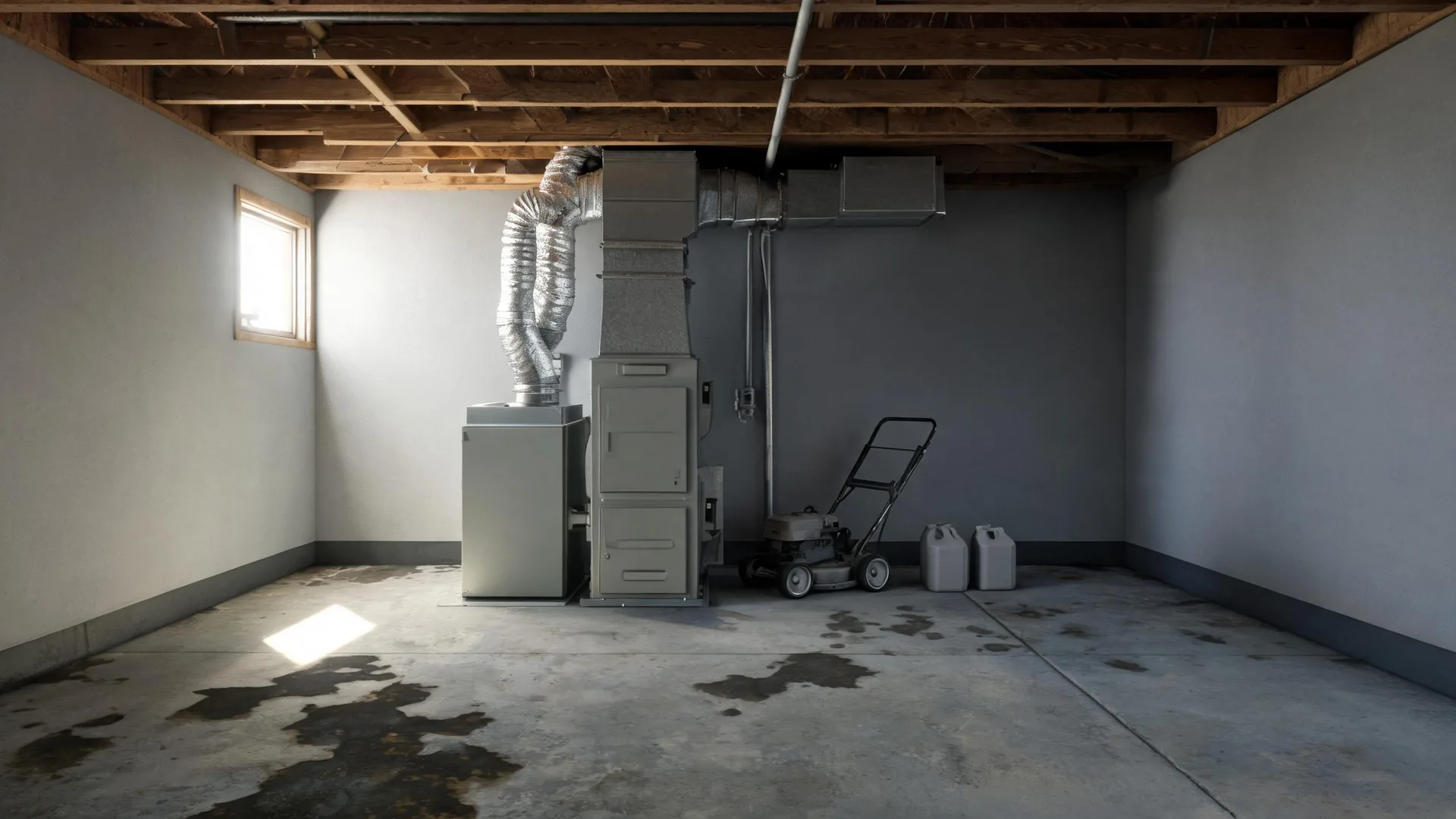
An empty unfinished basement containing a forced-air furnace with overhead ductwork, exposed ceiling joists, and a single hanging light bulb.

A new furnace would cut about $140 a year off heating for a typical Grundy County home.

  • A new high-efficiency furnace$570 a year
  • An older furnace$710 a year

Estimates for a typical Grundy County home, compared with an older unit built to the previous federal minimum, from EIA household energy data, Illinois fuel prices and NOAA climate normals. Your home will differ.

Repair makes sense when one part has failed and the heat exchanger is sound.

Replacement makes sense when the heat exchanger is cracked or the furnace keeps needing parts.

A diagnostic visit starts before any panel comes off. A tech asks what the furnace was doing: short cycling, not lighting, blowing cool air, making noise. Then they watch it run through a full cycle, because some problems only show up at ignition or only after the blower kicks on. The panel comes off to check the igniter or flame sensor directly, test the pressure switch, and look at the flame itself, since the color and shape say a lot about whether it's burning clean. A multimeter checks whether parts that look fine are actually getting the voltage they need. The goal is to find the one part driving the symptom, not to start swapping parts and see what helps. Once that part is identified, the tech can tell you what it takes to fix it and whether anything else is close behind it.