Morris homes skew newer
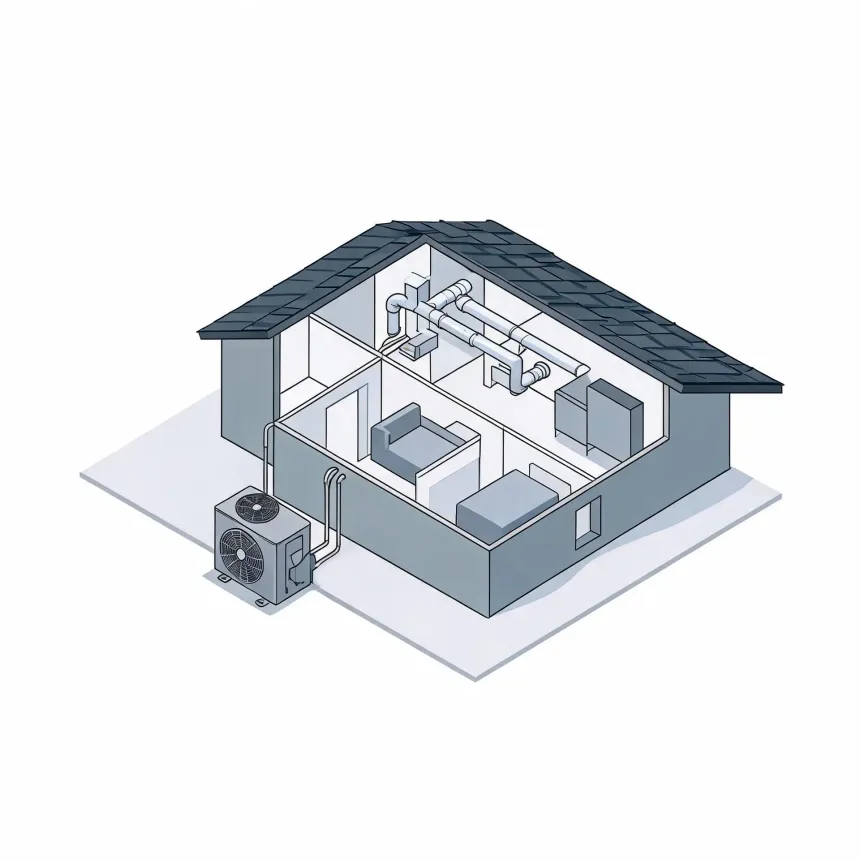
Half the houses in Grundy County were built in 1990 or later. A heat pump that came with one of these homes still has a lot of working life ahead of it.
Takes about a minute. No obligation.
Half the houses in Grundy County were built in 1990 or later. A heat pump that came with one of these homes still has a lot of working life ahead of it.
When the system is this age, a breakdown is usually a single part failing, not the unit wearing out. Worth having someone diagnose it before thinking about replacement.
NOAA nClimDiv, 1991–2020 normals
A heat pump that runs but doesn't warm the house is low on charge or stuck in the wrong mode.
Either one is a service call, not a sign the system is done.




If a repair tech tells you the part they need is still available, that's a good sign, not a dodge. Newer systems use parts that are still in production, so there's usually no waiting on a special order or hunting down a discontinued board. That keeps a repair a repair, instead of turning into a forced replacement because nobody makes the part anymore. If your heat pump came with the house, ask whoever you call whether the fix is something they can get same week. Most of the time, on a system this age, it is.
Your heat pump's biggest job here is holding the house warm through nights averaging 19°F, not fighting extreme cold for months on end. That's a steady, manageable load, not a punishing one. A system working under those conditions tends to wear evenly, so when something breaks, it's one part giving out, not the unit failing all over. Worth getting a tech out to look before you think about anything bigger.
Find a contractor
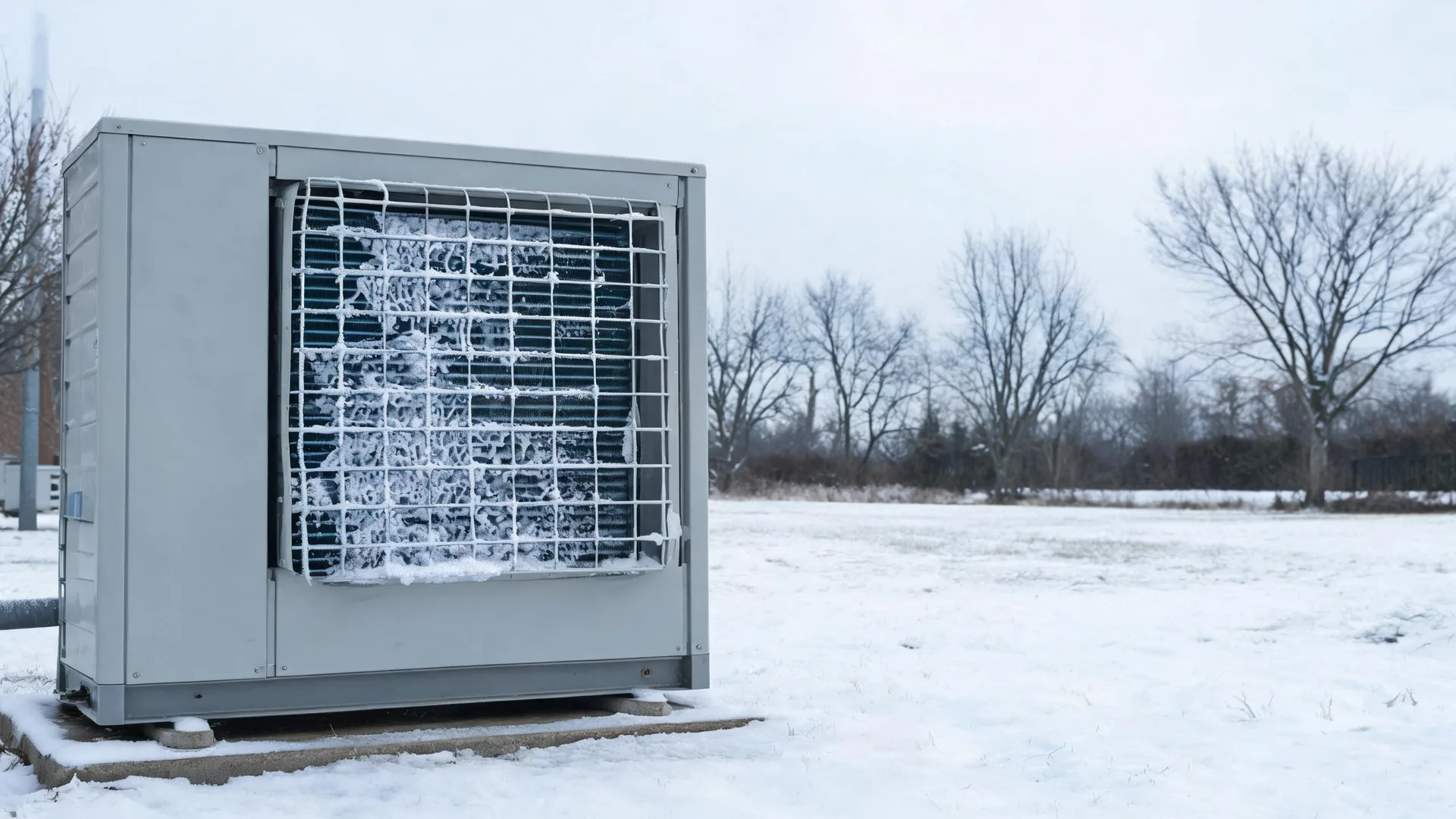
Before anyone comes out, go outside and look at the outdoor unit. If the coil is packed with ice, that's worth noting, especially if it's not cold enough out for frost to make sense. A little frost in defrost cycles is normal. A solid block of ice is not. Check that nothing is blocking the unit, no leaves, no snow piled against it, at least a foot of clearance on all sides. Inside, check the thermostat is set to heat, not cooling or fan only, and that the batteries aren't dead if it uses them. Go to the filter and look at it against a light. If you can't see light through it, swap it. A clogged filter starves the system of airflow and can make a working heat pump feel like it's failing. Check your breaker panel for a tripped breaker before assuming the worst, a heat pump pulls real current and a loose connection can trip it without anything being broken. If the system runs but blows air that feels cool rather than warm, that's normal for a heat pump, it doesn't put out the blast of hot air a furnace does. None of this tells you what's actually wrong inside the unit. It just rules out the things that aren't worth a service call.
A heat pump low on charge or stuck on a bad capacitor won't shut itself off. It keeps cycling, trying to hit the setpoint, and never gets there. Letting it run in that state doesn't give it a chance to recover. It just means the compressor keeps starting up against a fault that's still there.
A heat pump low on refrigerant can frost the outdoor coil. Left alone, that frost doesn't melt off on its own between cycles, it builds. Thick ice blocks airflow across the coil, so the system pulls in less heat each time it runs and has to run longer to make up for it. That's the point to shut it down and get it looked at, not wait and see.
Most heat pump failures trace back to a handful of parts, and they tend to fail the same ways. The reversing valve is the one unique to a heat pump, and when it sticks, the system heats when it should cool or won't switch into defrost at all. Capacitors weaken over time and give out, usually in the compressor or the outdoor fan motor, and a failing capacitor makes a motor hum or struggle to start rather than quit outright. Contactors pit and burn from constant cycling until they stop making contact. The defrost board and its sensor can fail too, and when they do, the outdoor coil ices over because the system never gets the signal to clear it. None of these parts wear out because a heat pump is a bad design. They wear out because they cycle on and off constantly, season after season, and every start and stop is a little bit of wear.
A diagnostic call starts outside at the unit. The tech checks refrigerant pressure first. A system low on charge tells on itself fast, and that rules out or confirms a whole category of problems in a few minutes. From there it moves to electrical, testing the capacitor, checking the contactor for pitting, seeing whether the compressor and outdoor fan are pulling the current they should. If the coil had ice on it, that gets looked at closely. Ice points toward either a charge problem or a defrost board that isn't doing its job. The reversing valve gets tested by running the system in both modes, because a valve that sticks only shows itself when you ask it to switch. Most of this is done with gauges and a multimeter, not guesswork, so the tech usually knows which part failed before anything gets opened up or replaced.