




A row of dark-clad gabled houses with gray shingle roofs behind trimmed green hedges, mown lawn, and leafy trees under an overcast sky.

Heat Pump Installation in Morris, IL

Tell us about the job

Takes about a minute. No obligation.

Step 1 of 3: Equipment

Illinois homes paid 15.87 cents per kilowatthour in 2024. That's above the national average, and a heat pump moving heat instead of burning gas to make it will run on electricity for every degree of heating it does. The efficiency of the unit you install decides how much of that rate you feel on your bill all winter. A heat pump with a high HSPF2 rating moves more heat for the same kilowatthour than a lower-rated one, and at this price per kilowatthour, that difference carries more weight here than it would somewhere with cheaper power. Worth asking any contractor you talk to what HSPF2 rating they're quoting, not just the SEER2 number for cooling.

8 months
October through May, your system heats
3 months
June through August, it cools
19°F
the average winter night it heats against
83°F
the average summer afternoon it cools against
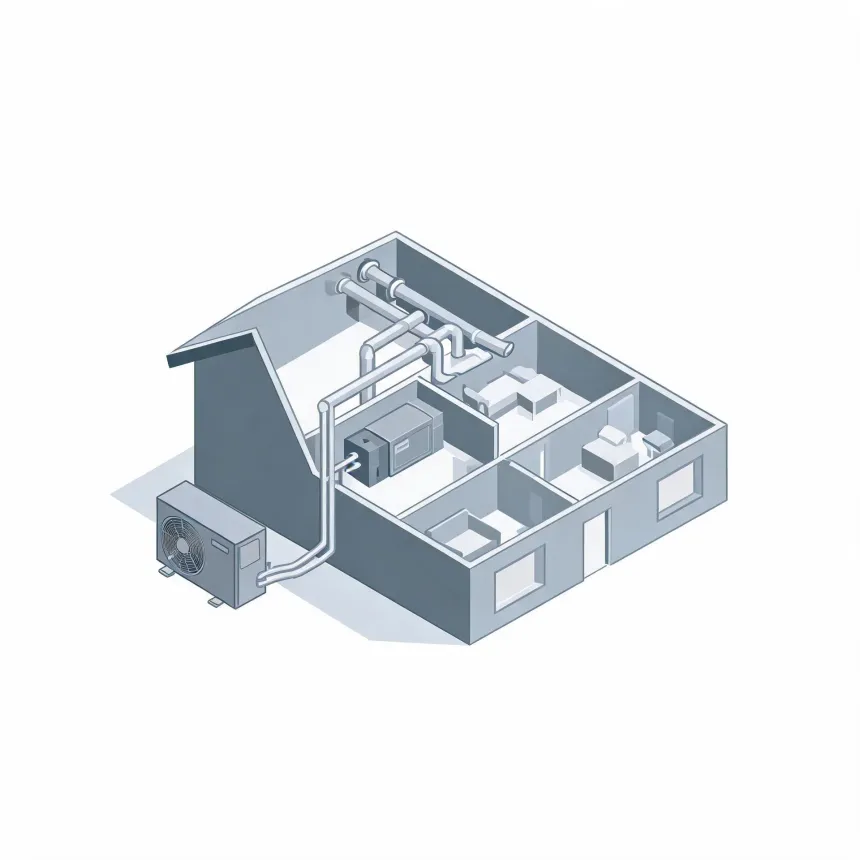
Isometric grayscale illustration of a cutaway house showing interior rooms, ducted air handler and duct runs, connected by pipes to an outdoor condenser unit beside the building.
Your system heats October through May and cools June through August.

NOAA nClimDiv, 1991–2020 normals

Winter nights here average 19°F, and heating carries the bigger load all season.

A heat pump sized for Grundy County winters will hold up fine without reaching for the highest efficiency model on the lot.

Gas heats 77.4% of homes in Grundy County

77.4% of homes heat with gas
54 damaging wind events from 2015 to 2024
Winter nights average 19°F

Grundy County falls in climate zone 5A, a cool zone where heating costs more to deliver than cooling does. Any split-system heat pump installed here since January 2023 has to meet 14.3 SEER2 for cooling and 7.5 HSPF2 for heating at minimum. Those are federal floors, not local ones, so they apply the same whether you're in Morris or anywhere else in the country. A contractor can install above that floor, but not below it. If you install before the end of the year, a federal tax credit is available on qualifying heat pumps, worth checking against what you're quoted.

Have it in before October

Heat carries the bigger load here, running October through May. September is the last quiet month to get a heat pump installed and set up before that load hits. Do it now and a contractor can take the time to size it right and set it up properly, instead of working around a cold snap.

Find a contractor
A man in a cap, dark shirt and tan pants carries a worn canvas tool bag up concrete steps toward a dark blue front door with a sidelight window and a large planter beside it.
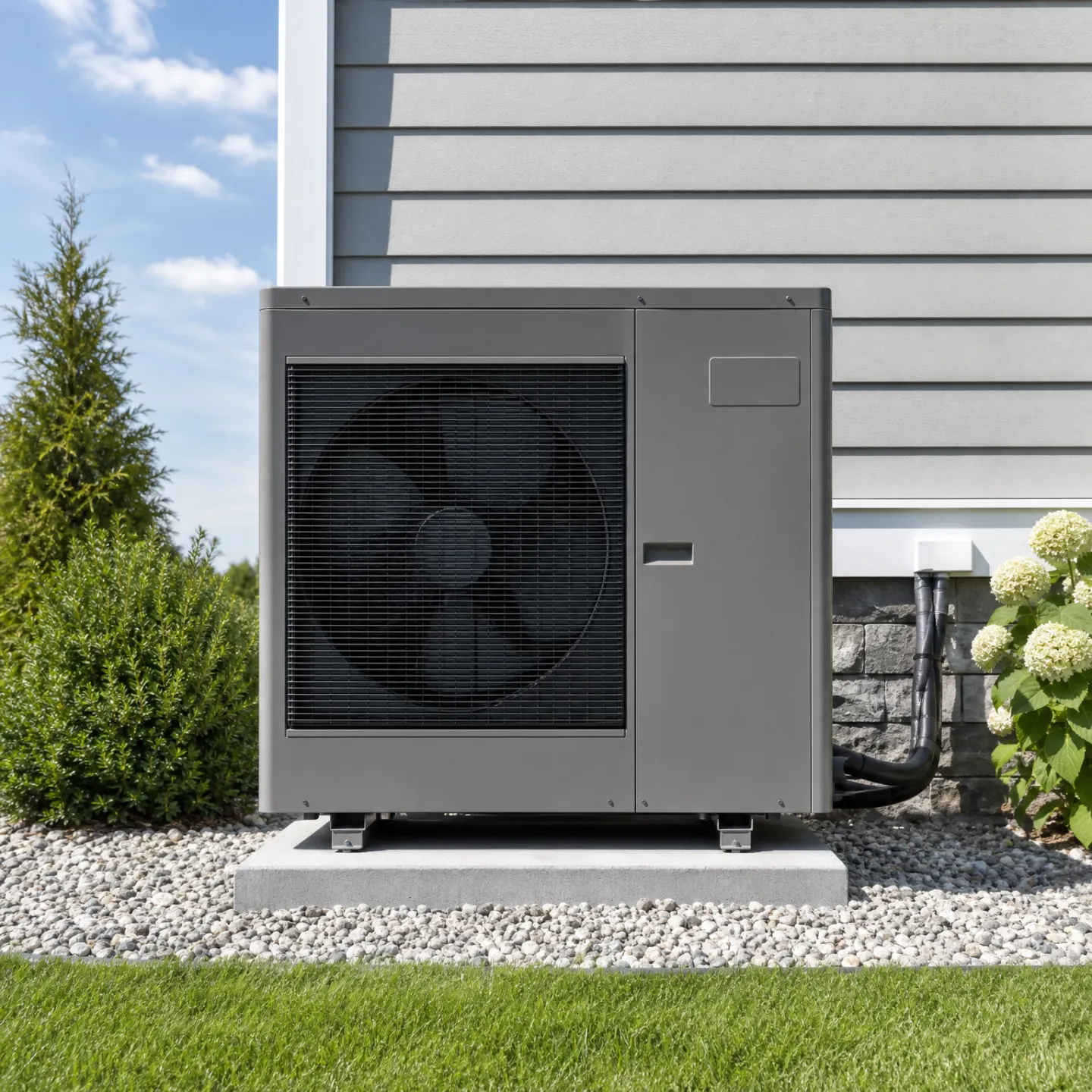
A gray air-source heat pump mounted on a concrete pad next to a house with gray vinyl siding, surrounded by gravel and flanked by green shrubs and white hydrangea flowers.

A steady load, not a hard one

Grundy County sees damaging wind 54 times a decade, but wind load doesn't run through the heat pump the way heating load does. What wears a heat pump here is hours of operation against that 19°F overnight average, and that's a known, steady load, not a hard one compared to what these systems handle in colder states. Pick a unit built to hold up through a normal winter here and let the contractor size it to the house. The top-tier model on the lot earns its keep where winters are harder than this.

The old equipment gets hauled away

Whatever is being replaced, furnace, air conditioner or existing heat pump, comes out as part of the install. The refrigerant in an old air conditioner or heat pump has to be recovered before the unit is cut loose, not vented, so a licensed contractor handles that step as a matter of course. The old unit then leaves with the crew. You are not left to deal with disposal.
The ductwork and thermostat usually stay

A heat pump swap typically works with the ducts already in the house, so there is no tearing out walls or floors to run new supply lines. The thermostat often gets replaced too, since a heat pump needs one built to call for heat and cooling from the same unit and to manage a backup heat source if one is installed alongside it. Ask whether your existing thermostat is compatible or whether a new one is part of the job.

What drives the price is mostly what has to change to make the new system work, not the unit itself. A straight swap costs less than a job where the panel needs more capacity for a backup heat strip, or the line set has to be rerun because the old one doesn't match the new unit. Ductwork condition matters too. If the existing runs are too small or leaky for the airflow a heat pump needs, that gets fixed before the unit goes in, not after. Sizing plays a part as well. A unit sized correctly for the house costs less than an oversized one, and getting that right takes a load calculation, not a guess based on the old equipment. Higher efficiency ratings carry a higher price on the unit itself, and that's a separate choice from what the installation work requires. Ask any contractor to walk through what's driving their number, the equipment or the labor, so you know what you're actually paying for.

Installation day starts before the crew touches anything, with the outdoor unit and air handler or coil already matched and sitting on the truck. The old equipment comes out first, and if refrigerant needs recovering from it, that happens before anything gets disconnected for good. Setting the new outdoor unit means a level pad and clearance on all sides so air can move through it, since a heat pump pulls heat from outside air even in winter and needs room to do that. Line set gets run or reused, connections get brazed, then the whole system gets pressure tested before any refrigerant goes in. That pressure test matters more here than on a straight air conditioner, because a heat pump runs refrigerant both directions and a leak shows up as weak heat, not just weak cooling. Once everything holds pressure, the system gets charged to the exact weight the manufacturer specs, not just until it feels cold, and the contractor checks airflow and the thermostat setup before calling the job done.