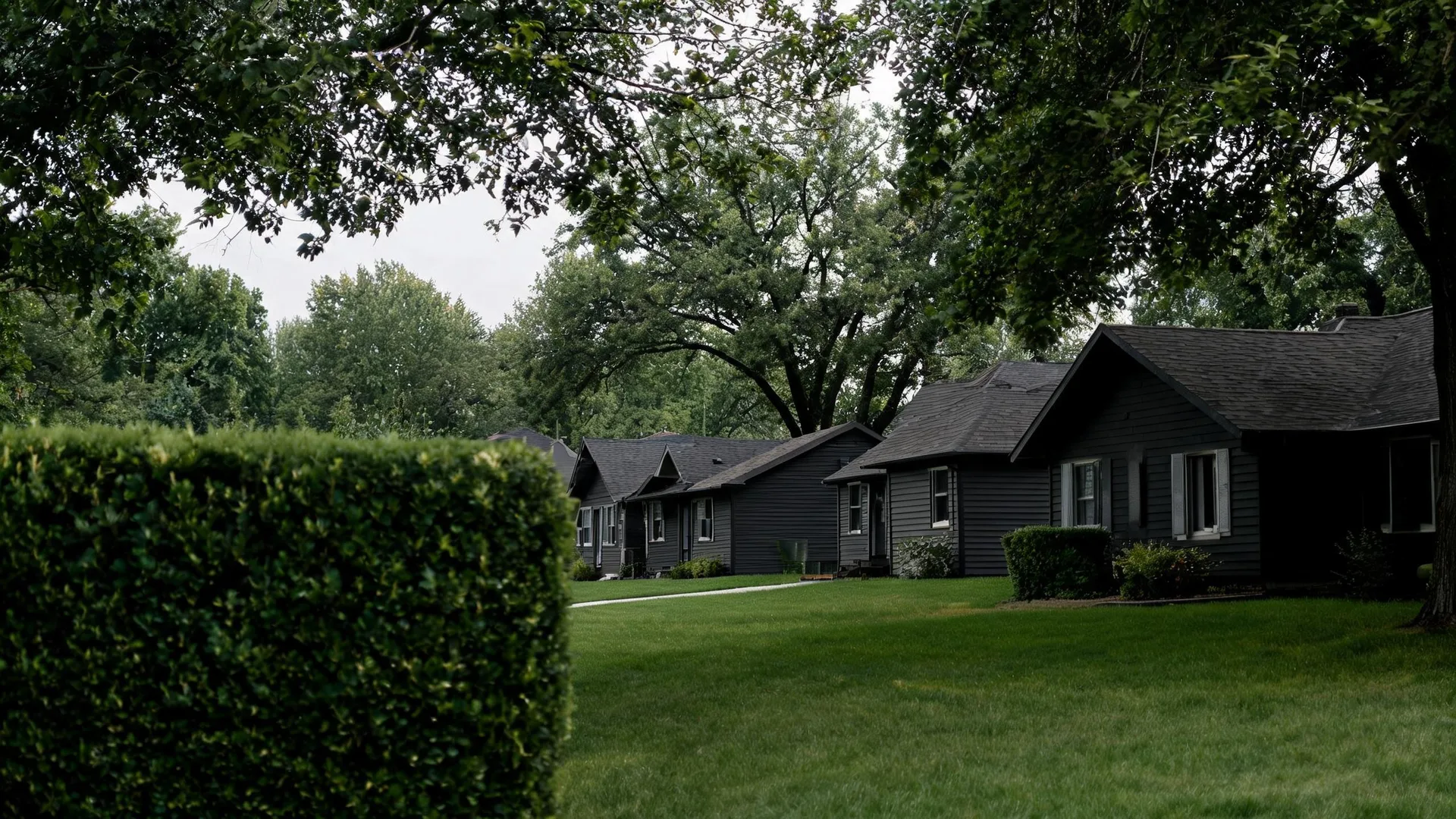




A row of dark-painted single-story cottages with gabled shingle roofs behind a mowed lawn, a trimmed hedge in the left foreground and large leafy trees overhead under an overcast sky.

Furnace Installation in Pontiac, IL

Tell us about the job

Takes about a minute. No obligation.

Step 1 of 3: Equipment

Half the homes in Livingston County were built in 1961 or earlier. A furnace going into a house that age is working with duct runs and a layout it didn't design. The original ductwork was sized for the furnace that came with the house, not necessarily the one going in now. A contractor sizing a new furnace has to account for that, not just swap in something with the same output as the old one. Get the sizing wrong and the new system either short cycles or can't keep up, no matter how new it is.

8 months
October through May, your furnace is on duty
19°F
the average winter night it heats against
68%
of homes here heat with gas, so most furnaces here burn gas
80% AFUE
the federal minimum any new unit must meet
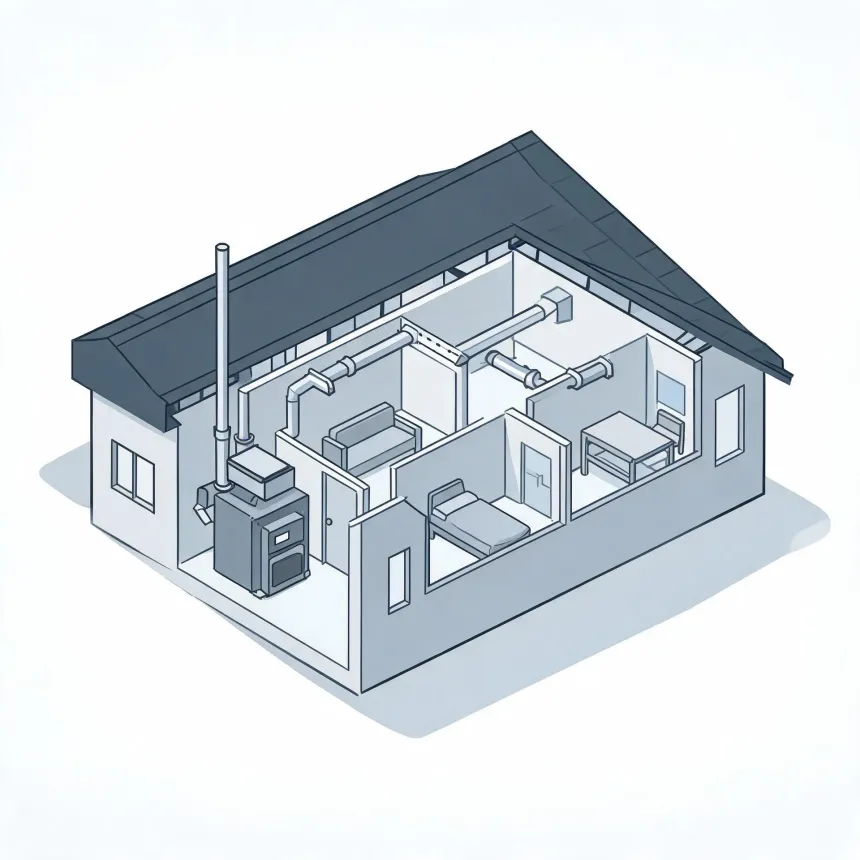
Isometric cutaway illustration of a single-story house showing interior rooms with furniture, overhead ducting, a flue pipe, and a furnace unit against an interior wall.
Your furnace works hardest from November through March.

NOAA nClimDiv, 1991–2020 normals

A furnace in Pontiac runs eight months a year, October through May.

That's more than half the year carrying the load, so this install has to be sized right, not just priced right.

Eight months of heat is a long time to find out it's failing

Heat runs October through May
Climate zone 5A
Winter nights average 19°F
Gas Heats This County68.4 percent of homes in Livingston County run on gas, more than any other fuel

Livingston County falls under zone 5A in the 2021 energy code, a cool, humid climate where the furnace carries more of the load than the air conditioner does. That rating sets a floor on what can legally go into a new install. Any furnace built from November 19, 2015 on has to turn at least 80 percent of the gas it burns into heat. That's the baseline, not a mark of anything special. A federal tax credit is available for units that beat it, so it's worth asking a contractor which models qualify before deciding on one. Standards move in one direction. Furnaces built from December 18, 2028 on will need to hit 95 percent, so a unit installed now is being sized against today's floor, not tomorrow's.

Eight months of heat is reason enough to get the sizing right now

October through May, the new furnace carries the house. Get the size right before it goes in, and have the contractor check it against the ductwork already there, not just the unit coming out.

Find a contractor
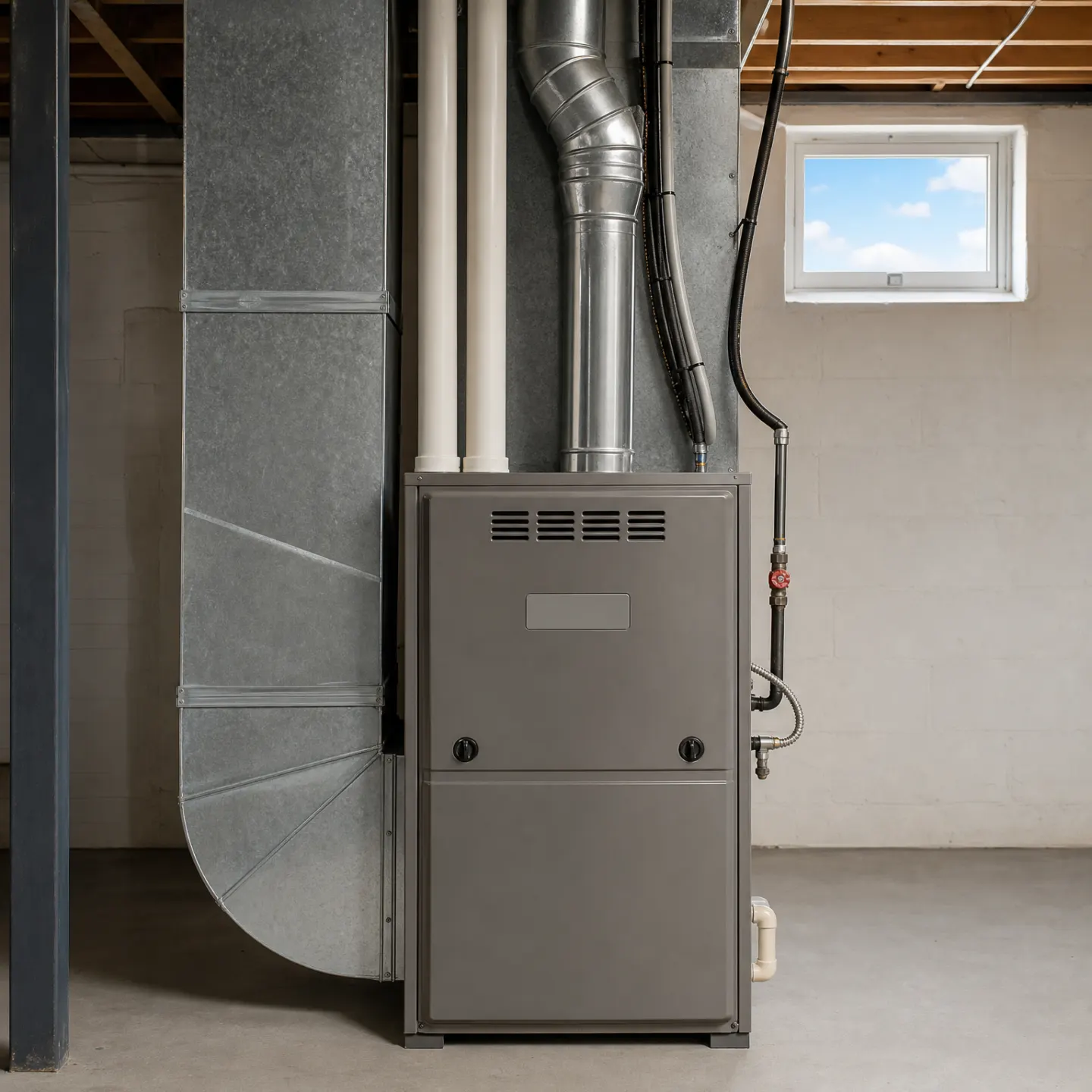
A gray residential gas furnace installed in an unfinished basement, surrounded by ductwork, a metal flue pipe, and a gas supply line.

An Older House Needs a Furnace Sized to Match It

Half the homes here went up in 1961 or earlier. If yours is one of them, a contractor sizing your new furnace needs to look at the ductwork that's actually there now, not assume it matches the house on paper. Ask them to check the duct runs and the layout before they settle on a unit. That's the step that decides whether the furnace heats every room evenly or leaves the far ones running cold.

The Old Furnace Still Has to Come Out

A furnace isn't just unplugged and left. It's tied into the gas line, the vent or flue, the ductwork, and the electrical that runs the blower and controls. Pulling it means shutting off and disconnecting the gas line, detaching the venting, and capping anything that isn't being reused. If the vent was sized and shared for a natural draft furnace, swapping in a higher efficiency unit can change what the old flue is allowed to do, since a furnace venting alone needs different venting than one sharing a flue with a water heater.

What Happens to It After

A furnace is mostly steel and copper, and scrap haulers take them for the metal. Some parts get pulled before that, like the blower motor or control board, if a contractor can reuse them for repairs on other systems. None of that affects the reader directly, but it does mean the old unit doesn't just sit at the curb. A contractor hauling it off as part of the job is routine, and it's worth confirming upfront that removal and disposal are included rather than billed separately.

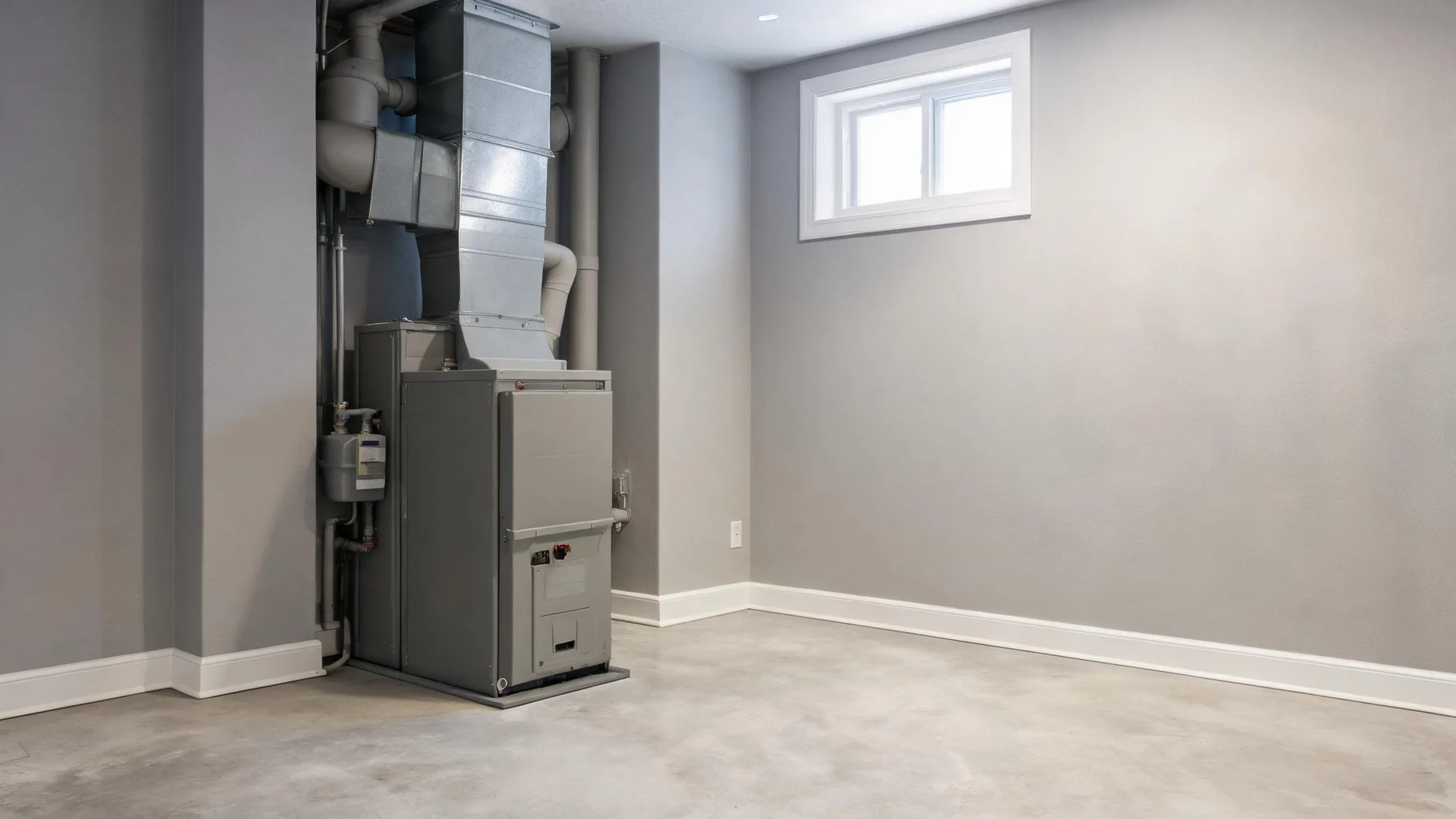
An unfinished basement featuring a grey forced-air furnace with metal ductwork, concrete block walls, exposed wooden joists, and a single hanging bare bulb.

A high-efficiency gas furnace would save about $120 a year to run in Livingston County compared with a gas furnace.

  • A high-efficiency gas furnace$560 a year
  • A gas furnace$680 a year

Estimates for a typical Livingston County home, from EIA household energy data, Illinois fuel prices and NOAA climate normals. Your home will differ.

Installation runs a full day, sometimes two if the venting changes. The old furnace comes out first, then the contractor works through the connections one at a time: gas line, ductwork, venting, wiring to the blower and controls. Setting the new unit means leveling it, sealing the duct connections, and running new venting if the efficiency rating calls for it. After that comes gas pressure, checking the ignition, and making sure the blower is pulling the right amount of air across the heat exchanger. A combustion analyzer gets used to check the flue gases before anyone calls the job finished, since that reading is the only real proof the furnace is burning clean. The thermostat gets wired in and tested last, run through a full cycle to see that it fires, heats, and shuts off the way it should. None of this is quick work, because every connection it touches has to be right before the furnace runs on its own.