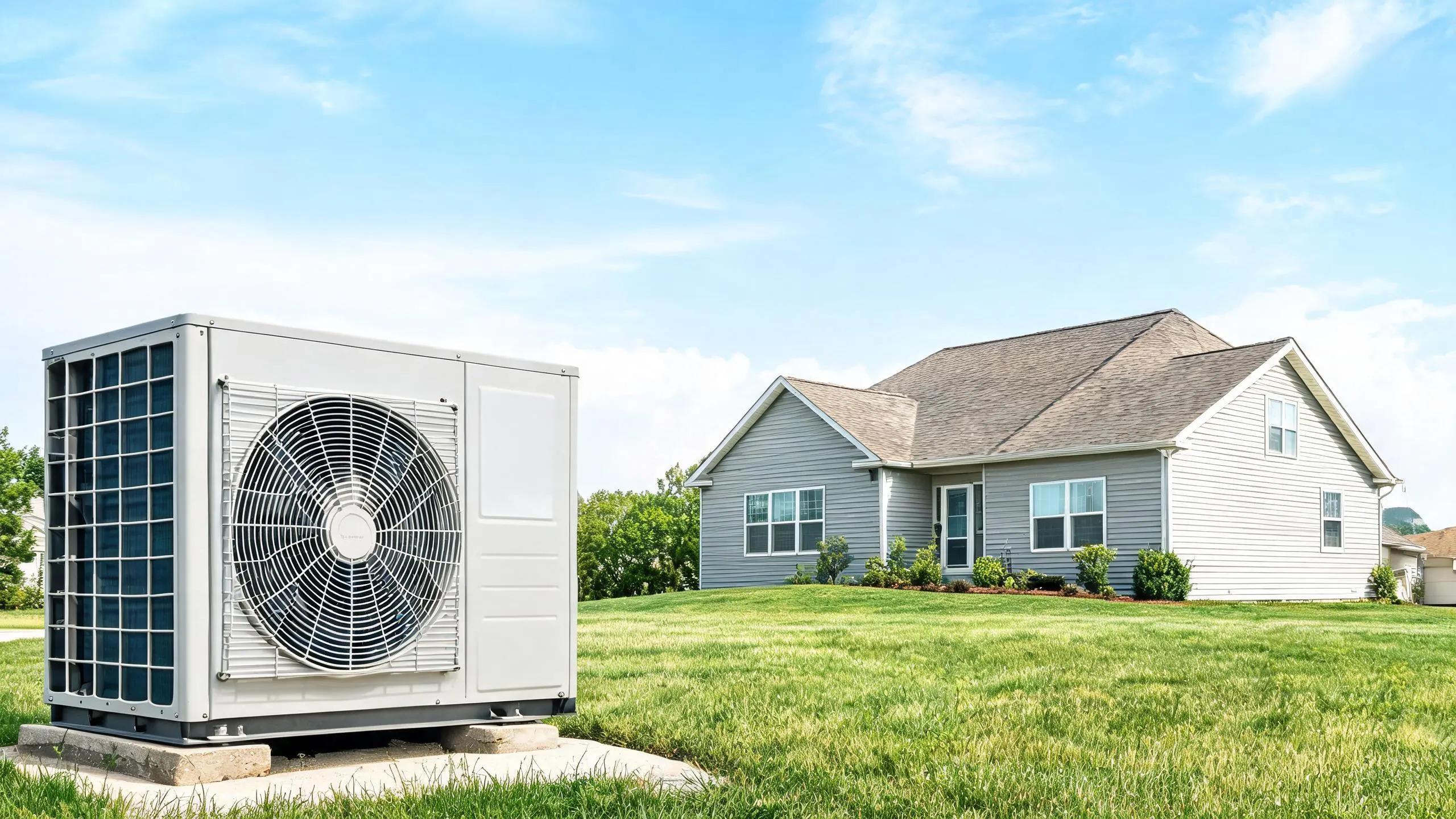




An outdoor HVAC condenser unit on a concrete pad in front of a single-story house with gray siding and a shingle roof.

Heat Pump Installation in Pontiac, IL

Tell us about the job

Takes about a minute. No obligation.

Step 1 of 3: Equipment

Electricity in Livingston County ran 17.98 cents per kilowatt-hour in 2025, higher than most US counties pay. A heat pump runs on electricity alone, so that rate applies to every hour it works. Summer air here sits at a dew point around 64°F across June, July and August, heavy enough that the system has to pull real moisture out along with the heat. The harder it works to do that, the more those cents per kilowatt-hour show up on the bill. Two systems can move the same heat out of a house and still cost different amounts to run, because one does it on less electricity than the other.

8 months
October through May, your system heats
3 months
June through August, it cools
19°F
the average winter night it heats against
83°F
the average summer afternoon it cools against
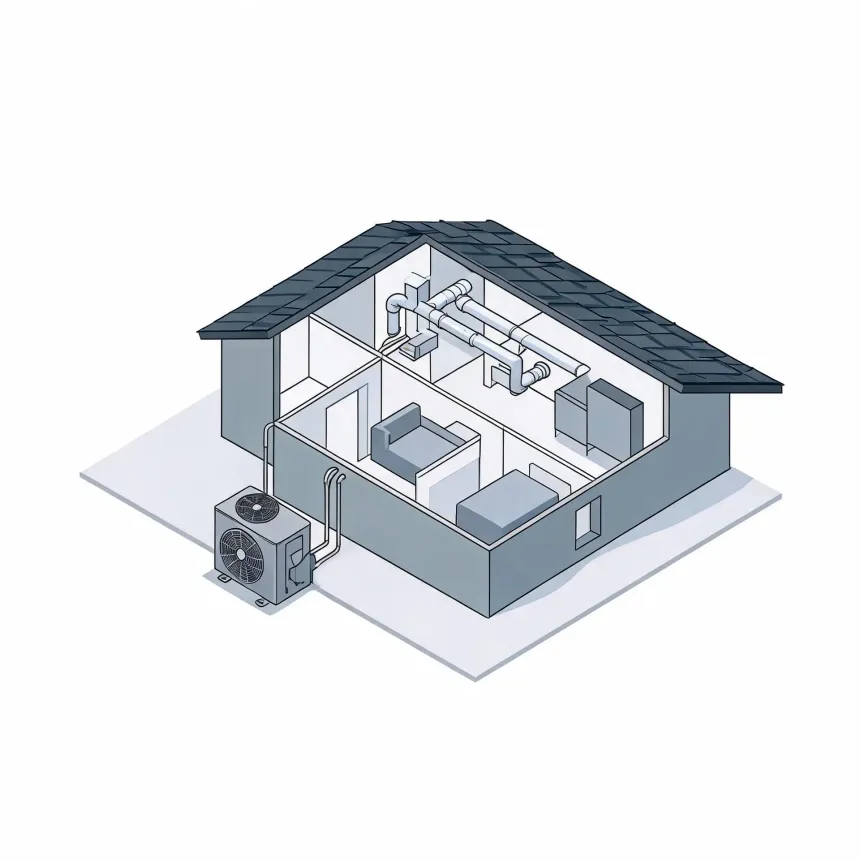
Isometric grey-toned illustration of a cutaway house showing interior rooms, ceiling ductwork and an air handler, connected by lines to an outdoor condenser unit beside the building.
Your system heats October through May and cools June through August.

NOAA nClimDiv, 1991–2020 normals

Half the homes in Livingston County were built in 1961 or earlier.

A heat pump going into a house that old has to match the house, not just the specs on the box.

Installed before October, a heat pump works through winter nights first, not summer afternoons

Cooling runs June through August
Heat runs October through May
62 damaging wind events from 2015 to 2024
Most homes here already heat with gasGas heats 68.4% of homes in Livingston County. A heat pump works alongside that system or replaces it, and that starting point shapes the job.

Livingston County falls in climate zone 5A under the 2021 energy code, a cool zone where heating is the bigger job for the system than cooling. Any split-system heat pump built from 2023 onward has to clear a federal floor before it can be sold at all. It has to deliver at least 7.5 Btu of heat for every watt-hour of electricity it uses over the winter, and remove at least 14.3 Btu of heat for every watt-hour over the summer. Those two numbers are the minimum, not a target. A system sized for zone 5A has to meet that heating side in particular, since winter is where this county asks the most of it.

The rate you pay makes efficiency worth checking before you buy

Electricity here runs higher than most places pay, and a heat pump runs on it alone, so the rating on the unit matters more here than somewhere with cheaper power. That rating is worth comparing across the systems you're looking at before you settle on one, not after it's installed.

Find a contractor
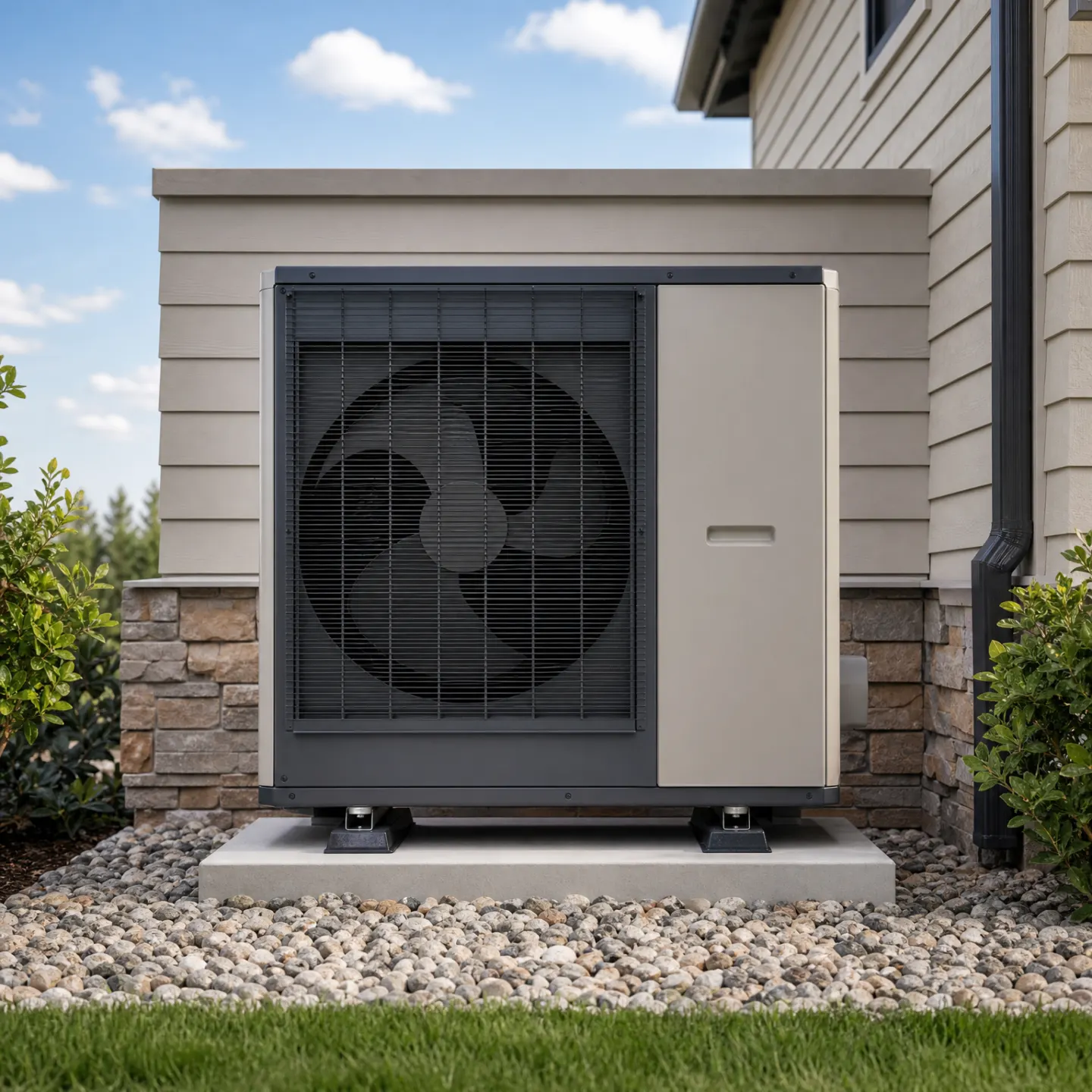
A gray heat pump outdoor unit mounted on a concrete pad next to the stone-accented exterior wall of a house.

An older home needs a system sized to it, not to a chart

Half the homes in this county went up in 1961 or earlier. If yours is one of them, sizing matters more than it would in a newer build. A contractor doing this right will run a load calculation on your actual house rather than going by square footage alone or matching whatever the old system was rated for. That number tells them what size heat pump to put in, and it's worth asking to see it before you agree to a unit.

The rating is two numbers, not one

A heat pump carries a heating rating and a cooling rating, and they measure different seasons. The heating number comes from testing across a range of outdoor temperatures, because a heat pump has to pull warmth from colder air the way a furnace never has to. The cooling number is the one most people recognize from shopping for an air conditioner. A system can be strong on one side and average on the other, so the label is worth reading as two separate claims, not a single grade.
The rating holds up only if the install does

That number is measured on a correctly charged system with the right airflow across the coil. Low refrigerant charge, a duct run that's too restrictive, or a coil that never gets cleaned will all pull real performance below what the label promised, no matter how high the rating was on paper. The rating tells you what the equipment is capable of. Whether the house actually gets that depends on the charge being set right and the airflow matching what the system needs.

Taking out the old system is part of the job, not an afterthought. If a furnace stays in place to back up the heat pump, the contractor has to wire the two so they hand off to each other instead of fighting for control of the thermostat. If the furnace comes out entirely, the gas line serving it needs to be capped off properly, not just shut at the valve. An old condenser gets disconnected from its refrigerant lines and the lines either reused or replaced, depending on their condition and what the new system needs. Old refrigerant has to be recovered into a tank, never vented, because releasing it is against the law. Whatever ductwork already exists gets inspected before the new coil goes in, since a coil sized for the new system can choke on a duct run built for the old one.

Installation day starts with the two outdoor and indoor units going in, but most of the day goes to everything around them. The line set connecting the two gets run, brazed, and pressure tested before any refrigerant goes in, because a joint that leaks slowly will cost performance for years if it's not caught now. The system gets evacuated with a vacuum pump to pull out moisture and air, not just refrigerant, since either one left in the lines ruins how the system transfers heat. Only after that does the refrigerant go in, charged to the exact weight the manufacturer specifies for that line length, not just until the pressure looks right. The thermostat gets wired and configured to match the equipment, including any backup heat strip or furnace it's paired with. Before the crew leaves, the system should run through both a heating and cooling cycle so someone is there to catch a problem while it's still easy to fix.