A illuminated two-story red brick house on a quiet residential street at dusk, flanked by mature trees under a deep blue evening sky.

Heat Pump Repair in Pontiac, IL

Tell us about the job

Takes about a minute. No obligation.

Step 1 of 3: Equipment

Winters here ask a lot of a heat pump

Pontiac winters average 19°F overnight through December, January and February, and heating is the bigger job for a heat pump all season. That's normal load for the equipment, not a sign something's wrong with how it was sized or installed.

So the cause is usually something specific

A heat pump that's struggling in cold weather is more often a failed defrost control, a low refrigerant charge, or a reversing valve stuck in one position. Those are known problems with known fixes, and a contractor can check each one directly instead of guessing.

8 months
October through May, your system heats
3 months
June through August, it cools
19°F
the average winter night it heats against
83°F
the average summer afternoon it cools against
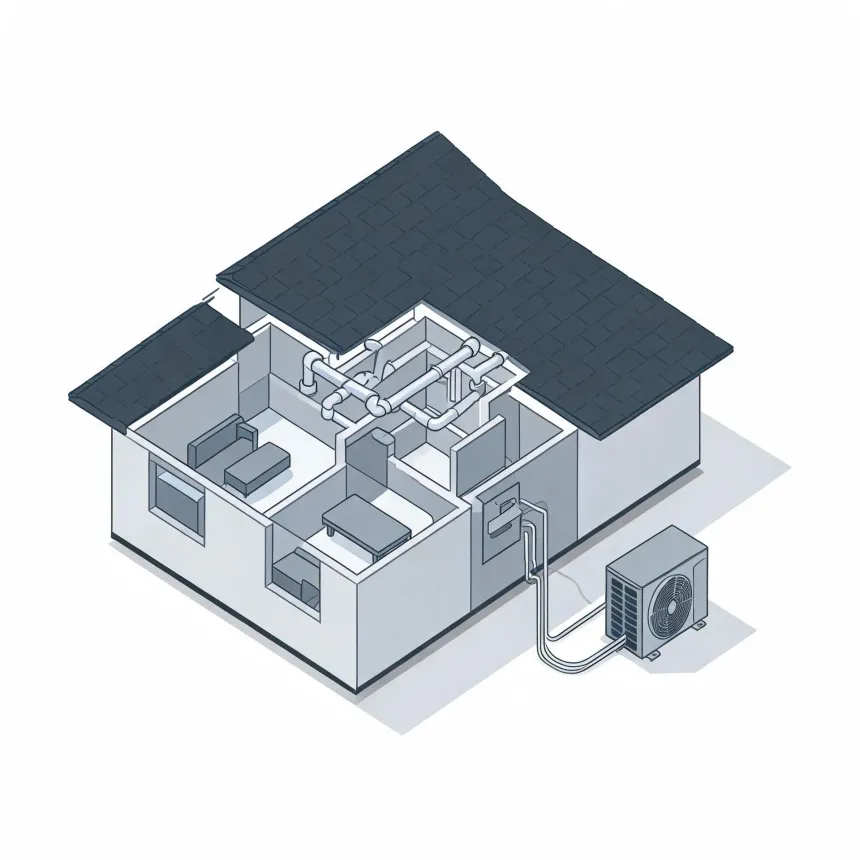
Isometric line illustration of a cutaway house showing interior rooms with furniture, ceiling ductwork under a dark shingled roof, and an outdoor condenser unit connected by lines on the right.
Your system heats October through May and cools June through August.

NOAA nClimDiv, 1991–2020 normals

Heat pumps in Livingston County start the heating load in October, with September the month to catch a weak part before it has to work.

A heat pump that made it through last winter on a failing defrost control or a low charge will usually show it again in the first cold snap.

At 15.87 cents a kWh, a heat pump running wrong runs up your bill fast

Power costs 15.87 cents a kWh statewide
62 damaging wind events from 2015 to 2024
20 hail events from 2015 to 2024
Pontiac homes are old enough to matterHalf the homes in Livingston County were built in 1961 or earlier.

A heat pump with a stuck reversing valve or a low charge does not just heat poorly, it runs longer to make up for it, and every extra hour shows up on the meter at 15.87 cents a kWh. That cost keeps adding up for as long as the real problem goes unfixed. Catching it now, before the coldest stretch of the season hits, means a contractor is chasing one bad part instead of a system that's been straining for months.

Know what you're fixing before you fix it

If your heat pump came with an older Pontiac house, repair may not be the real question. Before paying for a big fix, ask the contractor how much life the system has left, so the money goes where it counts.

Find a contractor
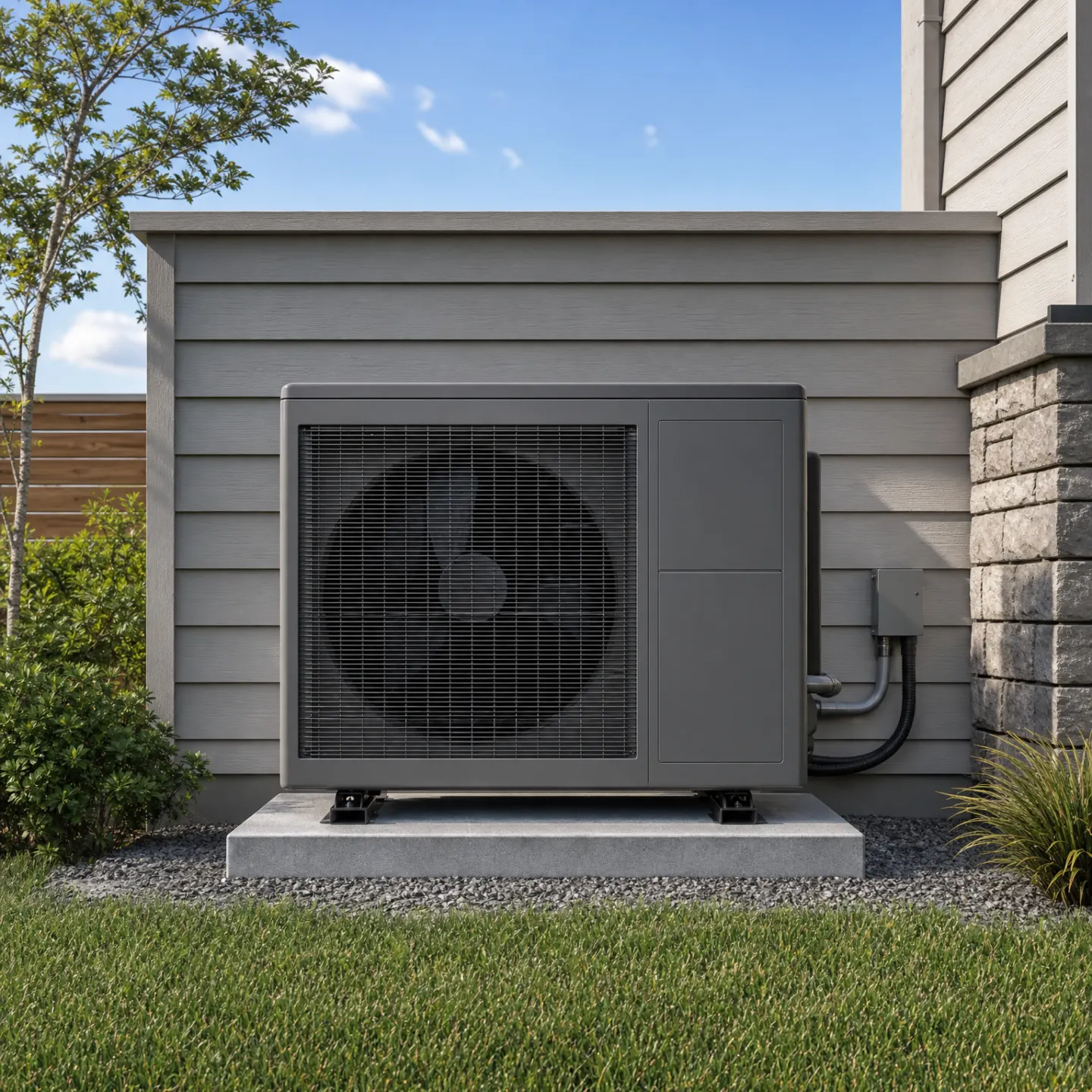
A gray heat pump outdoor unit mounted on a concrete pad next to a residential house with lap siding and stone accents.

What a failing heat pump sounds and feels like before it quits

A heat pump that's working right switches between heating and cooling on its own and holds the temperature you set. When something's wrong, you'll hear it before you can name it. Short cycling, where the unit kicks on and off every few minutes instead of running a steady stretch, points to a bad sensor or a unit that's too small or too large for the job. Air blowing that doesn't feel warm enough isn't always a problem, heat pumps run cooler than a furnace by design, but if a room won't come up to temperature at all, something's blocking the heat from getting where it needs to go. Ice building up on the outdoor unit and not clearing during the defrost cycle means that cycle isn't working. A reversing valve that's stuck will leave you heating when you want cooling, or the other way around. Listen for anything new, a hum that wasn't there before, a clicking that keeps going instead of stopping once the unit starts. None of these fix themselves, and running the system while they're happening usually makes the eventual repair bigger.

Check the thermostat settings first

Make sure it's set to heat, not auto, and the temperature you want is actually higher than the room. Replace the batteries if it's battery powered. A dead or misprogrammed thermostat looks exactly like a failed heat pump from where you're standing.

Look at the outdoor unit

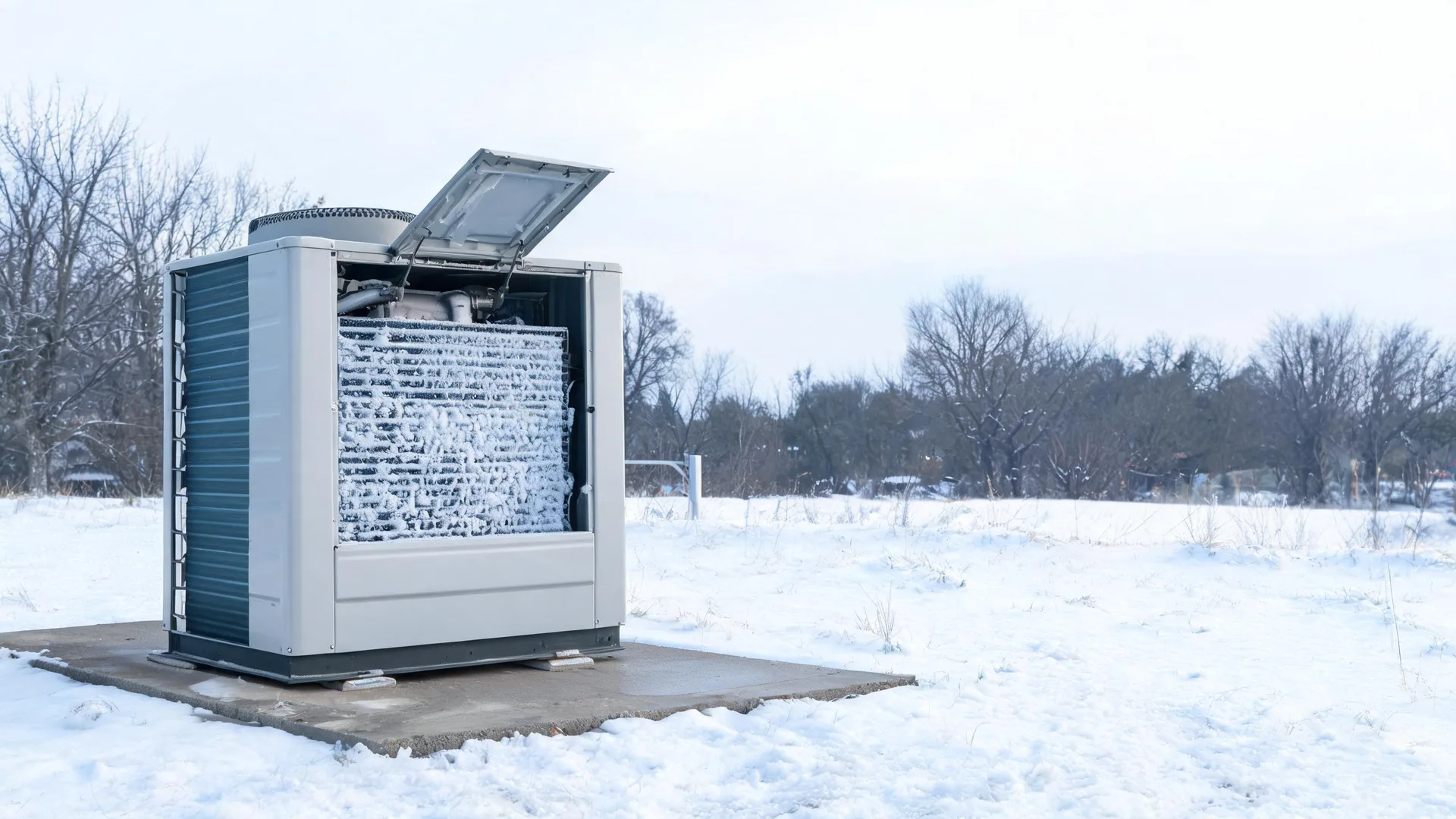
Clear away anything piled against it, leaves, snow, a cover someone left on. The outdoor unit needs open air on all sides to pull heat from outside. Some frost on it during a defrost cycle is normal. A thick coat of ice that never clears is not something you can fix yourself, but it's worth knowing before the contractor arrives.

A heat pump that's low on charge or stuck mid-defrost doesn't fail outright. It just works harder to hit the same temperature, and that extra strain lands on the compressor. The compressor is the part that does the real work in the system, and it's not something swapped out quickly. Run it for weeks against a bad reversing valve and it can end up pumping refrigerant against itself, which wears it in a way a failed defrost control never would on its own. Ice that doesn't clear adds its own weight and stress on the outdoor coil and fan. What starts as one bad part left alone can end up taking the compressor down with it.

A repair is worth making when the part that failed is one part and the rest of the system is still sound. A reversing valve, a defrost control, a low charge from a slow leak, these get fixed on their own without touching anything else. The compressor changes that math. Once it has worn from running against a stuck valve or a long refrigerant shortage, the question is not one part anymore, it is whether the system still has enough good years left to be worth putting money into. That is tied to how long the unit has been in service, which a contractor can walk through with you alongside what the compressor is actually doing right now.