A quiet residential street at dusk lined with illuminated two-story brick houses and mature trees.

Heat Pump Repair in Naperville, IL

Tell us about the job

Takes about a minute. No obligation.

Step 1 of 3: Equipment

Storms come through often

DuPage County logged 275 severe weather events between 2015 and 2024, including 180 rounds of damaging wind, 58 hail events and 21 tornadoes. A heat pump's outdoor unit sits outside through all of it, with coil fins and fan blades exposed to whatever comes down.

The power doesn't always hold

16% of Illinois households went at least a full day without power in 2024. A heat pump needs electricity to run at all, so when the power drops, heat and hot water drop with it until it comes back.

8 months
October through May, your system heats
3 months
June through August, it cools
19°F
the average winter night it heats against
82°F
the average summer afternoon it cools against
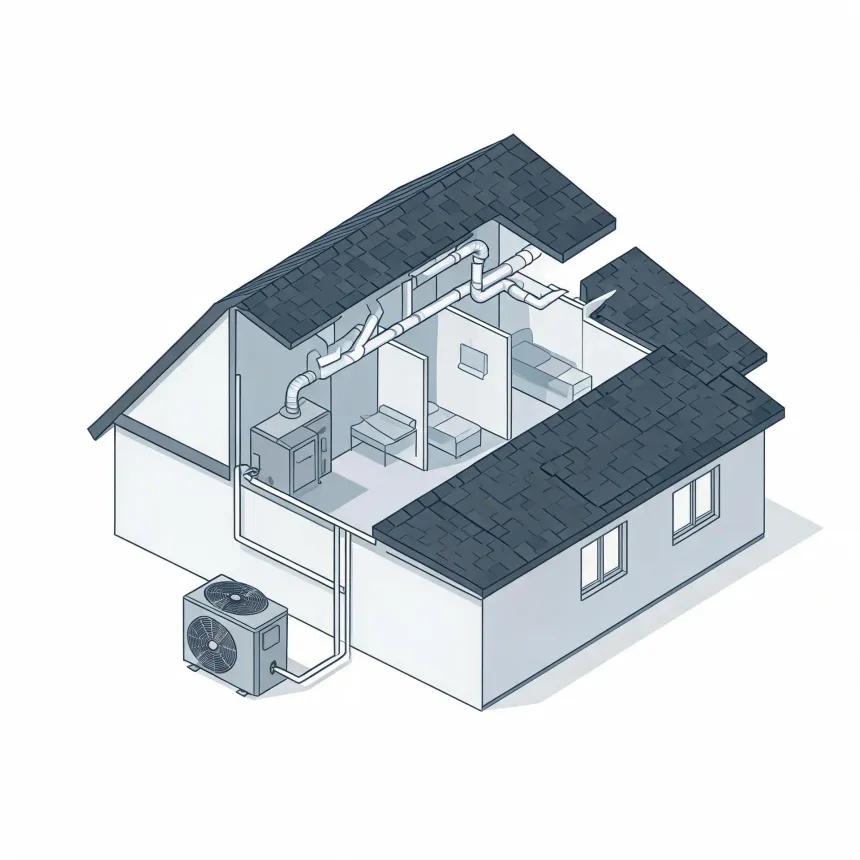
Isometric line illustration of a cutaway single-story house showing interior ductwork, an indoor air handler unit, and an outdoor condenser connected by refrigerant lines, with a dark shingled roof.
Your system heats October through May and cools June through August.

NOAA nClimDiv, 1991–2020 normals

September is the month to get a heat pump checked, before heat runs in October.

A weak part usually fails in the first cold snap, not before it.

Power here runs 17.56 cents a kilowatt-hour, and a struggling heat pump burns through more of it every month it goes unfixed

Power here costs 17.56 cents per kilowatt-hour
Climate zone 5A
Cooling runs June through August
Your Heat Pump Takes a Beating Out ThereDuPage County saw 58 hail events and 180 rounds of damaging wind between 2015 and 2024

A heat pump that's short cycling, running constantly, or blowing air that's not quite warm enough is pulling more power than it should, every day it runs that way. In Naperville that adds up faster than it would somewhere with cheaper electricity. Waiting until the system fails completely usually means more time spent running inefficiently first. If something seems off, a technician can check refrigerant charge, the compressor and the outdoor coil before the problem gets worse or the whole unit stops. Getting it looked at now costs less than paying the higher bill all month and still needing the same repair.

Had a storm come through? Get the outdoor unit checked, even if it still runs.

If the outdoor unit took a hit from hail or wind and still seems to run fine, get it checked anyway. Bent fins and a dented cabinet don't always show up as a problem right away. A tech can look at the coil and fan blades now, before a small dent turns into a refrigerant leak or a seized motor.

Find a contractor
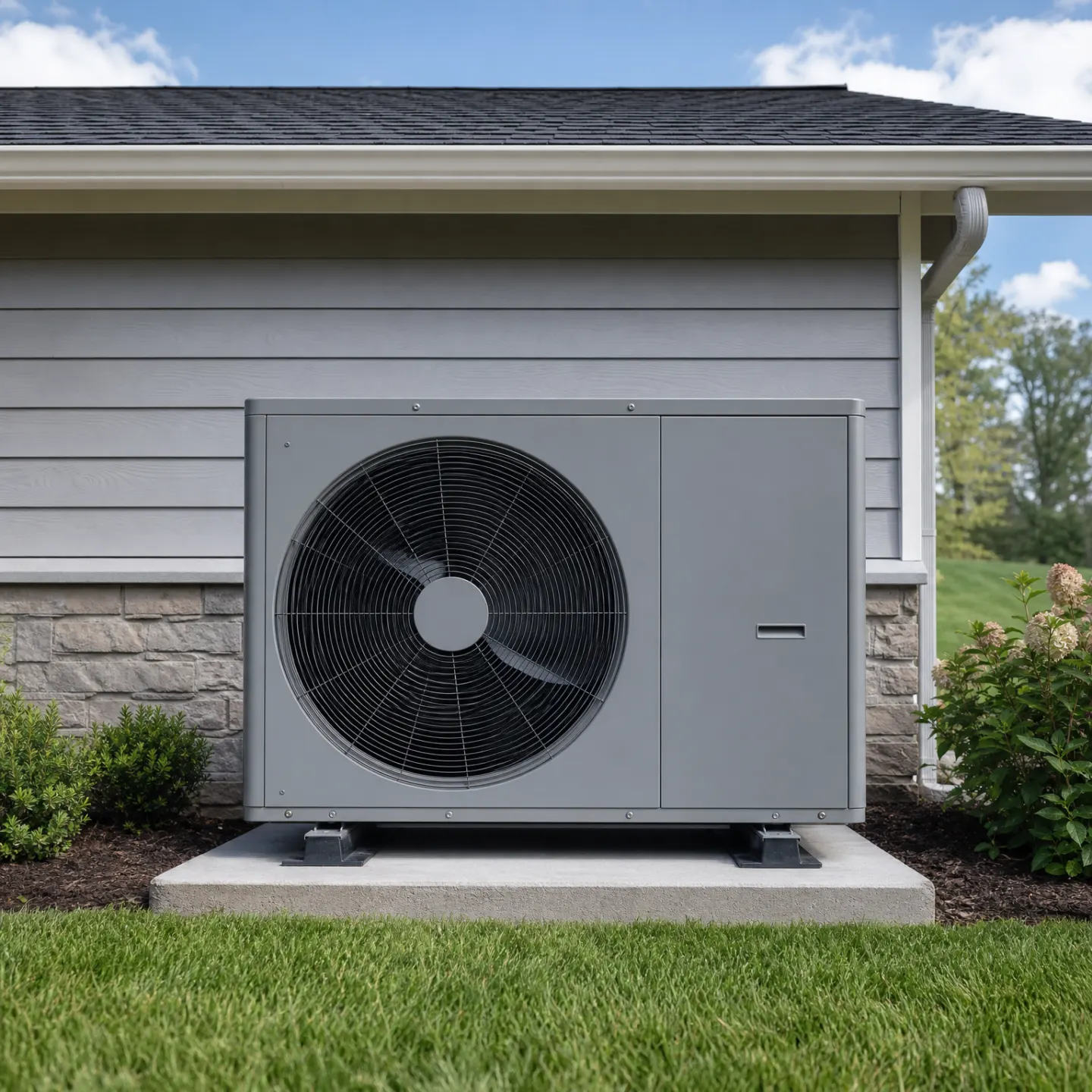
A gray outdoor HVAC unit mounted on a concrete pad beside a house with gray lap siding and a stone foundation.

This Unit Has Been Out There a While

This section already covered the storms this unit sits through. A heat pump that's taken hits like that for a few years is more likely to be the cause when something's off, not a fluke. If it's short cycling, icing up, or not holding temperature, have a tech check the outdoor coil and fan blades before guessing at the thermostat or the ductwork. Diagnosing it right the first time means the fix actually holds.

The signs are easy to miss at first

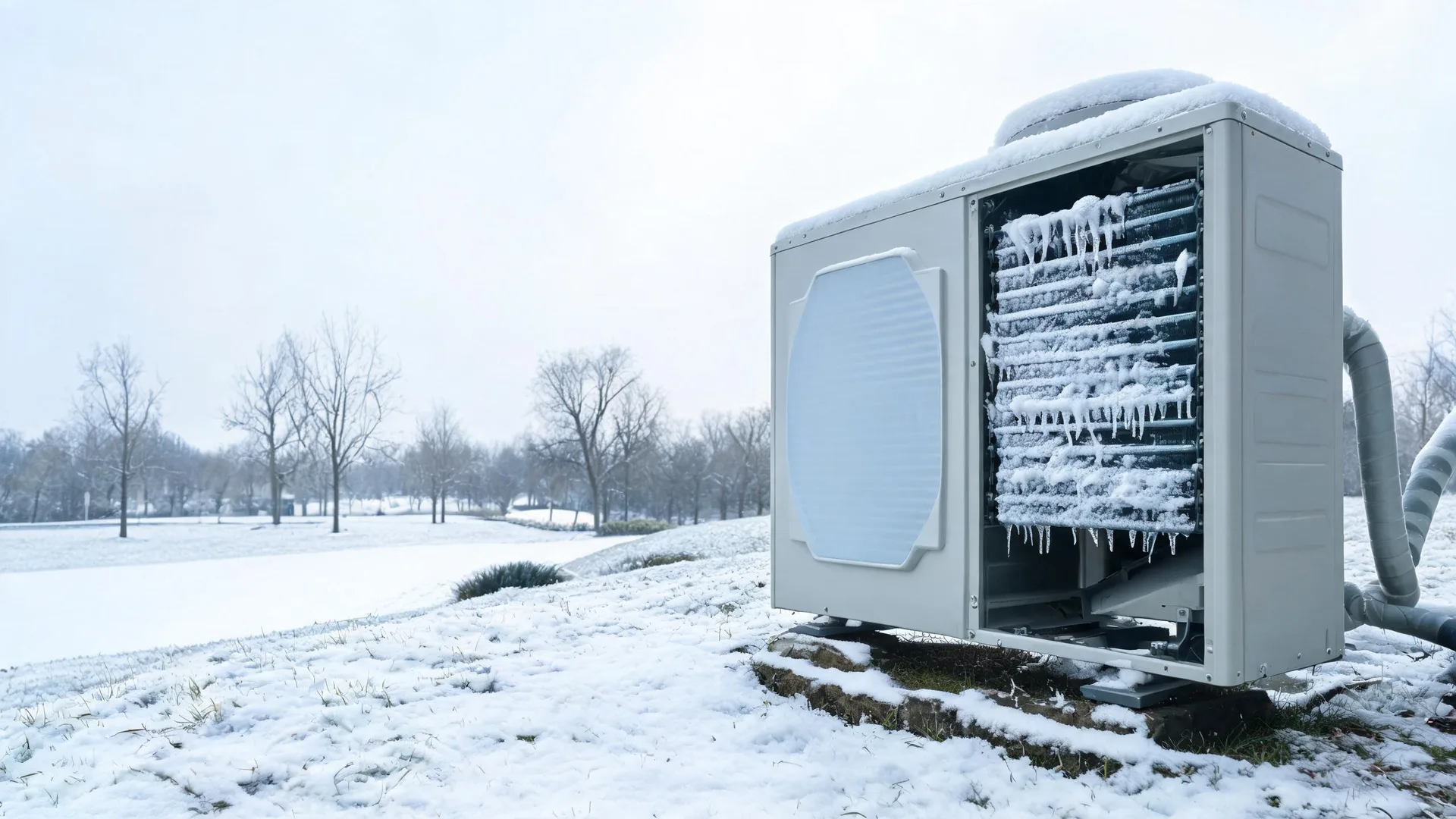
A heat pump in trouble doesn't always stop outright. It runs longer than it used to, or the air coming out feels lukewarm instead of warm. It might cycle on and off in short bursts, or frost builds up on the outdoor coil and doesn't clear. Any of these means something inside, the reversing valve, the compressor, a refrigerant line, isn't doing its job right.

Catching it early is the whole job

A tech can usually trace a soft symptom like weak airflow or a long run time back to one part before it takes anything else down with it. Wait past that point and a failing compressor can ruin itself, or a slow refrigerant leak can starve the system until it won't run at all. The earlier the sound or the feel of it gets checked, the fewer parts end up needing replacement.

Most heat pump failures start with something small that gets ignored. A capacitor weakens and the compressor or fan motor struggles to start, drawing more current each time until it trips out or burns up. A contactor pits and sticks from years of cycling on and off, and the outdoor unit either won't shut off or won't start at all. Refrigerant leaks out slowly through a worn fitting or a rubbed line, and the system keeps running while it loses capacity, until the compressor is working harder on less refrigerant than it needs. Dirty coils make the whole system work against itself, since a coil caked with dirt or choked with ice can't move heat the way it's supposed to. A reversing valve can also stick, and a heat pump stuck in one mode will blow cold air in winter or warm air in summer, which is as plain a sign of trouble as there is.

A diagnostic visit starts with the thermostat and works outward. A tech checks what the system is set to do against what it's actually doing, then moves to the outdoor unit to see if the compressor and fan are running the way they should. Gauges go on the refrigerant lines to check the charge, since too little or too much both keep the system from moving heat properly. Electrical readings on the capacitor and contactor catch the parts that are weakening but haven't failed outright yet. The coils get checked for dirt or ice, and the reversing valve gets tested to make sure it's switching between heating and cooling like it's supposed to. By the end, the tech should be able to point to the one part causing the symptom, not just the symptom itself.