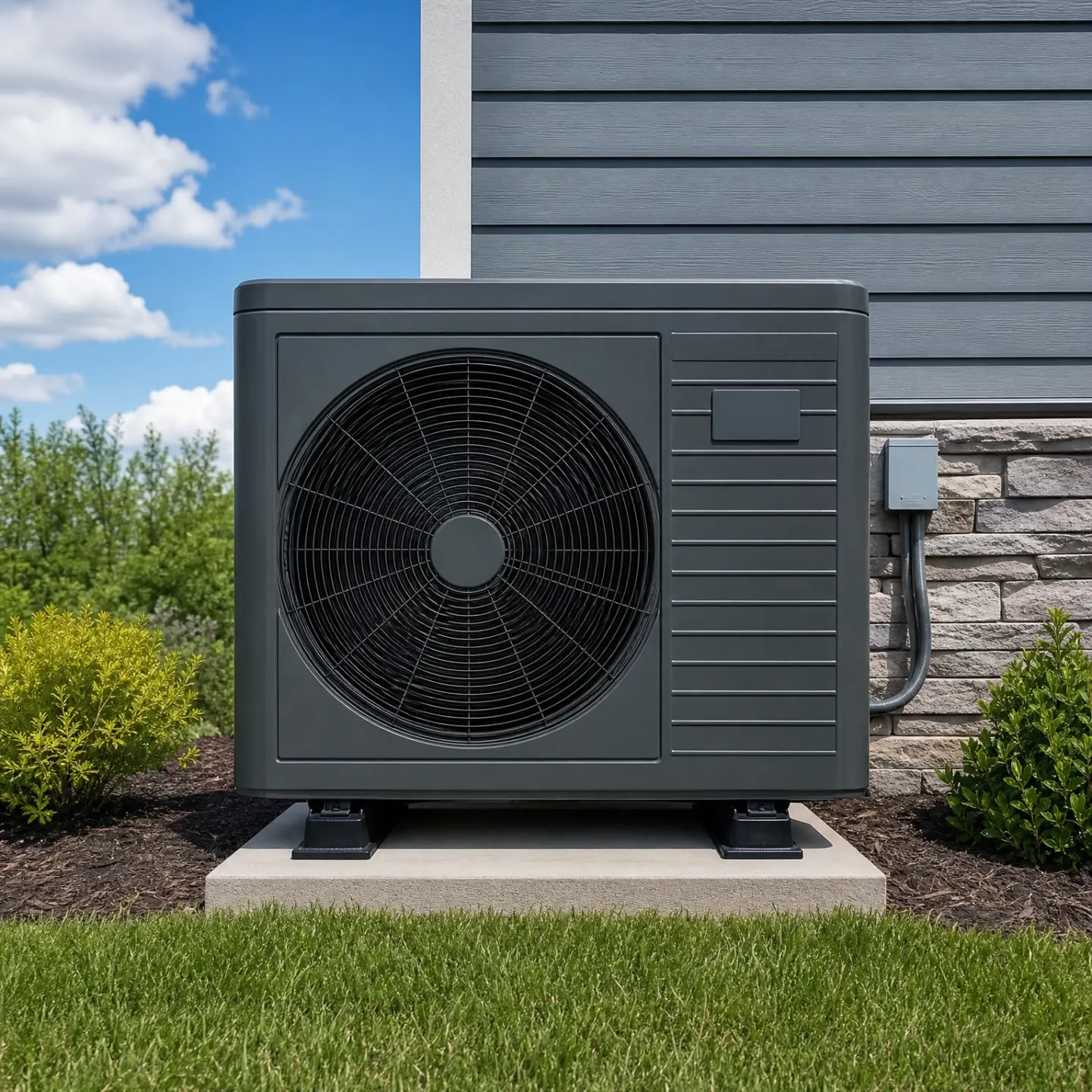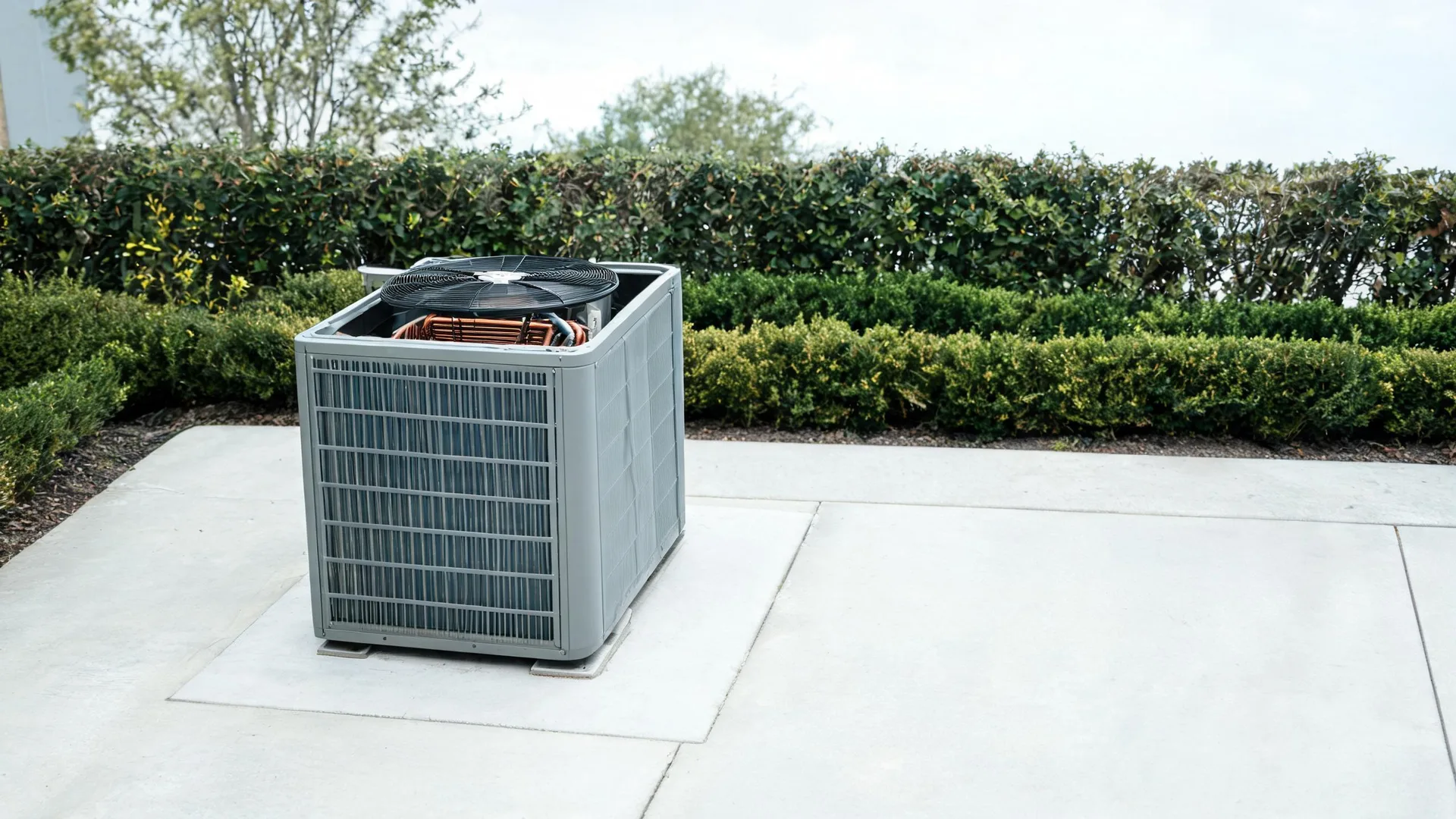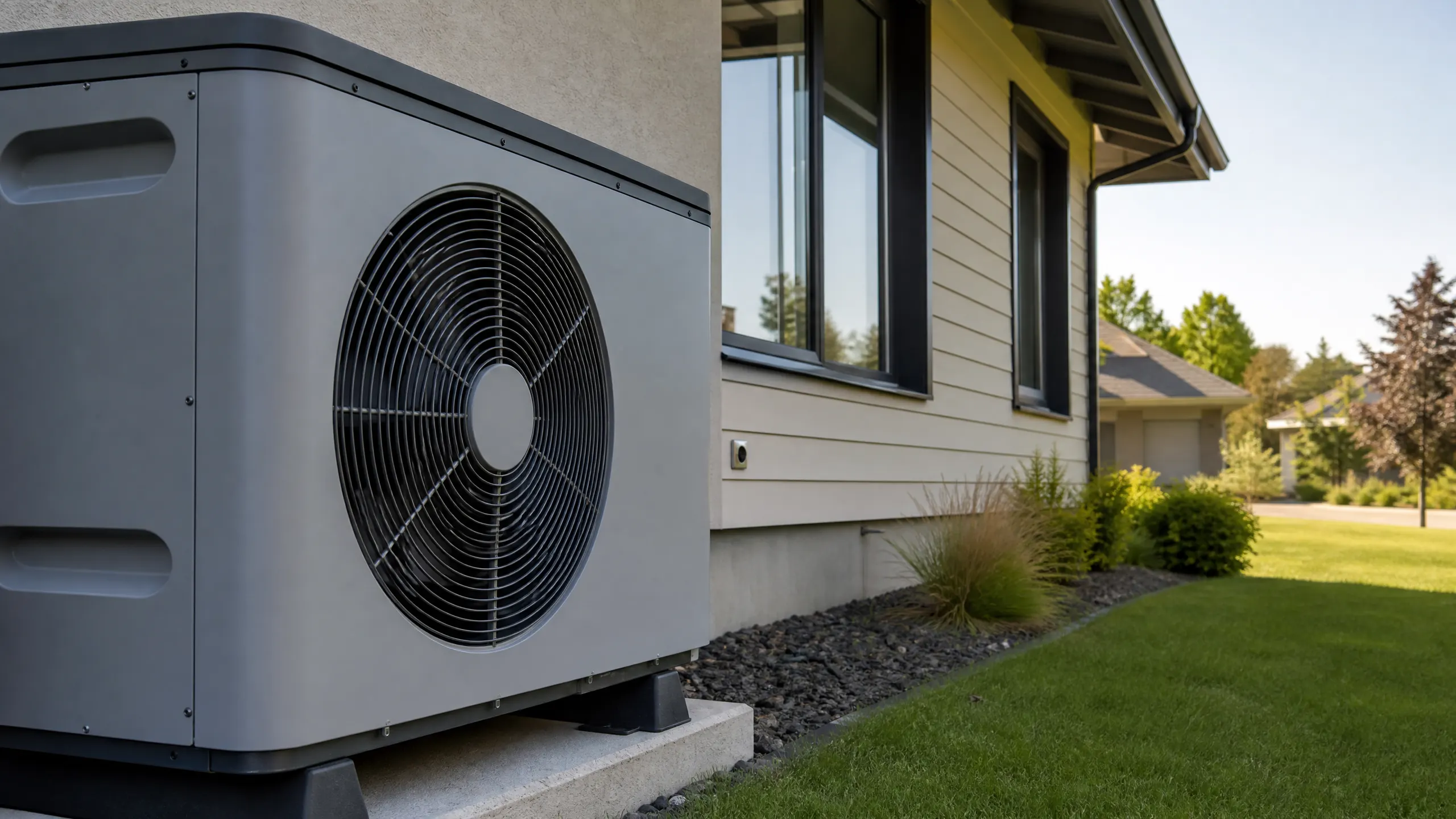
A grey outdoor HVAC unit mounted on a concrete pad beside the beige-sided exterior wall of a suburban house.

Heat Pump Repair in Chicago, IL

Tell us about the job

Takes about a minute. No obligation.

Step 1 of 3: Equipment

A small noise can mean a bigger failure coming

A heat pump that hums, clicks or buzzes differently than usual is telling you a part is struggling, maybe the contactor or the fan motor. Keep running it and that part works under the same strain until it fails outright, often taking something else down with it.

Ice on the outdoor unit means stop, not wait

A heat pump that can't complete its normal defrost cycle will keep building ice on the coil. Running it in that state blocks airflow further and forces the compressor to push against the freeze instead of just the load it was built for.

8 months
October through May, your system heats
3 months
June through August, it cools
20°F
the average winter night it heats against
82°F
the average summer afternoon it cools against
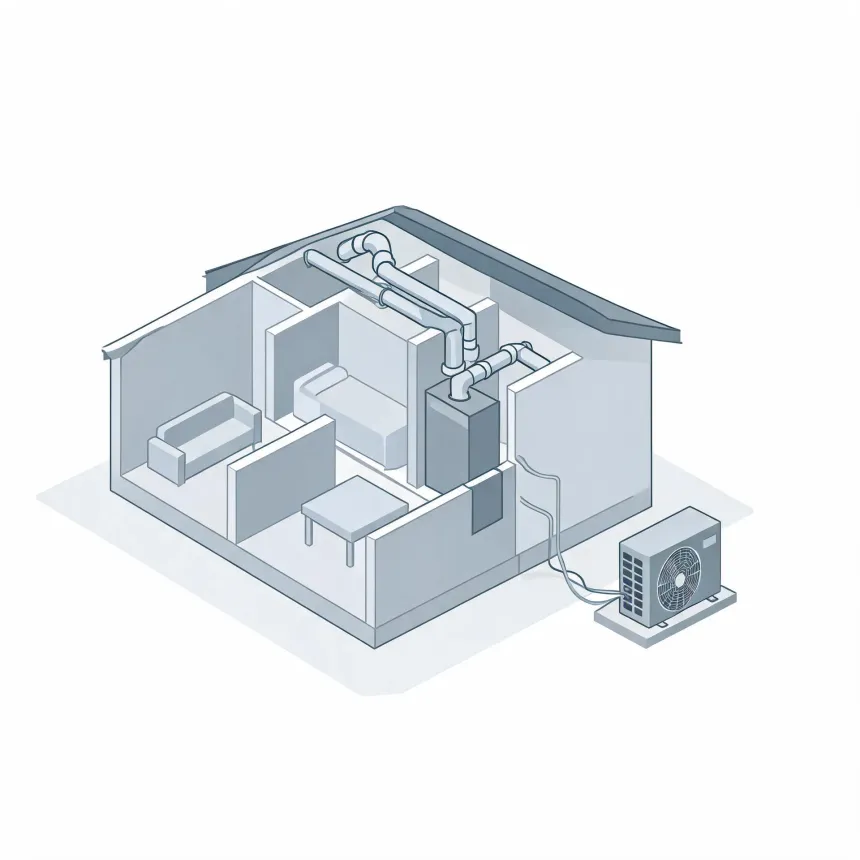
Isometric line illustration of a cutaway house showing interior rooms with furniture, ceiling ductwork connected to an indoor air handler, and a line running outside to an outdoor condenser unit.
Your system heats October through May and cools June through August.

NOAA nClimDiv, 1991–2020 normals

A diagnostic visit starts with questions, what the heat pump was doing before it quit, not just a look at it sitting there.

The tech checks the reversing valve, the defrost board and the refrigerant charge in order, because guessing at the part skips the fix.

At 15.87 cents a kilowatt-hour, a heat pump running wrong runs up your bill every day you wait

Power costs 15.87 cents a kWh statewide
Climate zone 5A
Cooling runs June through August
September is when a weak part gives outHeat runs here from October through May, and the first cold snap finds whatever didn't survive summer.

Half the homes in Cook County were built in 1961 or earlier. If your heat pump came with a house that old, or replaced one that did, it's worth asking how much life is left in it before paying for a big repair. A compressor or reversing valve failing on an old system often means the rest of it isn't far behind. A tech who's inside the unit can tell you whether the part failing now is a sign of what's coming next.

Stop paying for a struggling machine

Power costs more here, so a machine that's running badly costs you every month. Get it fixed soon.

Find a contractor
A man in a gray t-shirt and tan work pants, seen from behind, carries a canvas tool bag up wooden porch steps toward a dark blue front door beside a potted shrub.
A dark gray heat pump unit mounted on a concrete pad next to a house with gray siding and a stone veneer wall.

What's failing now is only part of the question

The time-lapse shows one day. A heat pump in a house this old has already run through many of them, one winter after another on the same compressor and the same valve. Ask the tech what's left in the unit before paying for the repair in front of you.

The reversing valve sticks before it fails outright

The reversing valve switches the heat pump between heating and cooling, and it's the part most unique to this machine. A valve starting to go often still moves, just sluggishly, so the unit blows cold air during a heat cycle or gets stuck in one mode. That looks like a thermostat problem until someone traces it back to the valve itself.

Small electrical parts wear out long before the compressor does

A capacitor weakens, a contactor pits and sticks, and the compressor starts pulling harder to do the same job. The compressor is built to last the life of the system, but it fails early when something smaller was left to strain it one winter after another. Replacing a capacitor or contactor early is what keeps the compressor out of that position.

Before you call anyone, look at the outdoor unit. If it's caked in ice or snow, shut the system off at the thermostat and let it sit. Running it iced over just adds strain for no benefit. Check the air filter too, since a clogged one starves the system of airflow and can mimic a much bigger problem. Walk your vents and feel whether air is actually moving through all of them. If the outdoor fan isn't spinning at all, or it's spinning but the unit is making a new noise, that's worth telling the tech before they arrive, not something to keep poking at yourself. Beyond that, the reversing valve, the defrost board and the refrigerant charge aren't things to test on your own.

A repair is worth doing when the part failing is small and the rest of the system is sound. A capacitor, a contactor, a fan motor, these can be swapped without touching anything else, and the heat pump runs like it did before. The harder call is the compressor or the reversing valve, since those sit at the center of the system and cost more to replace on their own. When one of those goes, a tech is really asking what else is close behind it, not just what it takes to fix the part in front of them. Age matters less than how the system has been maintained, but a unit that's needed several repairs in close succession is usually telling you something the next repair won't fix for good.