




An unfinished basement containing a metal furnace with ductwork, exposed wooden joists on the ceiling, cardboard boxes, a coiled cable, and a single hanging incandescent bulb.

Furnace Installation in Aurora, IL

Tell us about the job

Takes about a minute. No obligation.

Step 1 of 3: Equipment

Kane County logged 298 severe weather events between 2015 and 2024. Most of that was wind, 190 events, along with 65 hail events and 23 tornadoes. Add 19 winter storms with heavy snow and ice, and you've got weather that interrupts power on a regular basis. Statewide, 16% of Illinois households lost power for a full day or more in 2024. A furnace needs electricity to run even when the fuel is gas, so the ignition, the blower and the thermostat all stop working the moment the power does.

8 months
October through May, your furnace is on duty
18°F
the average winter night it heats against
86%
of homes here heat with gas, so most furnaces here burn gas
80% AFUE
the federal minimum any new unit must meet
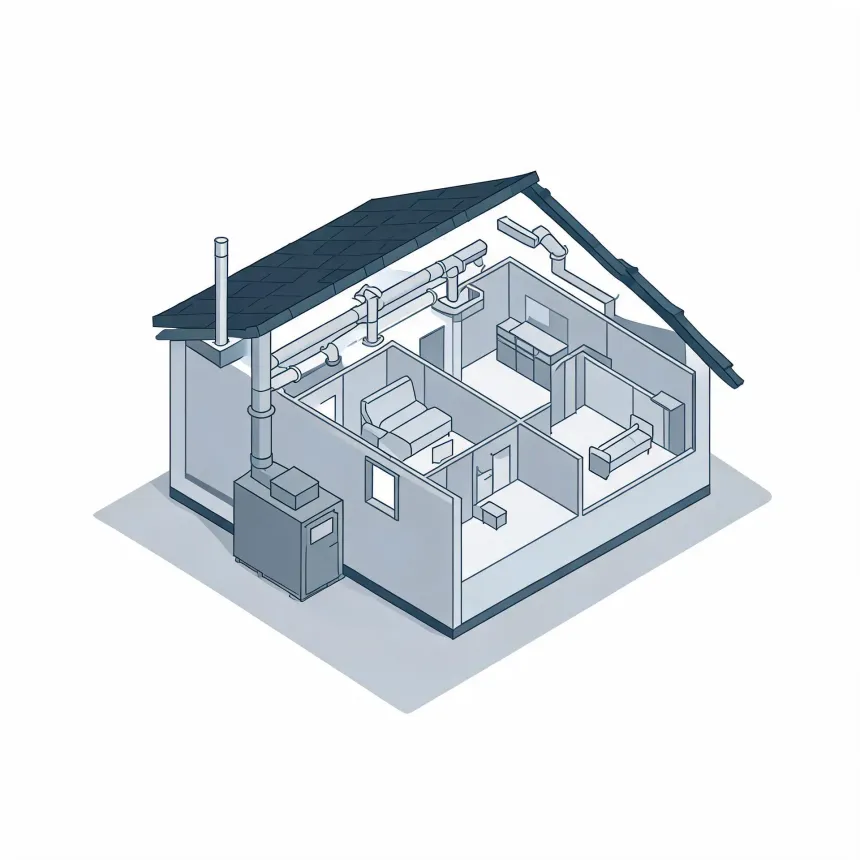
Isometric line illustration of a cutaway single-story house showing interior rooms with furniture, ceiling ductwork, a chimney flue, and a furnace unit outside the exterior wall.
Your furnace works hardest from November through March.

NOAA nClimDiv, 1991–2020 normals

Furnaces here start working in October and run through May.

Install before September ends, and the job happens on your terms, not during the first cold snap.

Eight months of heat a year wears a furnace faster than it does anywhere mild

Heat runs October through May
Winter nights average 18°F
Climate zone 5A
Here, gas furnaces are the standard86.1% of homes in Kane County heat with gas

Kane County falls in climate zone 5A, a cool zone where the energy code treats heating as the bigger job for a furnace than cooling. Any furnace installed here has to meet that standard. Furnaces built from November 2015 on already have to turn at least 80 percent of their gas into heat over the winter. That floor rises to 95 percent for units built from December 2028 on, so what counts as the legal minimum is about to change. A federal tax credit is available for qualifying high-efficiency furnaces, separate from whatever the installer charges.

Plan the install around the outages, not just the cold

A new furnace is a chance to decide where the outdoor equipment sits and how the whole system holds up when the power drops, not just whether it heats. Ask about surge protection and what happens to ignition and the blower on a system built to handle an outage. If backup power matters to you, this is the point to bring it up, before the unit is in the ground.

Find a contractor
A man in a dark long-sleeved shirt and tan work pants, seen from behind, climbs porch steps toward a navy front door while carrying a canvas tool bag.
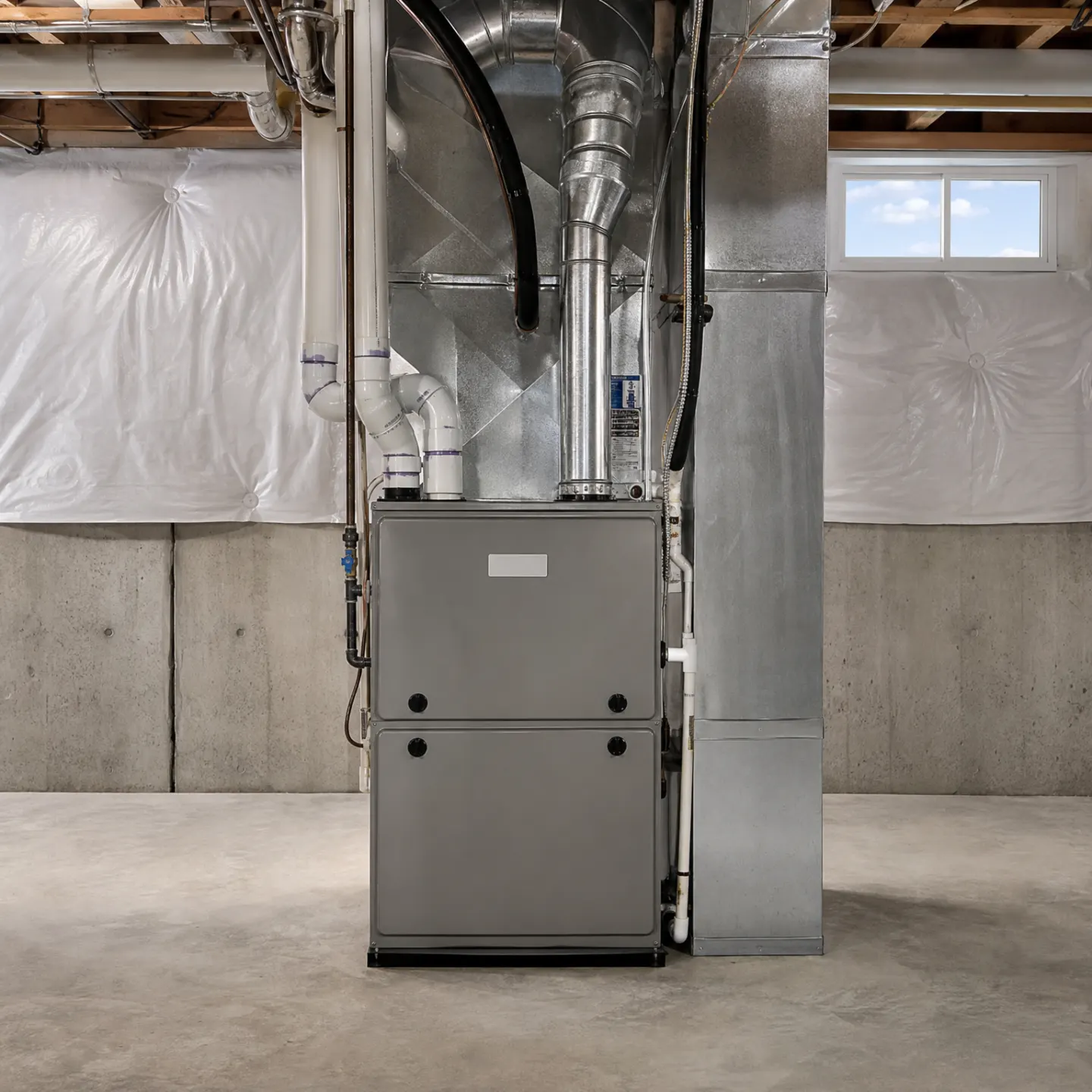
A gray residential gas furnace installed in an unfinished basement, connected to sheet-metal ductwork and PVC pipes.

Eight months of heat a year means buy for the long haul, not the lowest bid

Eight months of heat a year adds up fast. A furnace here racks up more run hours in one winter than a furnace in a mild state sees in two or three. Every hour the burner fires and the blower runs is an hour on the igniter, the heat exchanger, the motor. Buy on price alone and you're buying the thing most likely to need a part replaced early. Get the size and the brand right the first time, and you won't be the one finding out which corners got cut.

A furnace too big cycles instead of heating

An oversized furnace blasts the house to temperature fast, shuts off, then starts again a few minutes later. It never runs long enough to warm the ductwork or move heat evenly room to room. That short cycling puts extra wear on the ignition system and the blower motor, since both take the most strain at startup. A furnace sized right runs longer stretches at a steady flame and holds the temperature instead of chasing it.

Sizing comes from a heat loss calculation, not the old unit

A contractor works out the right size by measuring the house: square footage, window area, insulation, ceiling height, how much outside wall each room has. That's a heat loss calculation, and it tells you how much heating capacity the house actually needs room by room. Matching the new furnace to whatever size was there before just repeats the last guess. If the old one was wrong, a like for like swap keeps the same problem running under a new nameplate.

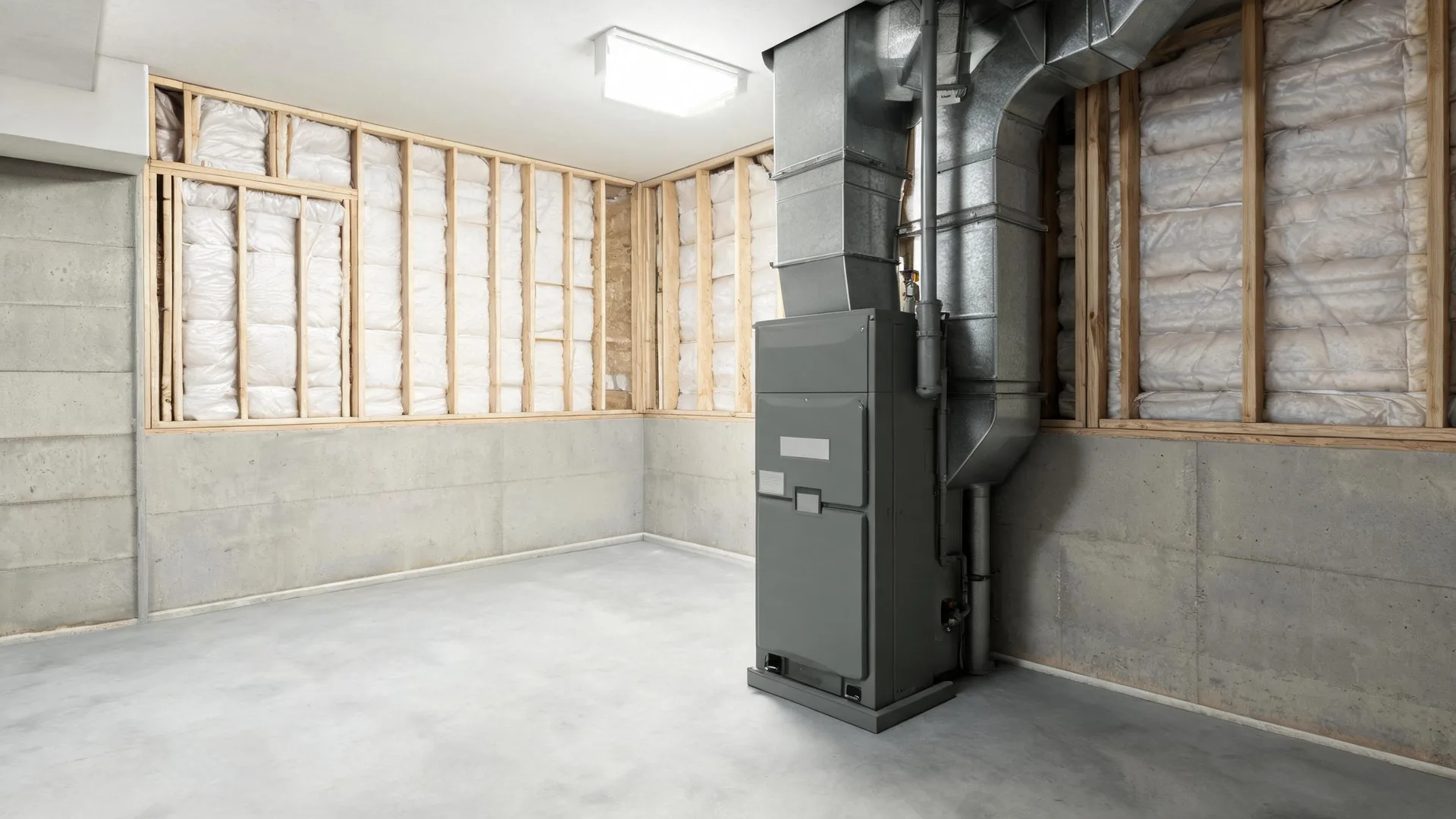
A gas furnace with sheet-metal ductwork and PVC pipes installed in an unfinished basement.

A high-efficiency gas furnace would save about $130 a year to run in Kane County compared with a gas furnace.

  • A high-efficiency gas furnace$610 a year
  • A gas furnace$740 a year

Estimates for a typical Kane County home, from EIA household energy data, Illinois fuel prices and NOAA climate normals. Your home will differ.

The old furnace comes out first, along with the flue pipe and whatever ductwork connections don't match the new unit. A contractor checks the gas line, the venting, and the electrical before setting the new furnace in place, since all three have to suit the specific model going in. Venting gets particular attention: a high-efficiency furnace vents through PVC pipe out a sidewall, not up a chimney, and that often means new venting run from scratch. Once the furnace is set, it gets connected to the ductwork, the gas line, and power, then the whole system gets tested. That test includes checking the flame, the temperature rise across the heat exchanger, and the airflow at the registers. A contractor also checks for gas leaks and confirms the venting is pulling exhaust properly before calling the job done. None of this is quick work, and rushing the venting or the gas connection is where problems start.