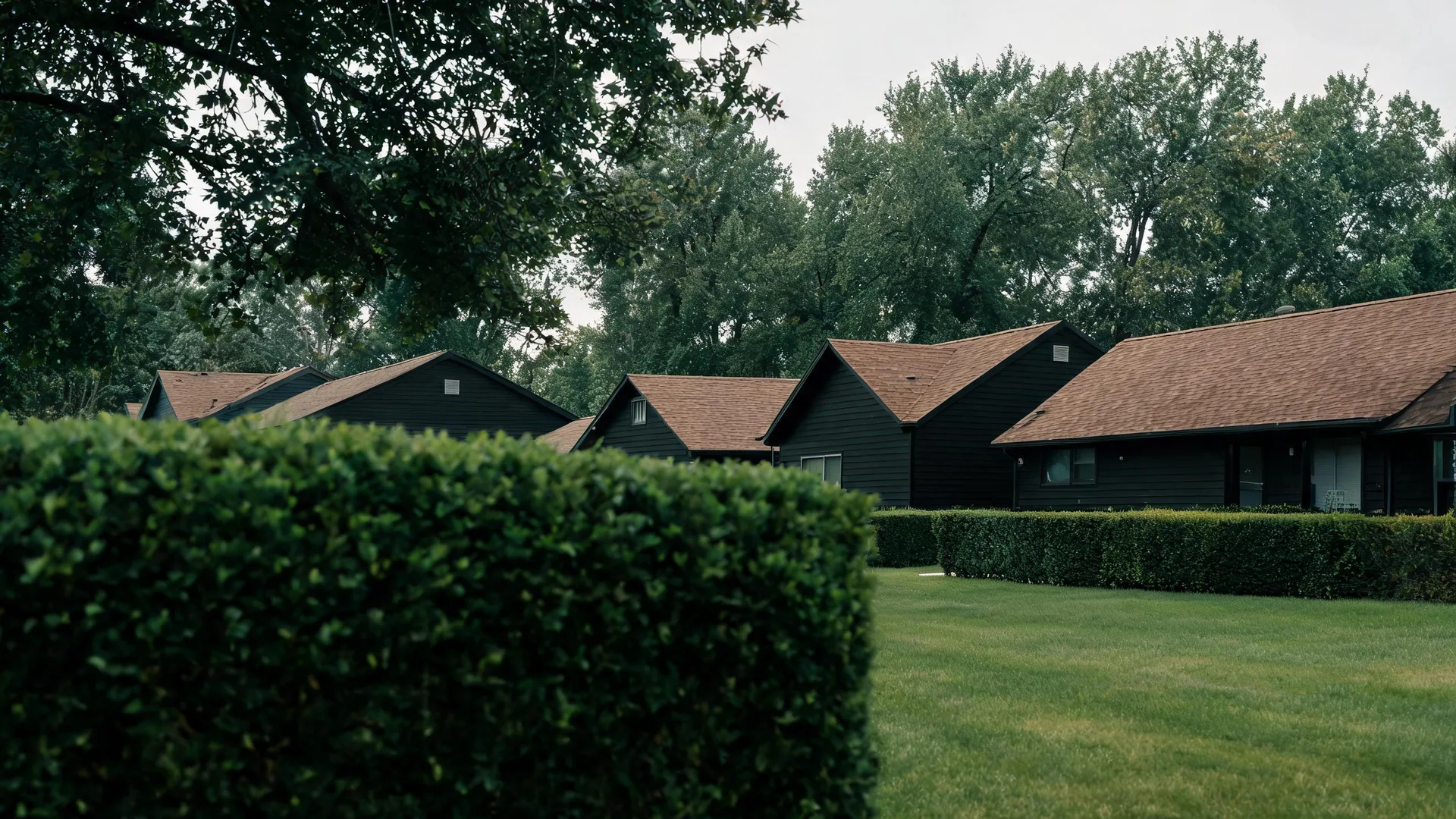
A row of dark-sided buildings with brown shingled gable roofs behind trimmed hedges, with a mown lawn in the foreground and leafy trees under an overcast sky.

Furnace Maintenance in Aurora, IL

Tell us about the job

Takes about a minute. No obligation.

Step 1 of 3: Equipment

This county sees real storms

Kane County recorded 298 severe weather events between 2015 and 2024. That includes 190 damaging wind events, 65 hail events and 23 tornadoes. Winter added 19 more events of heavy snow, ice and blizzards. A furnace that sits untouched through weather like that is worth a second look before it has to work.

Power doesn't always hold

Statewide, 16% of Illinois households lost power for a day or more in 2024. A gas furnace still needs electricity to run its blower and controls, so an outage during a cold stretch leaves the house without heat even though the gas is still on. Checking the furnace now is about making sure it's ready to run when the power is, not just when the weather turns cold.

Half the homes in Kane County were built in 1985 or later.

A furnace that age still has years ahead of it, and a yearly check is what gets it there.

Eight months of heat a year wears a furnace down early

Heat runs October through May
Winter nights average 18°F
Climate zone 5A

Gas heats 86.1% of homes in Kane County. Electric furnaces are rare here, and so are oil systems. That matters for what a tune-up needs to cover. A gas furnace has a burner, a flue and a set of safety controls that an electric furnace doesn't, and those are the parts that fail in ways you can't see from the thermostat. A cracked heat exchanger or a venting problem won't show up as a strange noise. It shows up as carbon monoxide in the house. Checking the burner and the venting is part of a proper tune-up, not an extra step.

Have the furnace checked before the next storm takes the power out

A tune-up is where a cracked heat exchanger or a blocked flue gets caught before it becomes a safety problem. It's also where a contractor can see whether the blower and controls are in shape to come back on the moment power does. Get it checked now, while nothing is forcing the question.

Find a contractor
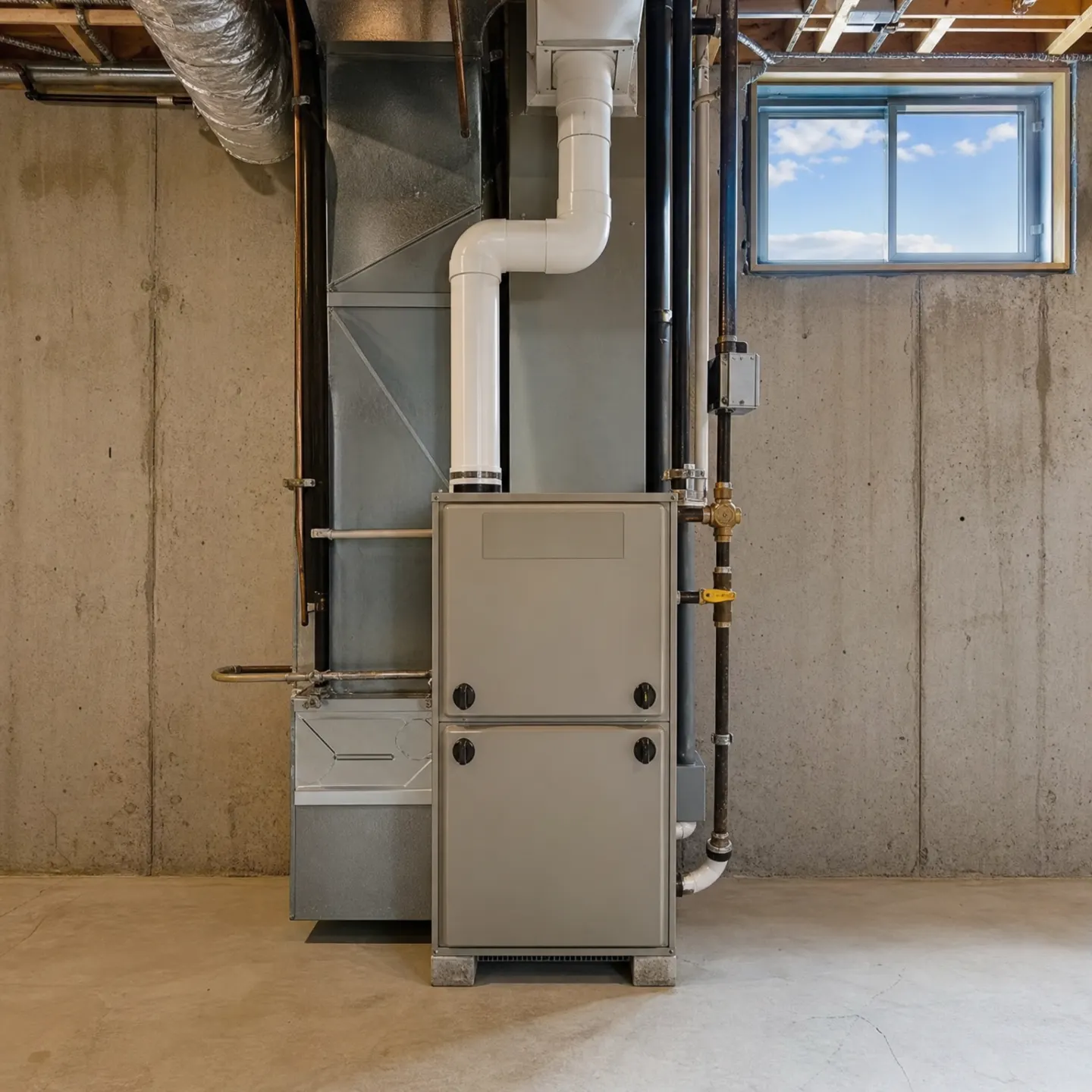
A gray gas furnace with attached ductwork and piping installed in an unfinished concrete basement.

Get it checked in September, before October asks anything of it

Heat goes on in October here and stays on through May. That's eight months of runtime, most of the year, on a machine that sits unused the other four. September is when to get it checked, before it's carrying the house through the first cold snap. Book it after a storm knocks the power out and you're doing it with the heat already off and the house getting cold.

The flame tells a story most people never see

A burner flame should burn steady and blue. Yellow tipping, flickering, or flame that rolls out past the burner means it's not combusting clean, and that can point to a dirty burner or a venting problem. A homeowner never sees the flame once the cabinet's closed up. A tech pulls the panel and looks.

A cracked heat exchanger doesn't announce itself

The heat exchanger is sealed inside the cabinet, between the burner and the ductwork, and a crack in it lets combustion gas mix into the air the blower pushes through the house. There's no sound, no smell you'd catch, nothing on the thermostat to warn you. Finding it takes pulling the furnace apart and inspecting the metal directly, which is exactly what a tune-up does and a homeowner can't.

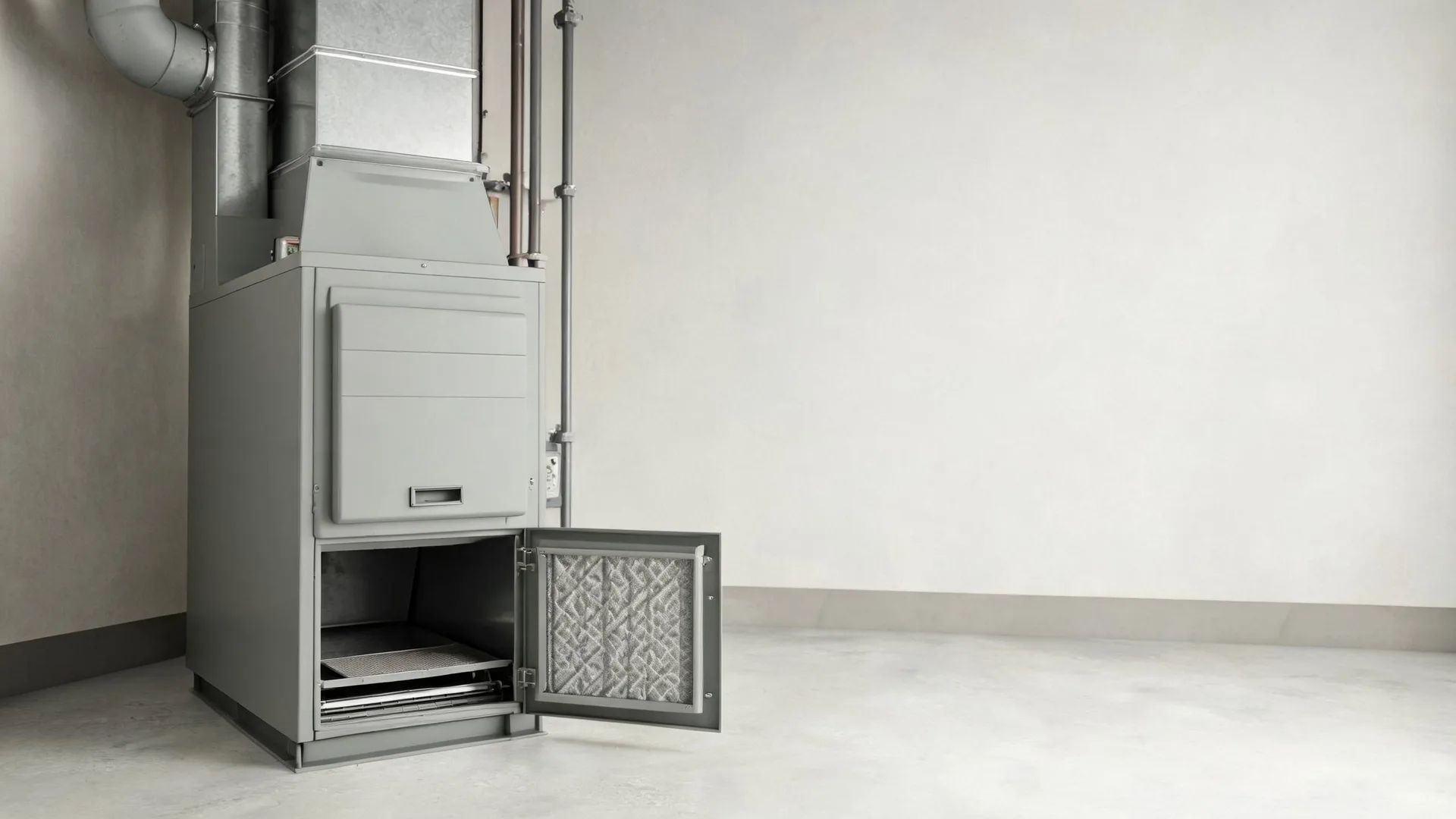
A dirty filter is the most common way a furnace gets starved for air. Restrict that airflow and the heat exchanger runs hotter than it was built to, which shortens its life and can lead to the kind of crack that lets combustion gas into the ductwork. A filter is also one of the few things a homeowner can check without taking anything apart. Coils and drains matter more on the cooling side, but the same blower and ductwork carry both, so a clogged coil or a slow drain on the air conditioner affects how hard the furnace has to work later too. A tune-up checks all of it together because the system doesn't run as separate parts, it runs as one path for air.

Eight months of runtime a year is more than most furnaces see anywhere else, and that kind of use catches up with a machine before the calendar says it should. A belt doesn't stretch and an igniter doesn't weaken on a schedule, they wear with hours run, and this furnace is logging more of them than one in a milder county ever would. That's the case for getting it looked at every year instead of waiting for a problem to announce itself. A tune-up now means a tech catches a worn part while it's still just worn, not after it's failed on a night the house needs the heat most. Get it on the schedule before October puts the machine to work.