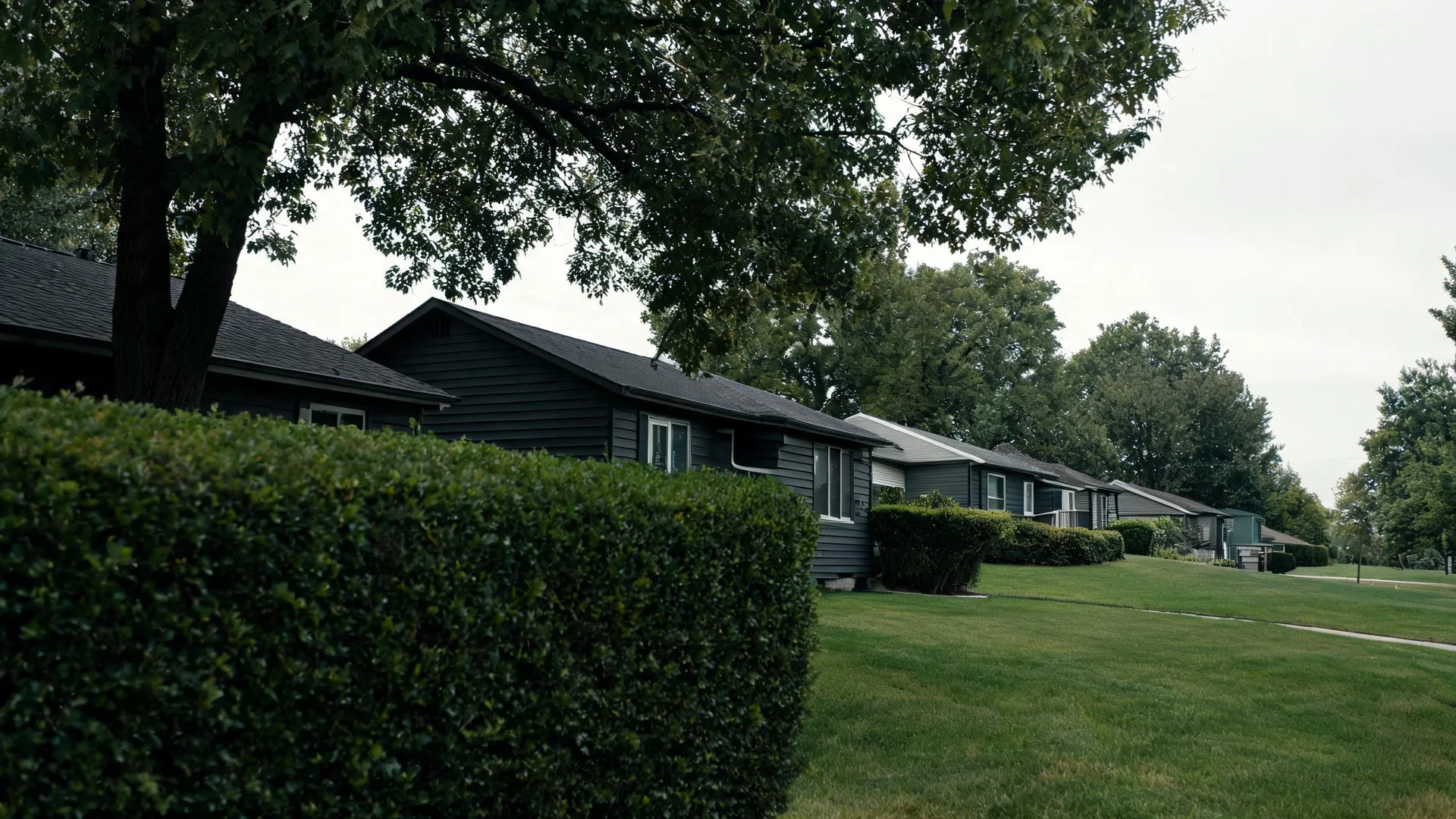



A row of dark-sided single-story houses behind a tall trimmed hedge and a large tree, with a mown lawn and a paved path under an overcast sky.

Heat Pump Installation in Aurora, IL

Tell us about the job

Takes about a minute. No obligation.

Step 1 of 3: Equipment

Illinois electricity runs 15.87 cents per kilowatthour, above what a lot of the country pays. A heat pump moves heat instead of burning gas or firing a resistance coil, so it gets more warmth out of every kilowatthour it uses. That matters more here than somewhere with cheaper power, because every inefficient hour on your bill costs more in Aurora than it would elsewhere. When you're comparing units, the efficiency rating on each one is worth as much as the price tag.

8 months
October through May, your system heats
3 months
June through August, it cools
18°F
the average winter night it heats against
82°F
the average summer afternoon it cools against
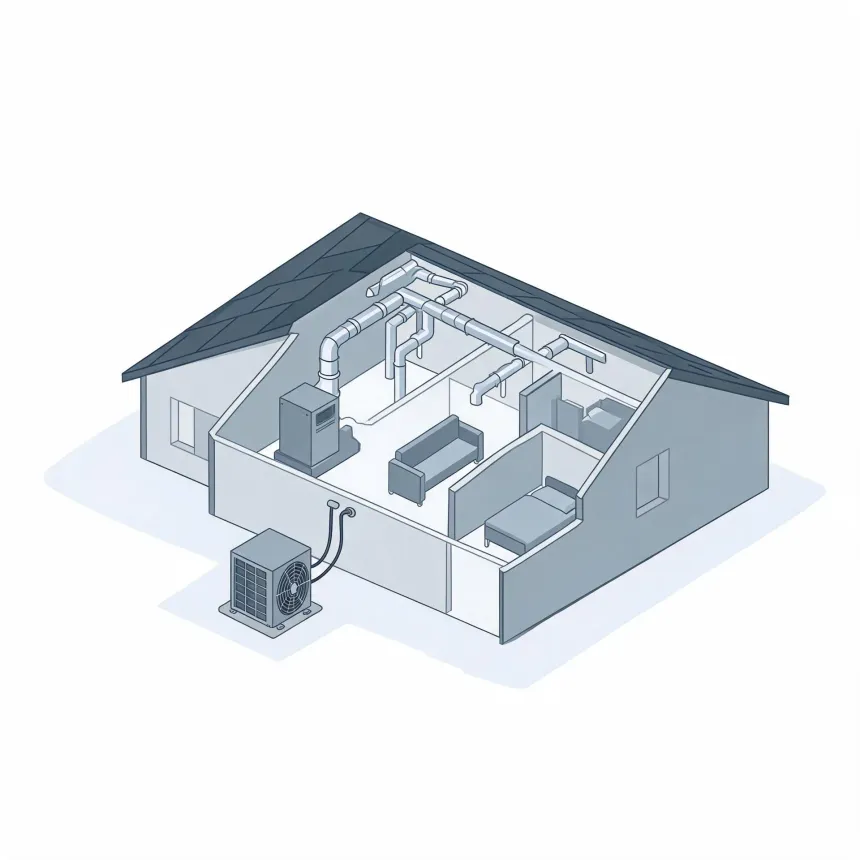
Isometric cutaway illustration of a single-story house showing interior rooms with furniture, an attic duct network connected to a furnace or air handler, and an outdoor condenser unit linked by lines outside the wall.
Your system heats October through May and cools June through August.

NOAA nClimDiv, 1991–2020 normals

A heat pump's rated output drops as the outside air gets colder.

Ask what each system can still put out at the coldest temperature your area sees, not just at mild conditions.

Most of Aurora already heats with gas

86.1% of homes heat with gas
190 damaging wind events from 2015 to 2024
65 hail events from 2015 to 2024

Kane County falls under zone 5A, a cool, fairly humid climate where heating carries the bigger share of the work. Any split-system heat pump installed here now has to meet 14.3 SEER2 for cooling and 7.5 HSPF2 for heating, the federal minimum for units built since January 2023. That floor narrows what a contractor can put in, but it doesn't set a ceiling. Given what power costs in this state, a unit that clears the minimum by a wide margin earns that difference back on every heating cycle this winter.

Have it in before October

Heat here runs October through May, eight months of the year. September is your last easy window to get a new system in before the cold settles in and that heat pump has to work. Install it now and whoever puts it in isn't racing weather, and you're not choosing a system under pressure.

Find a contractor
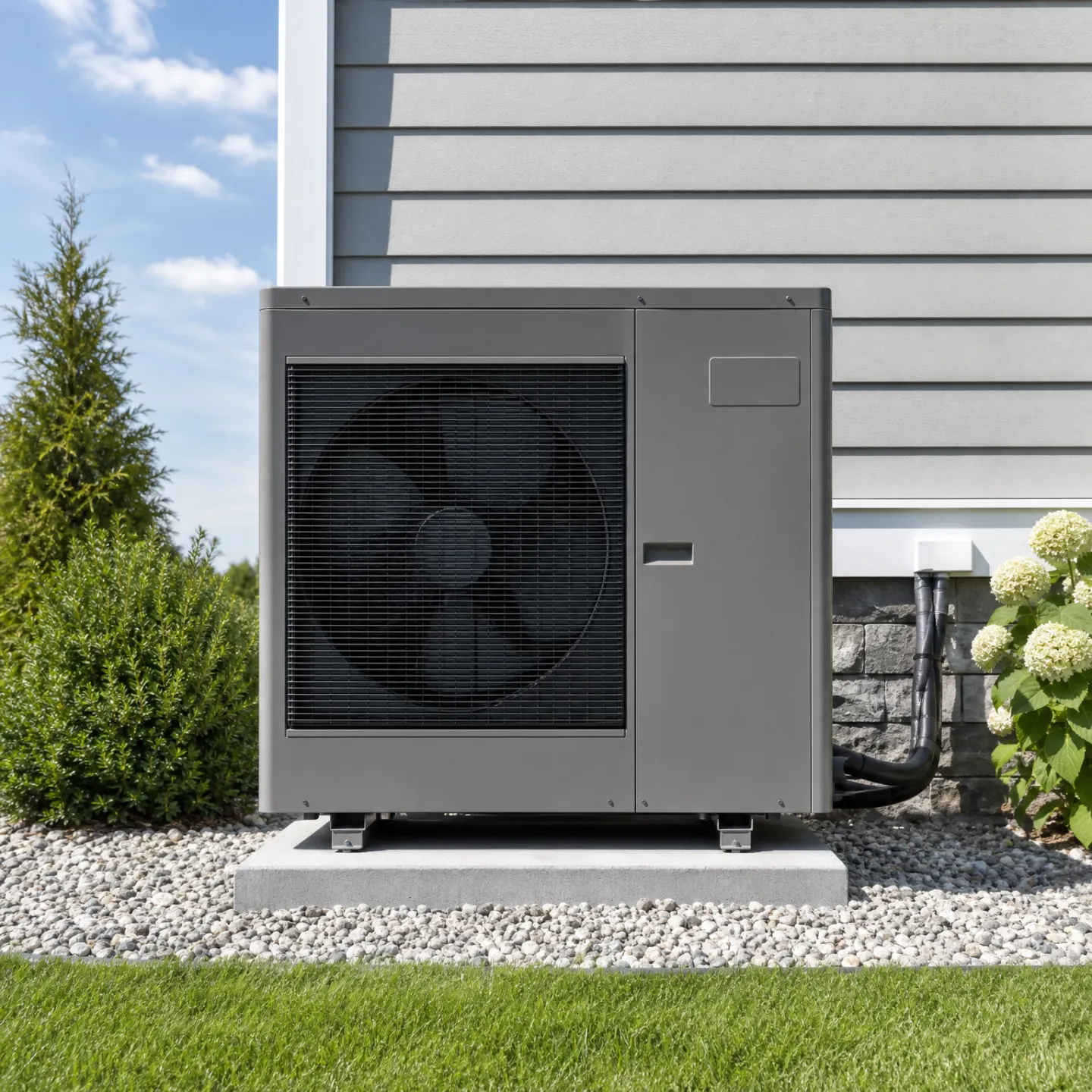
A gray air-source heat pump mounted on a concrete pad next to a house with gray vinyl siding, surrounded by gravel and flanked by green shrubs and white hydrangea flowers.

The old equipment doesn't just get unplugged

The outdoor unit and the indoor coil both come out together, not just the box in the yard. If the system is swapping from a furnace and separate AC to a heat pump, the installer has to check what the ductwork can handle, since a heat pump moves air differently than a gas furnace did. The old refrigerant doesn't get vented into the air. It has to be recovered into a tank and handled as waste, so that step takes real time on install day. The line set connecting the outdoor unit to the indoor coil usually gets replaced rather than reused, since old refrigerant lines can carry contamination that causes problems in a new system. The pad and the electrical disconnect outside often get reused if they're in good shape and rated for what the new unit draws.

The rating covers both directions, not one

A heat pump carries a cooling rating and a heating rating, because it does both jobs. A unit can be strong in one direction and average in the other. Check both numbers on the label, not just whichever one is printed bigger.
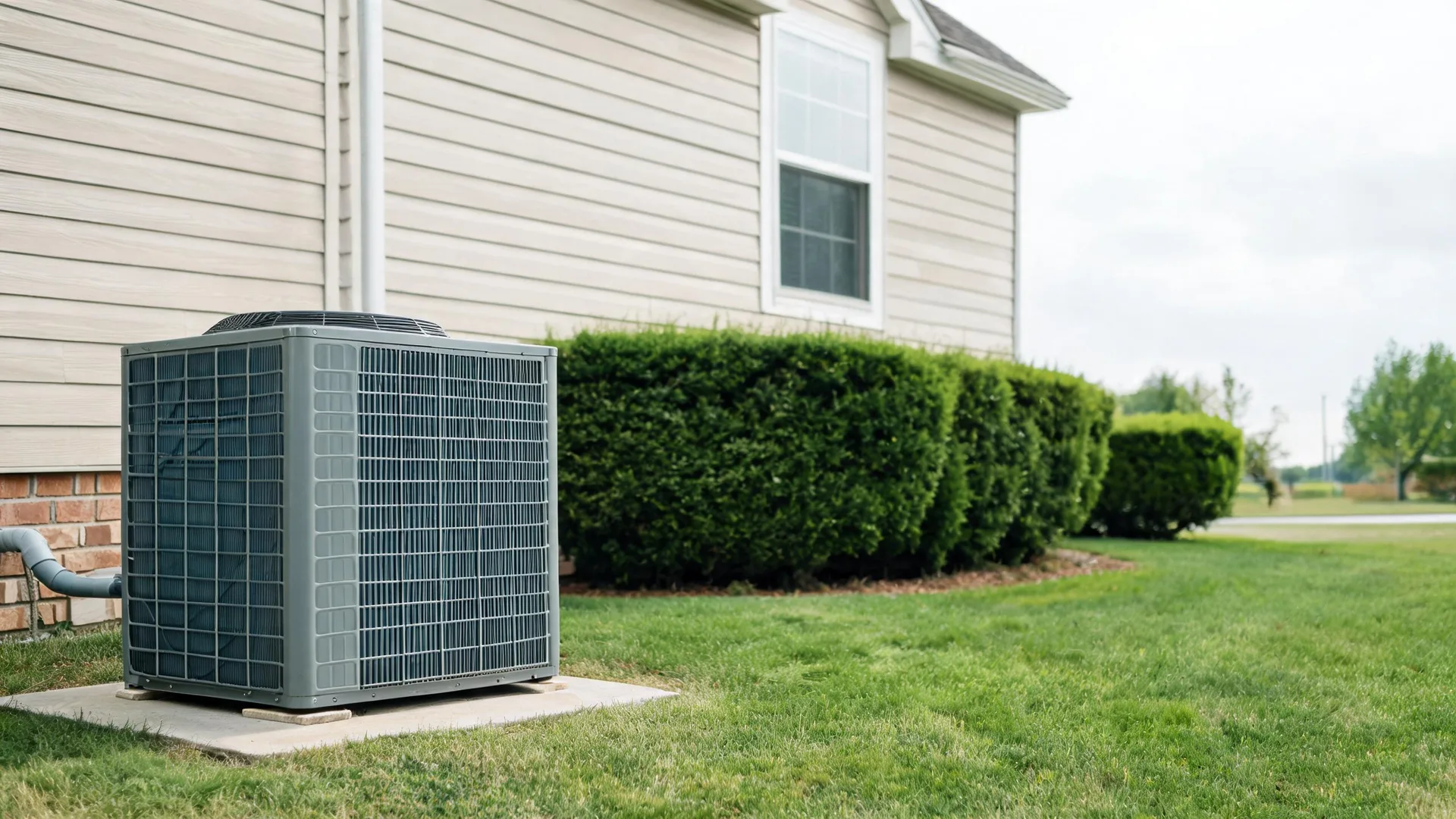
The rating comes from a lab, not from your ducts

A heat pump earns its rating on a test bench, matched correctly to its coil with the airflow set where it should be. Undersized ductwork, a low refrigerant charge, or a mismatched coil will all pull real performance below that number. The equipment only runs as efficiently as what it's hooked up to allows.

Size is what drives most of the price swing on a heat pump job. A unit sized to match the square footage and insulation of the space costs less to buy and runs more efficiently than an oversized one bought for peace of mind. Beyond the equipment itself, what's already in place matters. A straightforward swap, same footprint, existing ductwork in good shape, costs less than a job where the ducts need rework or the electrical panel needs upgrading to handle the new load. Cold-climate heat pumps built to hold their output at low temperatures cost more than standard units, and where winter does real work, that difference is often worth paying for. The install itself, running new line sets, setting the outdoor unit, commissioning the system correctly, is where a lot of the job's value actually sits, even though it's the part you can't see once the covers go back on.

The outdoor unit goes in first, set on its pad with clearance on all sides so air can pull through the coil. Inside, the air handler or the coil over the furnace gets tied into the line set. That connection gets pressure tested before anything is charged. A vacuum pump pulls moisture and air out of the lines, because any left behind turns into problems once refrigerant is in the system. Once the system holds vacuum, the lines get charged to the weight the manufacturer specifies, not just until the pressure looks right. The last part of the day is commissioning. The installer checks airflow at the registers, sets the thermostat to talk to the new equipment, and runs the system in both directions to confirm it heats and cools the way the label says it should. None of that shows once the panels are back on, but it's what determines whether the unit runs the way it was rated to.