




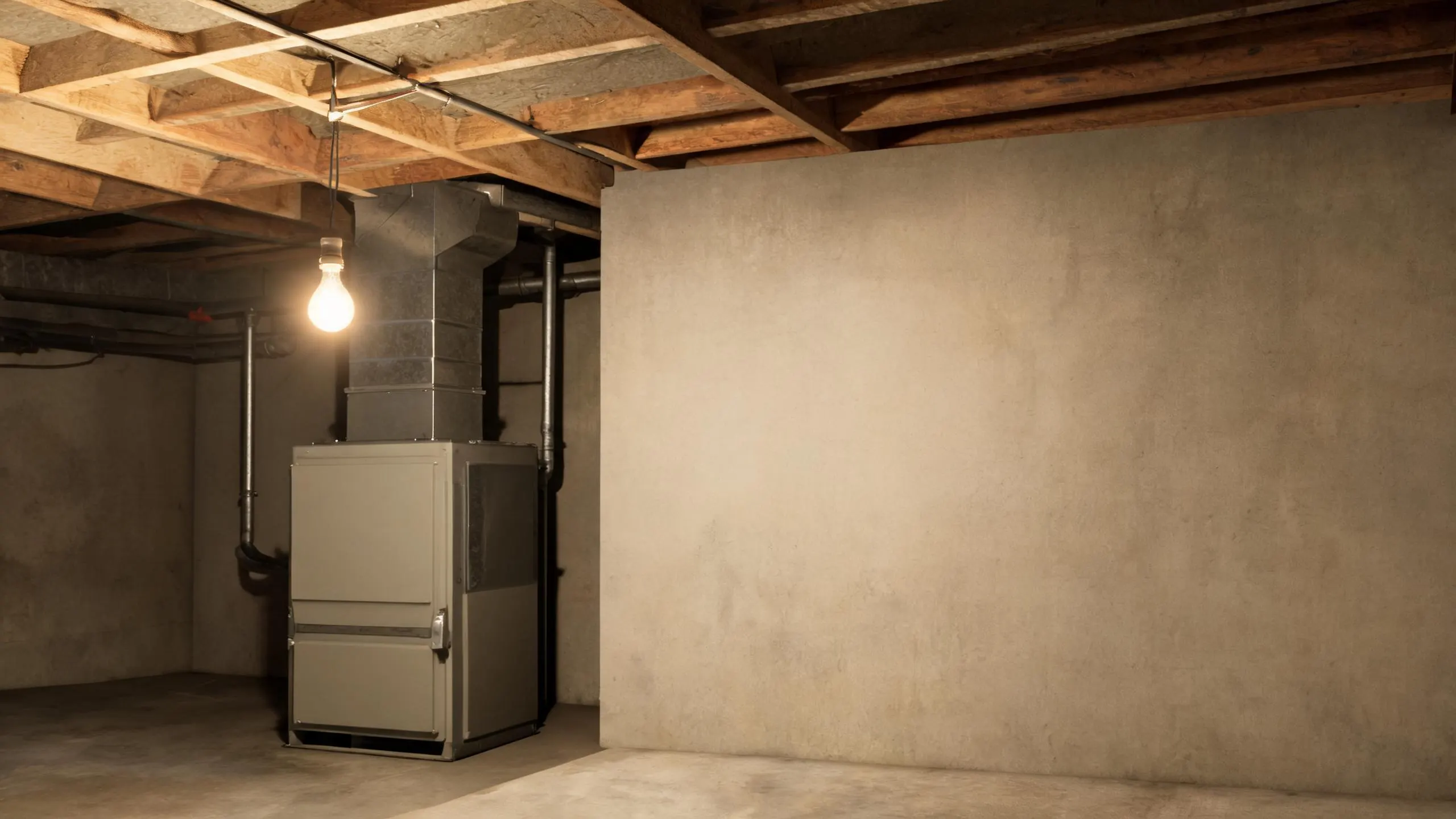
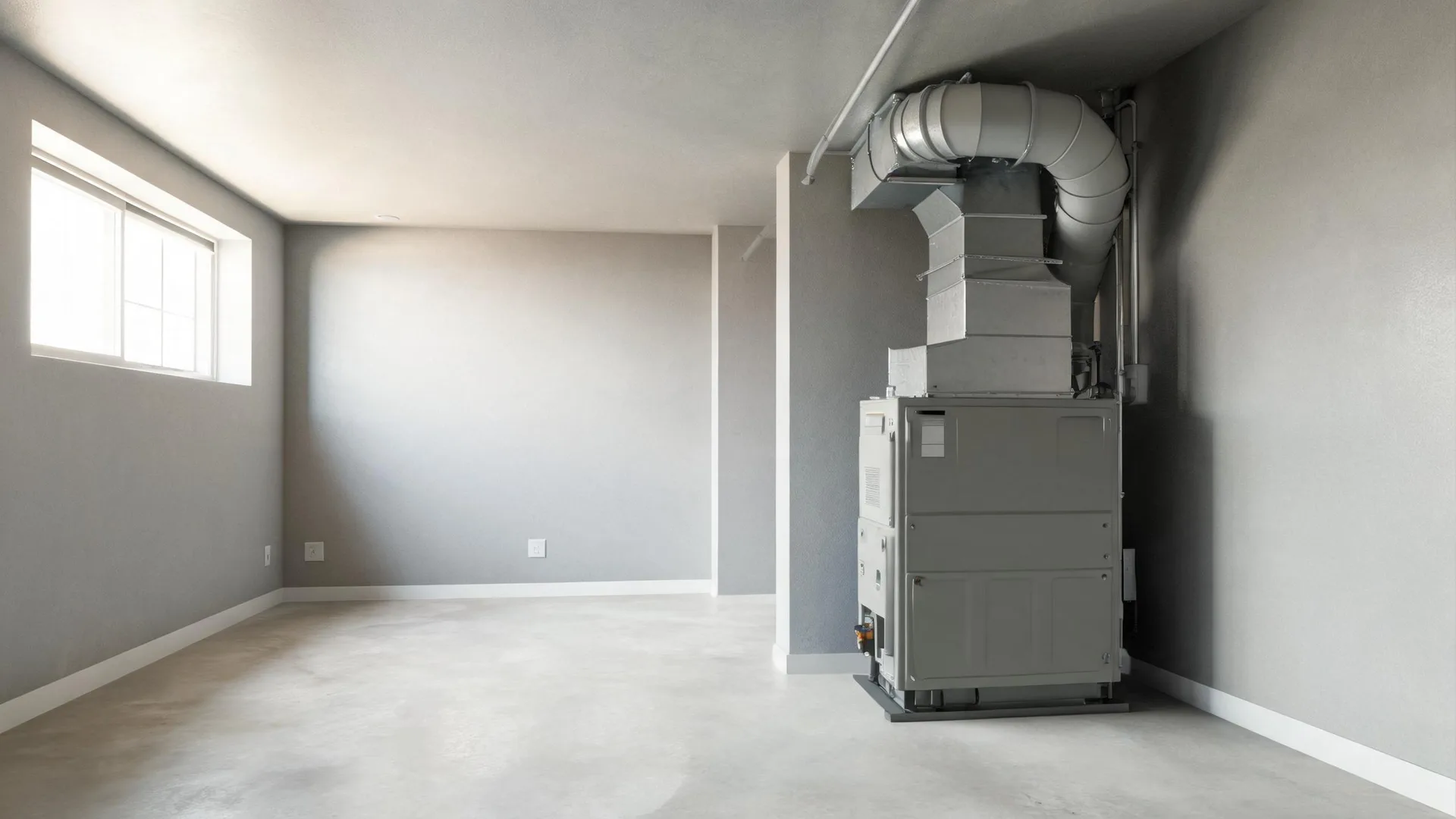
A bare concrete basement containing a gray gas furnace with metal ductwork and a vertical flue pipe, lit by a single hanging bulb.

Furnace Installation in Chicago, IL

Tell us about the job

Takes about a minute. No obligation.

Step 1 of 3: Equipment

Cook County recorded 780 severe weather events between 2015 and 2024. Damaging wind caused most of them, 548 times, with 171 hail events and 33 tornadoes mixed in. Winter storms hit 20 times in that same span, and any one of them can knock out power along with the heat. Statewide, 16% of households went at least a day without electricity in 2024. A new furnace should be chosen with that in mind, since the best equipment still needs power to run.

8 months
October through May, your furnace is on duty
20°F
the average winter night it heats against
80%
of homes here heat with gas, so most furnaces here burn gas
80% AFUE
the federal minimum any new unit must meet
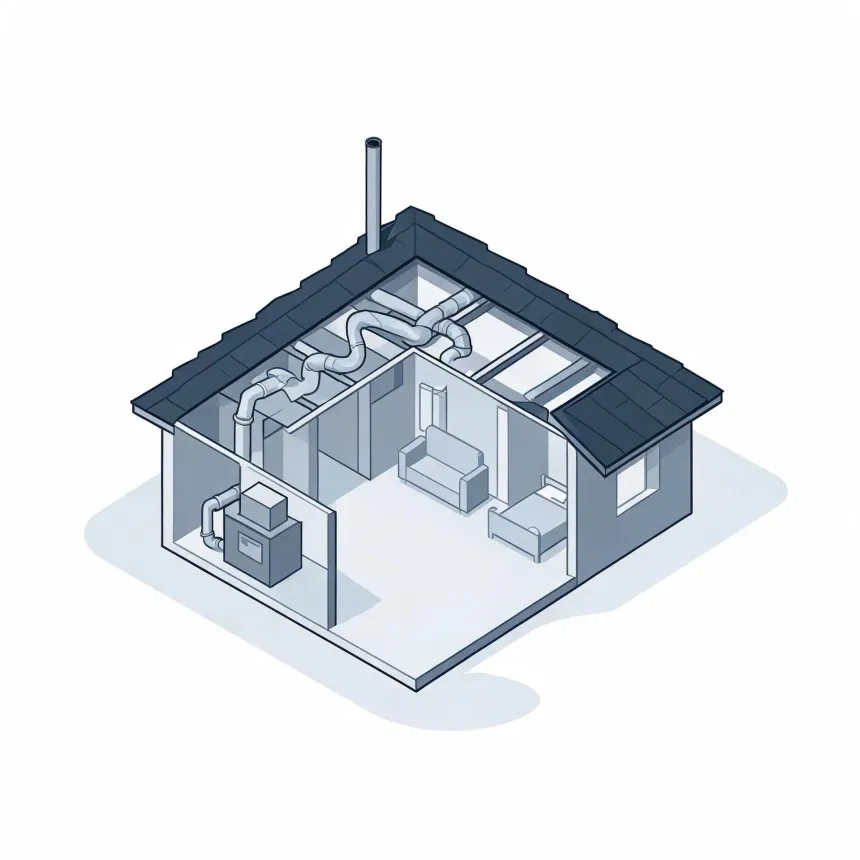
Isometric cutaway illustration of a small house showing a furnace unit connected to ductwork running through the interior and attic, with a chimney on the shingled roof and simple furniture in the rooms.
Your furnace works hardest from November through March.

NOAA nClimDiv, 1991–2020 normals

Furnaces here start working in October and keep running through May.

Getting the new furnace in before October means it's installed on your timeline, not during the first cold snap.

Four out of five homes here already run on gas, and that makes the replacement decision simple

80.2% of homes heat with gas
Climate zone 5A
Heat runs October through May
Built for an older houseHalf the homes in Cook County went up in 1961 or earlier, and the furnace has to work with the house that's already there.

Cook County falls under zone 5A, a climate code that treats heating as the bigger job a furnace has to do. Any furnace installed here has to turn at least 80 percent of its gas into heat, a rule that's applied to every unit built from November 2015 onward. That floor rises to 95 percent for furnaces built starting December 2028, so the range of what a contractor can install will narrow as that date gets closer. A federal tax credit is available on qualifying high-efficiency furnaces, which can offset some of the cost of going above the current minimum now rather than waiting.

Plan this furnace around the power going out

A furnace install is the chance to decide where the unit sits and how the house handles a blackout before one hits. Ask about battery or generator compatibility now, while the system is being chosen, not after a storm takes the power out.

Find a contractor
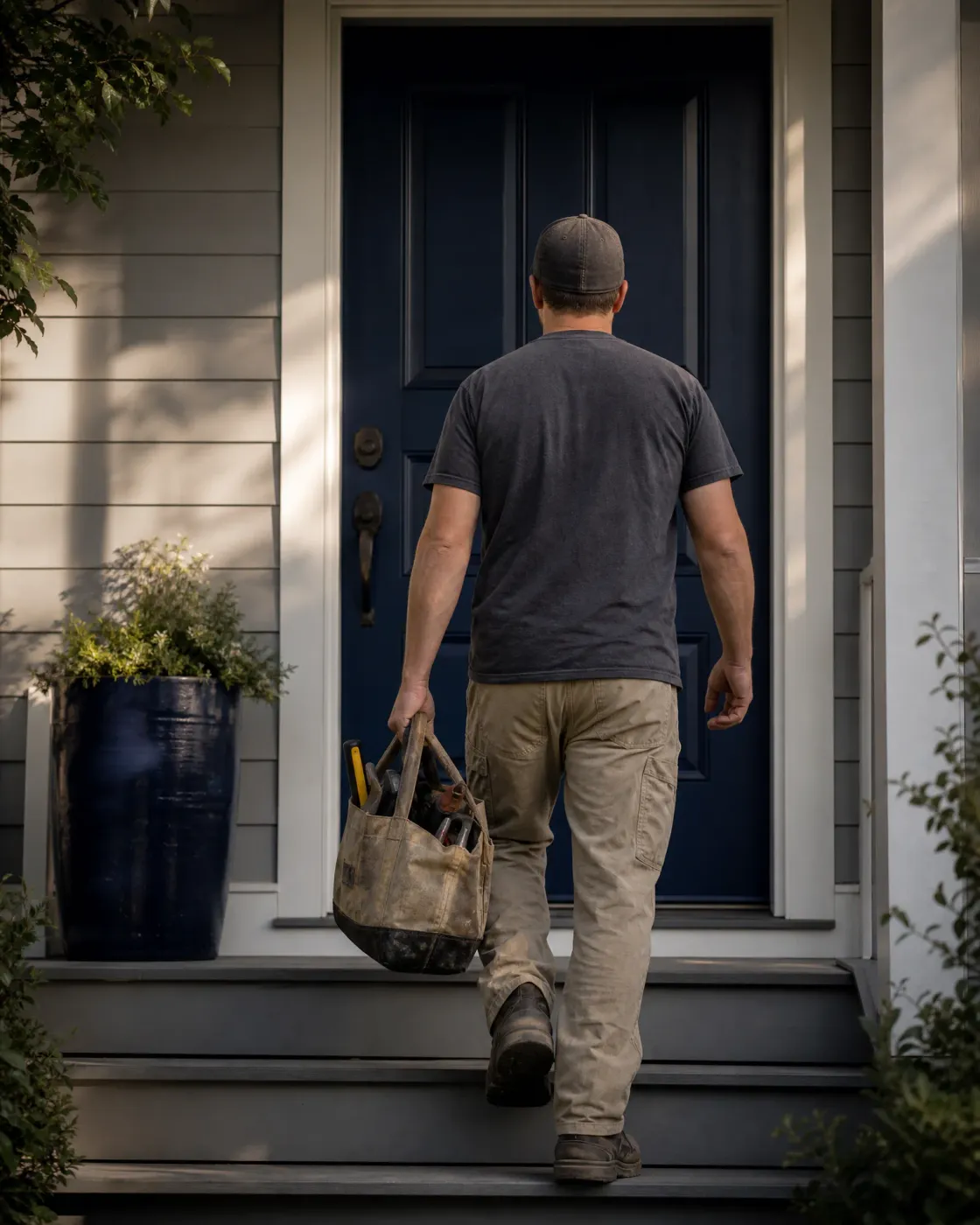
A man in a cap, gray T-shirt and tan work pants carries a canvas tool bag up porch steps toward a dark blue front door of a gray clapboard house, with a potted plant at left.
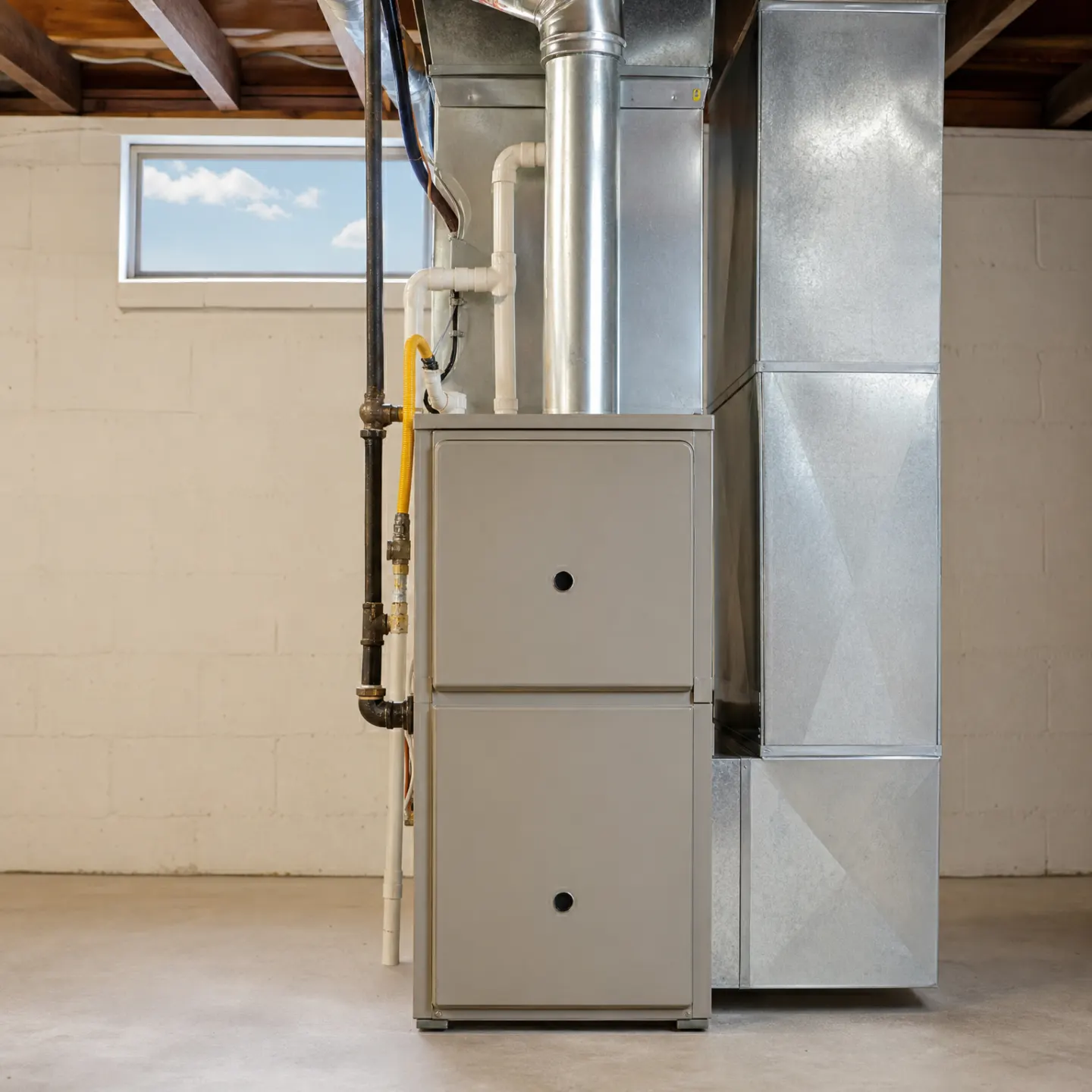
A gas furnace with attached ductwork, gas piping, and condensate lines installed in a concrete-block basement.

Eight Months of Work, Every Year

Eight months of heat a year is a long season. From October through May, this furnace is either running or about to be. That's most of the year spent cycling on and off, pushing air through the ducts, holding the house at temperature while it's cold outside. A furnace sized and installed right can carry that load for years without drawing attention to itself. One that's undersized or poorly matched to the house will run longer to do the same job, and the parts that cycle most, the igniter, the blower motor, are the ones that wear first.

Size drives the price

A furnace has to be sized to the house, the duct run, and how much heat escapes through the walls and windows. Too big and it short cycles, turning on and off before the house ever feels even heat. Too small and it runs constantly and still falls short on the coldest days. Getting the size right takes a load calculation, not a guess based on the last unit, and that calculation is part of what you're paying for.
The install matters as much as the unit

Ductwork sometimes needs modification to match the new furnace, especially if the venting or the plenum doesn't line up with what's being installed. Gas line and electrical connections have to be brought up to code, not just reconnected the way they were. A contractor who takes the time to do that work right is charging for hours a rushed job skips, and those are the hours that keep the furnace running the way it should for years.

A gray forced-air furnace with metal ductwork stands in an unfinished basement with exposed wooden joists, concrete walls, and a single hanging light bulb.

A high-efficiency gas furnace would save about $130 a year to run in Cook County compared with a gas furnace.

  • A high-efficiency gas furnace$580 a year
  • A gas furnace$710 a year

Estimates for a typical Cook County home, from EIA household energy data, Illinois fuel prices and NOAA climate normals. Your home will differ.

The old furnace usually comes out first, and that changes the house for a few hours. The gas line gets capped, the power to the unit gets cut, and the space around it sits open while the new one gets set in place. A tech will check the vent pipe and the flue before anything else, since a new furnace sometimes needs a different venting setup than the one it replaces. Once the new unit is set, the gas line, the electrical, and the ductwork all get connected and checked for leaks before anything is fired up. The last step is running the furnace through a full cycle, watching how it ignites, how the flame looks, and how air moves through the ducts once the blower kicks on. Nothing gets left running unattended until it's gone through that check.