Kane County sees a lot of storms
Kane County logged 298 severe weather events between 2015 and 2024. That includes 190 damaging wind events, 65 hail events, and 23 tornadoes touching down.
Takes about a minute. No obligation.
Kane County logged 298 severe weather events between 2015 and 2024. That includes 190 damaging wind events, 65 hail events, and 23 tornadoes touching down.
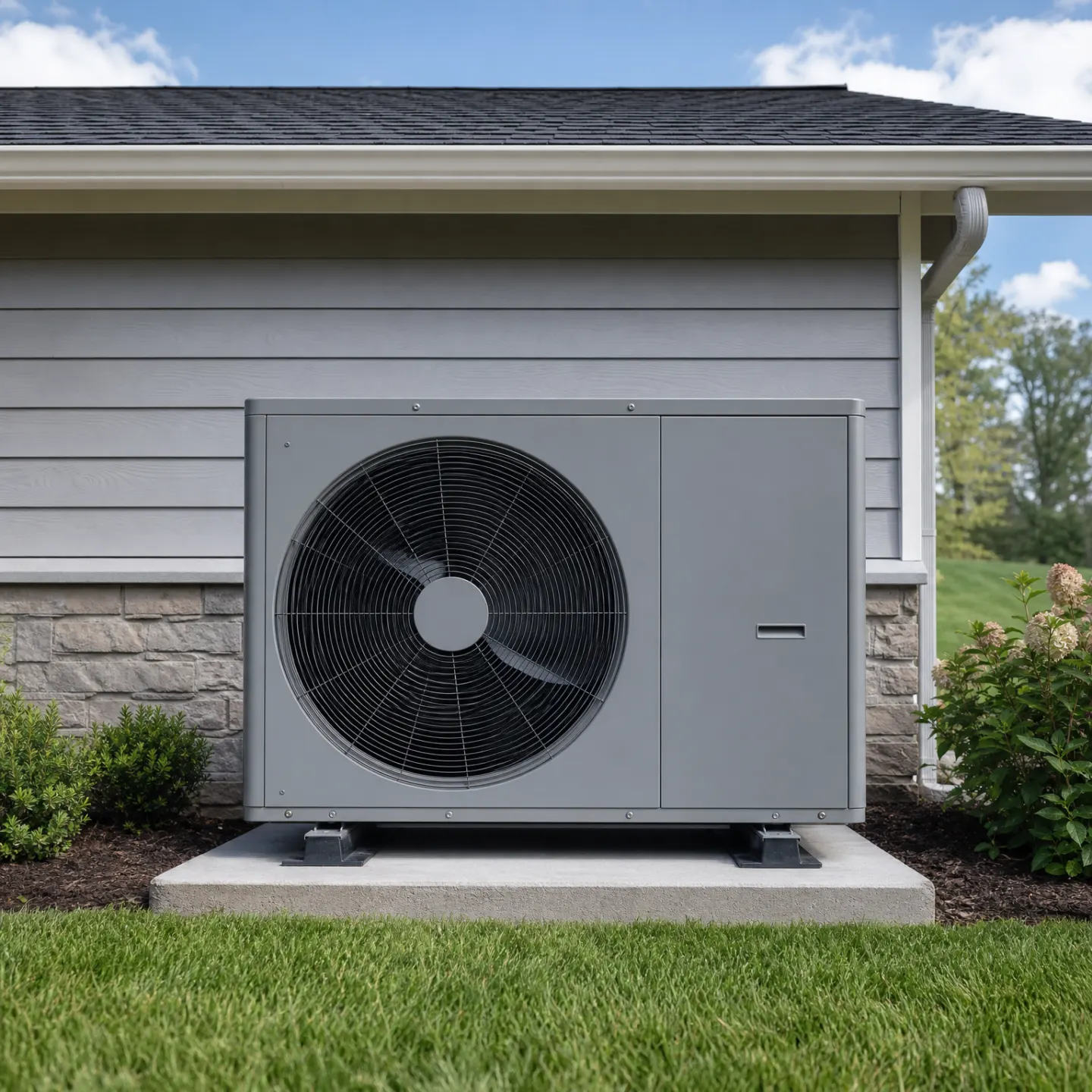
A heat pump's outdoor unit lives outside year round, taking whatever the weather brings. Wind drives debris into the coil and fan, hail dents the cabinet and bends fins, and none of that always shows up as a problem right away.
NOAA nClimDiv, 1991–2020 normals
Heat pumps run in Kane County from October through May, about eight months a year.
A weak part usually fails in October, the first cold snap, not in the easy months.




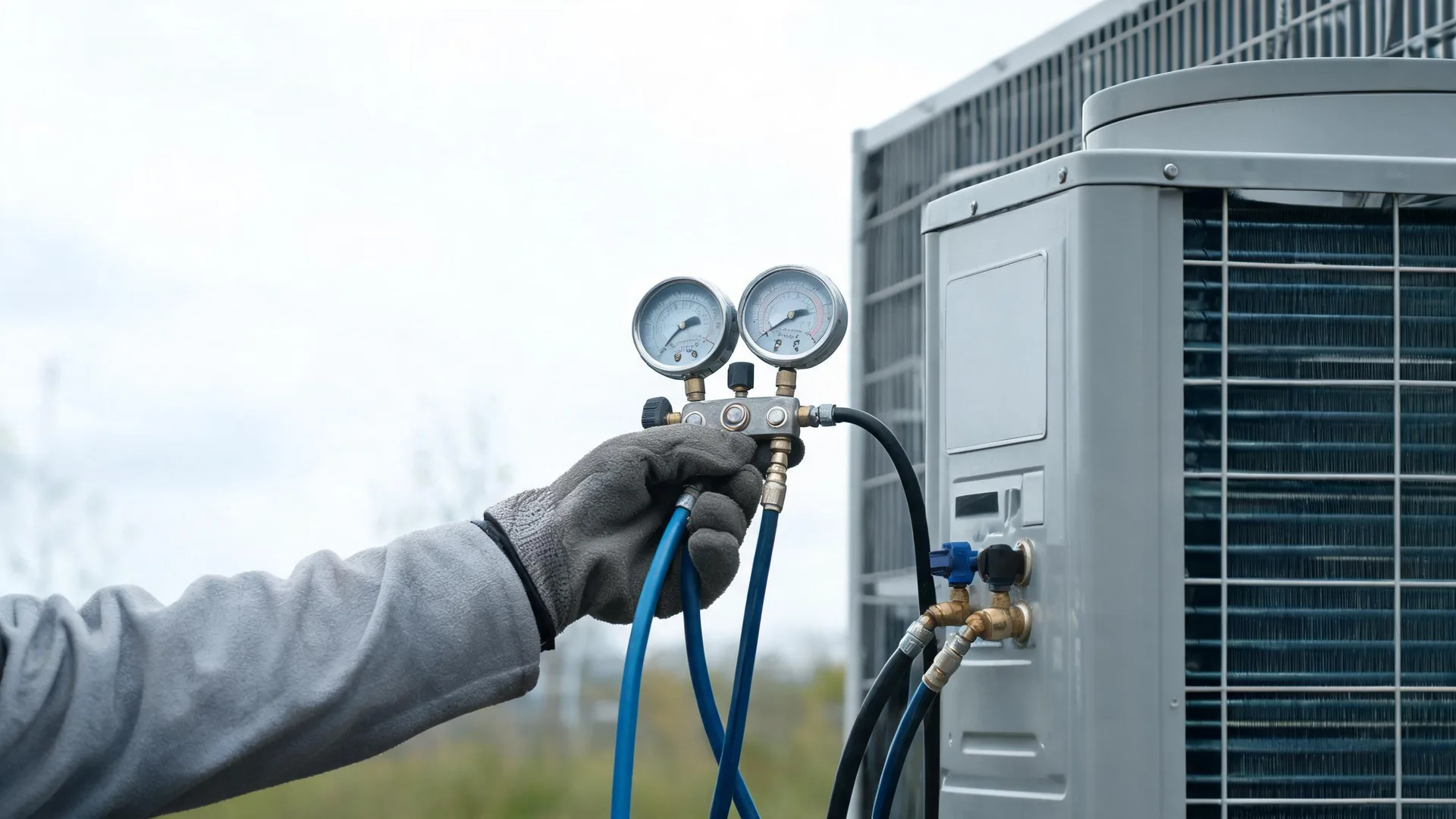
Wind and hail don't ask whether the unit is new or old, and a heat pump that's taken a hit doesn't always show it right away. That's why a weak part gets caught too late more than it gets missed entirely. If the system is short cycling, running loud, or not keeping up, the honest move is to have someone check it rather than guess from the thermostat. A tech can put gauges on the refrigerant charge, check the capacitor's readings against what it should be, and look over the coil and fins for damage that's already started. That's the only way to know if this is a quick fix or something further along. Catching it early is what keeps it a quick fix.
After wind, hail or a storm comes through, have the outdoor unit looked at even if the heat pump still seems to run fine. Bent fins and a dented cabinet don't always show up as a problem right away, and a unit that's struggling will run that way until someone catches it.
Find a contractorIf your heat pump came with the house and the house is from the newer half of the county, repair is the right call before replacement enters the conversation. A compressor or control board failure in a system that age is usually one bad part, not a sign the whole unit is done. Ask whoever comes out to look at the install date on the unit itself, not just the age of the house. That tag tells you what you're actually working with.
A heat pump with a weak component doesn't stop and wait for help. The compressor keeps pulling against whatever's wrong, whether that's a low charge or a failing capacitor. Every hour it runs that way is an hour of added wear on the compressor itself, which is the most expensive part in the system.
A coil that's losing efficiency or a motor that's starting to drag will keep the house comfortable right up until it can't. There's rarely a warning period. The system either keeps covering for the bad part or it trips out and quits, usually on the hardest day it's asked to work.
Before calling anyone, check the thermostat first. Make sure it's set to heat or cool as needed and the batteries aren't dead. Next, look at the air filter. A clogged filter chokes airflow across the indoor coil, and the system will struggle or ice up because of it. Walk outside and check the outdoor unit. Clear away leaves, grass clippings or anything blocking the fan or the coil fins, and make sure nothing is sitting right against the cabinet. If the outdoor unit is caked in ice or frost beyond what normally defrosts off, that's worth noting but not worth chipping at yourself. Check the breaker panel too. A tripped breaker will shut the whole system down and look like a bigger failure than it is. None of this fixes a bad capacitor or a refrigerant leak, but it rules out the simple stuff before someone drives out to look at it.
A heat pump that's running weak doesn't just cost more once, it costs more every day someone waits to call. Power here isn't cheap, and a struggling compressor pulls extra to do the same job, month after month. If something's off, a thermostat that won't hold its setting, a unit that runs longer than it used to, that's worth looking at now, while it's still one bad part. Wait through a cold stretch running that way and the repair tends to get bigger, not smaller. Get it looked at while it's still a small fix.