A row of dark-clad single-story cottages with gabled roofs behind trimmed hedges, with a mown lawn in the foreground and large leafy trees under an overcast sky.

Furnace Installation in Oswego, IL

Tell us about the job

Takes about a minute. No obligation.

Step 1 of 3: Equipment

Most of Oswego runs on gas

Utility gas heats 86.7% of homes in Kendall County, and electricity covers most of the rest. A gas furnace is the system a contractor here installs most often, with the venting and gas line work already understood for houses like yours.

Replacing gas with gas is the straightforward job

If your home already has a gas line and venting in place, swapping in a new furnace means working with what's already there. Switching fuel types is a bigger job, with new venting or electrical to plan for, so most homeowners here stick with gas when it's time to replace.

8 months
October through May, your furnace is on duty
19°F
the average winter night it heats against
87%
of homes here heat with gas, so most furnaces here burn gas
80% AFUE
the federal minimum any new unit must meet
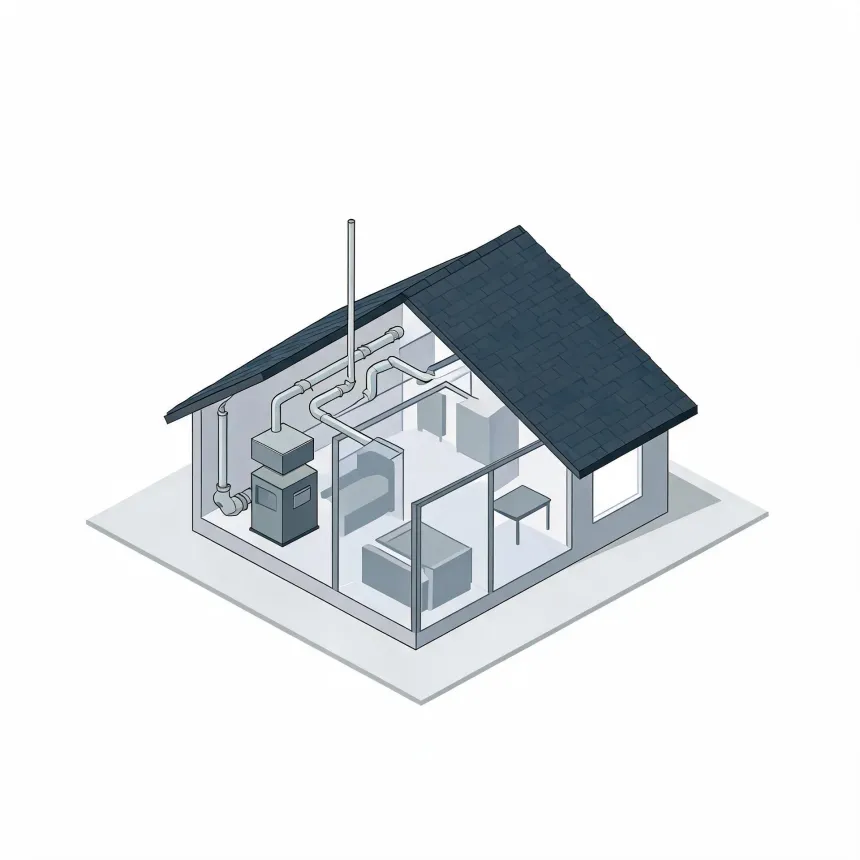
Isometric cutaway illustration of a small house with a dark shingled roof, showing an interior furnace unit, ductwork, and a flue pipe extending through the roof.
Your furnace works hardest from November through March.

NOAA nClimDiv, 1991–2020 normals

A furnace install isn't just the unit, it's what the job takes to do right.

Matching the furnace to the house, the ductwork, and the venting is what decides the price, not the sticker on the box.

Eight months of heat a year, down to 19 below freezing, means this furnace doesn't get an easy season

Heat runs October through May
Winter nights average 19°F
Climate zone 5A

September is the month to get this done. Heat goes on in October here and stays on into May, so waiting until the furnace fails means replacing it in the middle of an eight month stretch of cold. Getting the new unit in before October means the install happens on your schedule, not in a rush to get heat back on. It also gives the contractor room to size the furnace to the house and sort out the venting without a cold house pushing the pace.

Any new furnace here has to clear zone 5A's efficiency floor

Any furnace installed here has to meet the efficiency floor set for this climate zone. The minimum is 80 percent AFUE now, and it climbs to 95 percent for furnaces built from December 2028 on. A federal tax credit is available for qualifying high-efficiency equipment, worth factoring in while you're comparing units.

Find a contractor
A man in a cap, gray T-shirt and tan work pants carries a canvas tool bag up porch steps toward a dark blue front door of a gray clapboard house, with a potted plant at left.
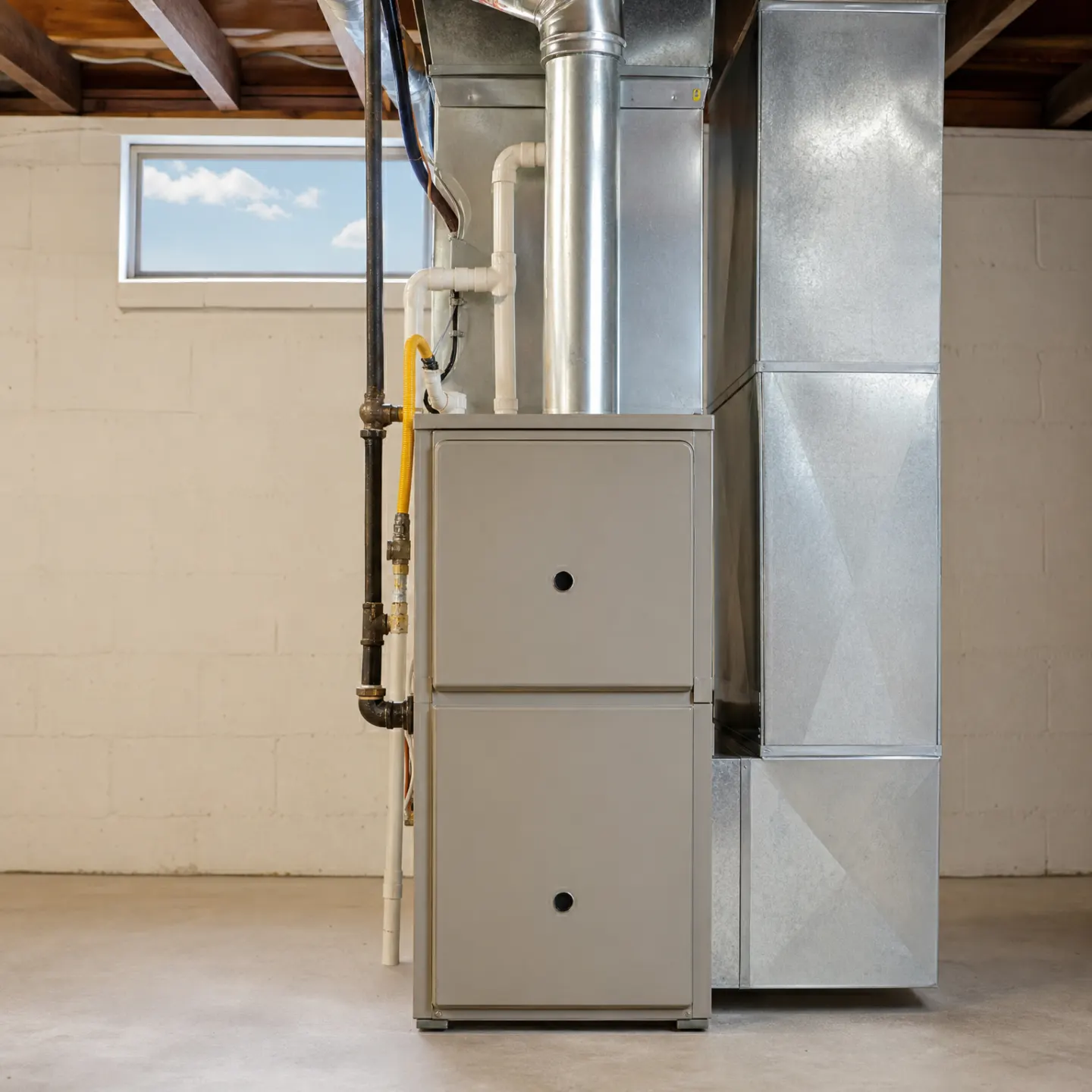
A gas furnace with attached ductwork, gas piping, and condensate lines installed in a concrete-block basement.

Size it for this house, not for a mild winter

Get the sizing wrong and this is the system that pays for it. A unit too small runs flat out from October to May trying to keep up. One too big short cycles, shutting off before it's done heating the house, and that's harder on the igniter and the blower than a long steady run. A contractor sizing your furnace needs the actual house, square footage, insulation, window count, not a guess based on the last unit. That calculation matters more here than in a place where the furnace only has to cover a few mild weeks.

AFUE tells you what's lost up the flue

The rating on the label is how much of the fuel becomes heat in the house versus what escapes burned but unused out the flue. A higher rating wastes less gas doing the same job. It says nothing about how big a house the furnace can heat or how fast, that comes from the sizing, not the label.

A higher rating changes the venting too

Furnaces with a high efficiency rating cool the exhaust enough that it has to leave through PVC pipe instead of a metal flue, often out a side wall instead of up through the roof. Moving up a tier isn't just a swap of the unit, it changes what the installer has to run and where it exits the house.

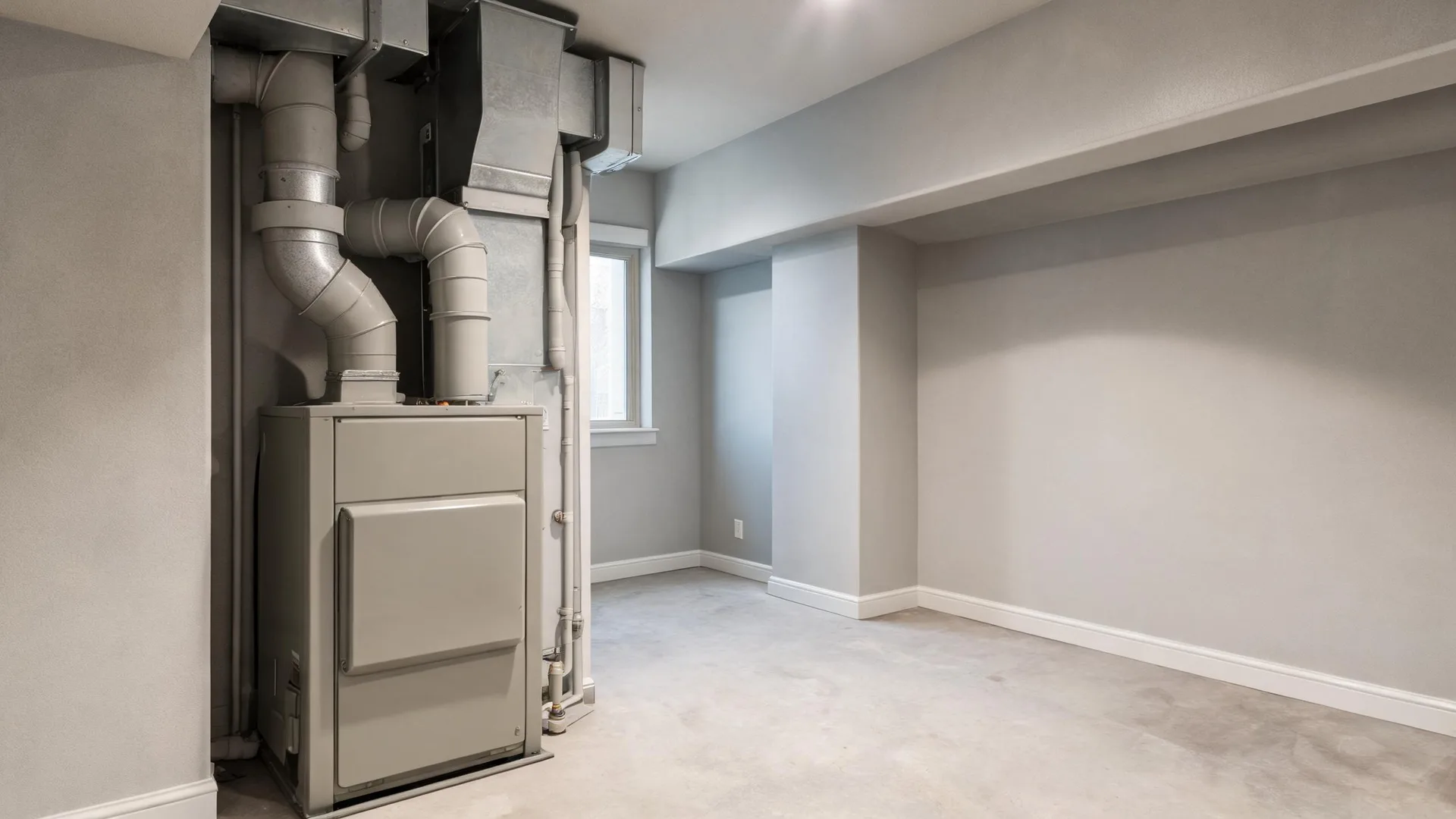
A gray forced-air furnace with metal ductwork stands in an unfinished basement with exposed wooden joists, concrete walls, and a single hanging light bulb.

A high-efficiency gas furnace would save about $120 a year to run in Kendall County compared with a gas furnace.

  • A high-efficiency gas furnace$590 a year
  • A gas furnace$710 a year

Estimates for a typical Kendall County home, from EIA household energy data, Illinois fuel prices and NOAA climate normals. Your home will differ.

The old furnace comes out first, and that tells the installer things a brochure never could. With it gone, they can see the ductwork, the gas line, and the venting and confirm the new unit actually fits what's there. Setting the furnace in place is the fast part. Most of the day goes to connecting it properly. The duct joints get sealed. The venting gets run to the right spot. The gas line gets checked for a tight, safe connection. Once it's running, a good installer doesn't just flip it on and leave. They check the airflow across the heat exchanger and confirm the temperature rise matches what the furnace is rated for. They also make sure the system is actually drawing and venting the way it's supposed to. That last check matters most on high-efficiency units, where the exhaust runs through PVC instead of metal. A loose joint there doesn't show up as a problem right away. It shows up later, and it's not something you'd catch just by looking.