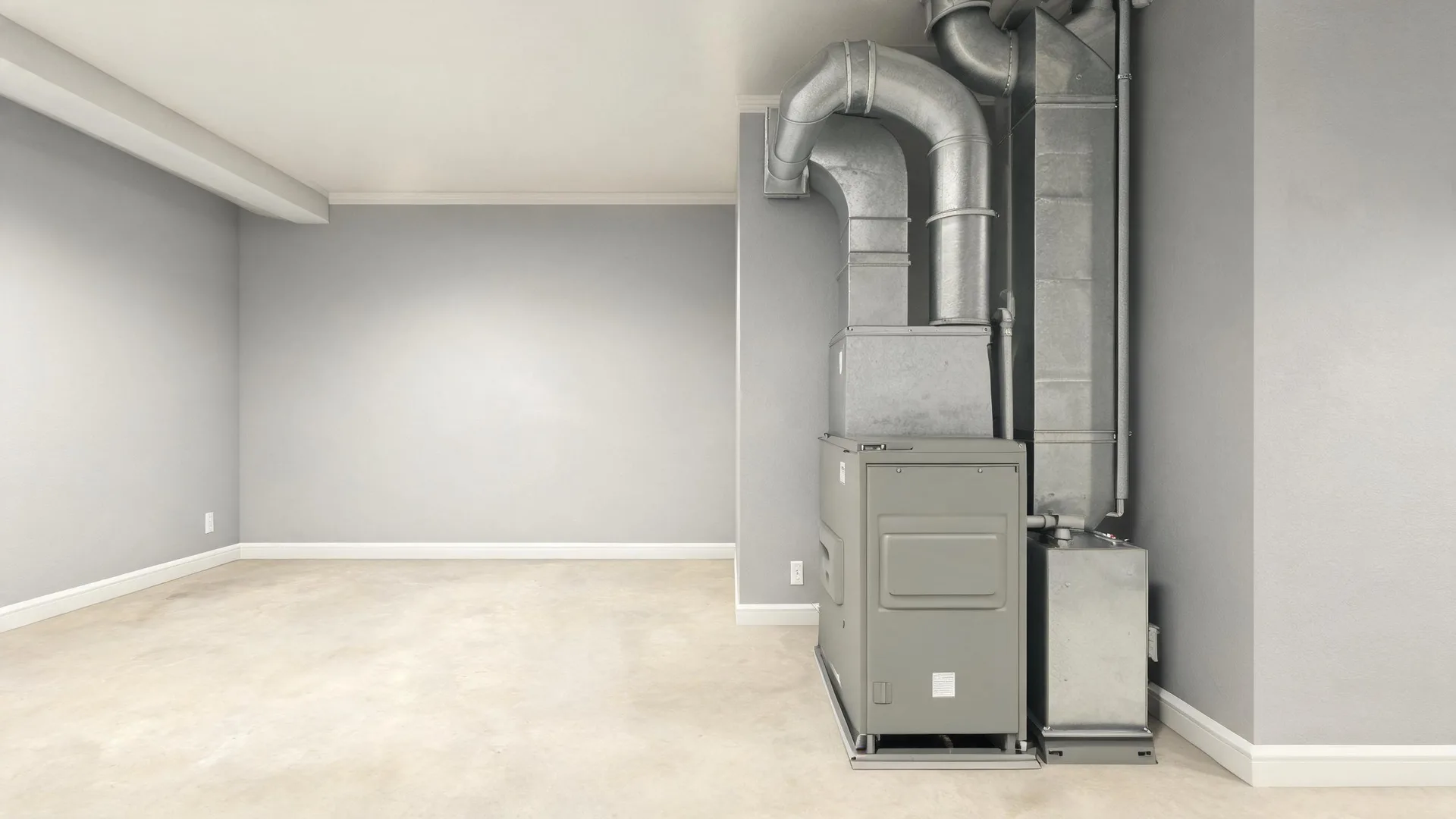
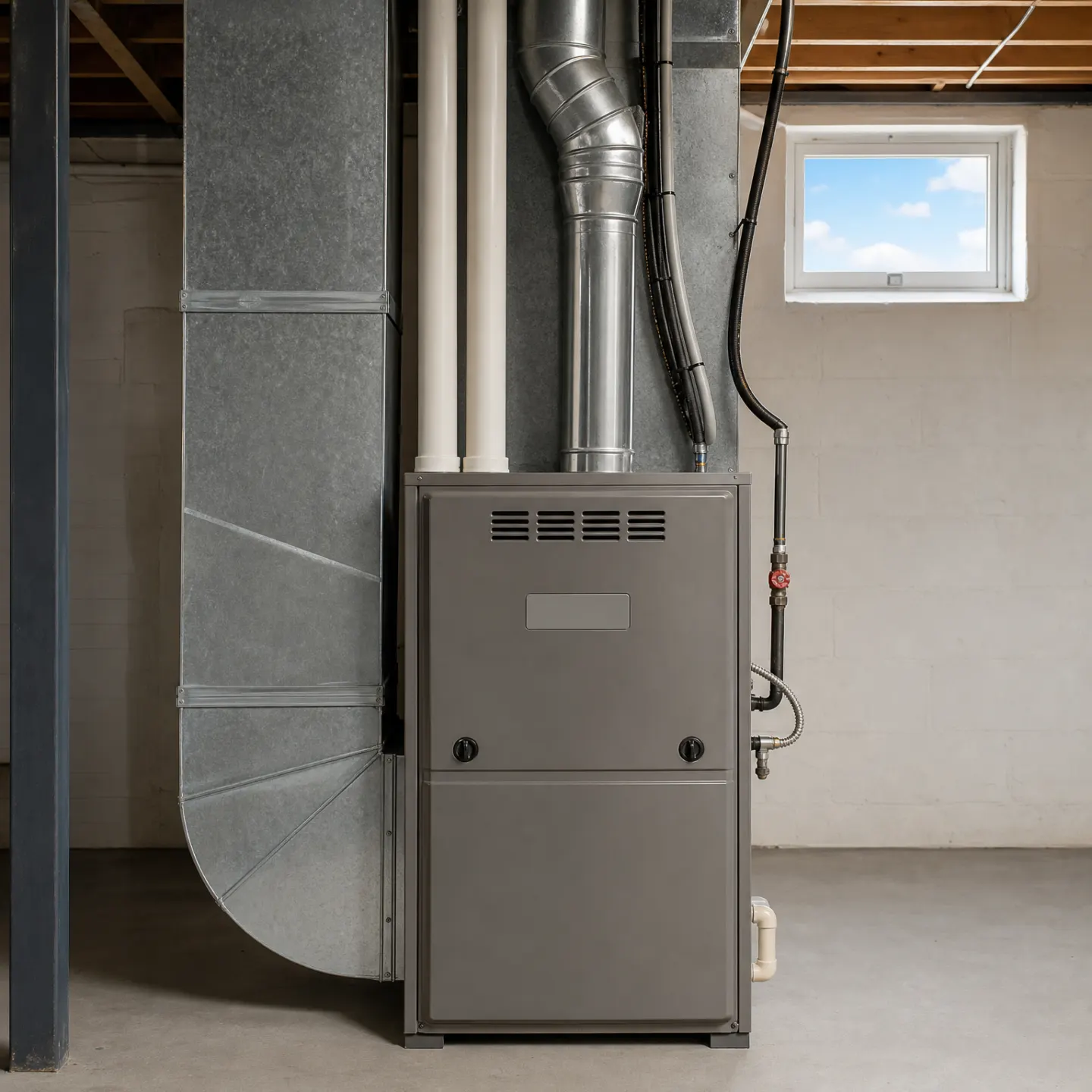
Gas is the standard here
Utility gas heats 78.2% of homes in Boone County. A gas furnace is what most installers here size, vent, and stock parts for.
Takes about a minute. No obligation.
Utility gas heats 78.2% of homes in Boone County. A gas furnace is what most installers here size, vent, and stock parts for.
If your home already has a gas line and a vent for a furnace, replacing it with another gas furnace is usually the straightest job. Switching fuels means new venting or new electrical, and that's a different conversation.
NOAA nClimDiv, 1991–2020 normals
Furnaces in Boone County run October through May, about eight months straight.
Replace it in September and it's ready before that first cold morning, not during it.



Boone County is zone 5A, a cool climate where heating does most of the work. Any furnace installed here has to meet the federal minimum for that kind of unit, which right now is 80.0 percent AFUE for a standard non-weatherized gas furnace. That floor is set to rise to 95.0 percent for units built a few years from now, so the minimum itself isn't fixed forever. A federal tax credit is available for qualifying high-efficiency equipment, worth checking against whatever system you're considering.
Eight months of heat a year, with overnight lows averaging 16°F through December, January and February, is a real load on a furnace. Size it to the house, not to the lowest bid.
Find a contractorAsk what load calculation a contractor runs before they quote a number. Square footage alone does not tell you what a furnace has to do in a house that heats from October through May. The unit that gets sized right is the one you want running on the coldest night in January, not the one that looked good on paper.
An oversized furnace heats the house fast, then shuts off, then fires up again a few minutes later. That short cycling wears the igniter and the blower motor harder than a furnace that runs a long, steady stretch. It also leaves rooms far from the furnace underheated even though the one near it feels fine.
A load calculation looks at the walls, the windows, the ceiling height and how the rooms are laid out, then works out how much heat the house actually loses on the coldest night. That figure, not the square footage on the listing, is what a furnace gets sized against. Houses that look alike from the street can call for different furnaces.
Estimates for a typical Boone County home, from EIA household energy data, Illinois fuel prices and NOAA climate normals. Your home will differ.
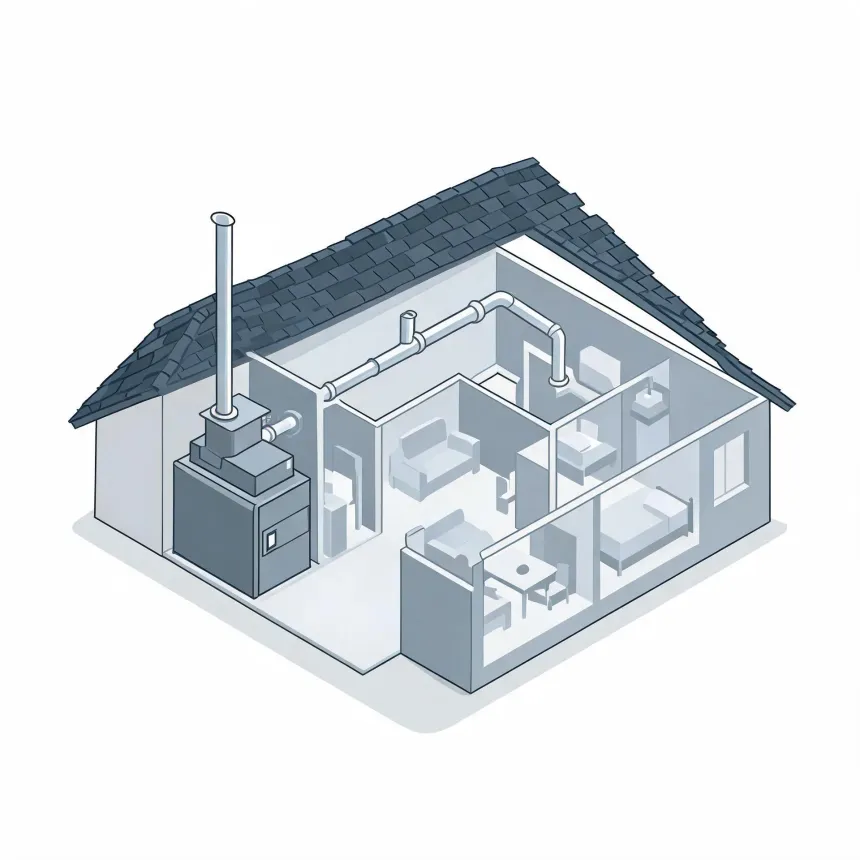
Installation day starts with the old furnace coming out, not the new one going in. The contractor disconnects the gas line, the vent, the electrical and the ductwork connection, then removes the unit before anything new comes through the door. Setting the new furnace means leveling it, connecting the supply and return plenums, running new gas line if the fitting has changed, and venting it according to what that model requires. Once it's in place, the contractor fires it up and checks gas pressure, temperature rise across the heat exchanger, and airflow at the registers. A combustion analyzer reading tells them whether it's burning clean. The last step is walking the house to feel for airflow at the vents and going over the thermostat settings before they leave.