



A quiet residential street at dusk lined with illuminated two-story brick houses and mature trees.

Furnace Repair in Belvidere, IL

Tell us about the job

Takes about a minute. No obligation.

Step 1 of 3: Equipment

Furnaces in Boone County run from October through May. That's eight months out of the year the burner, igniter and blower are all doing their job, not just through a few cold snaps. More months running means more cycles on every part. The igniter fires more times. The blower motor logs more hours. When something starts acting up here, it's usually not bad luck. It's a part that's earned its wear faster than it would somewhere milder. Worth having someone look at the actual cause rather than guessing.

8 months
October through May, your furnace is on duty
16°F
the average winter night it heats against
78%
of homes here heat with gas, so most furnaces here burn gas
14 winter storms
in ten years, the nights a failure hurts most
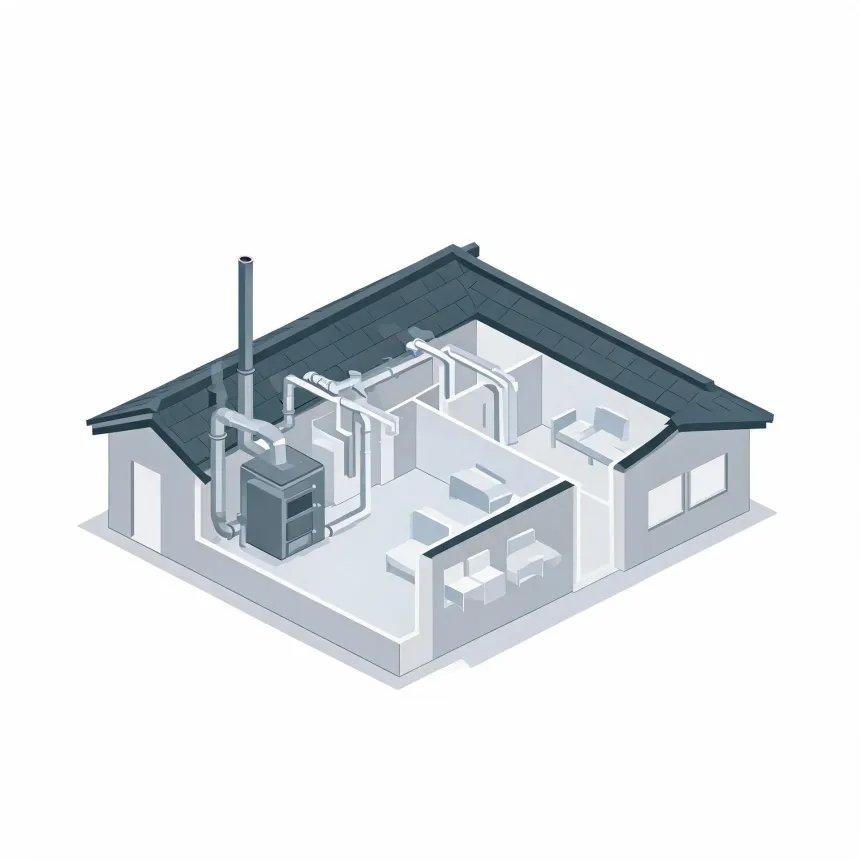
Isometric cutaway illustration of a single-story house showing interior rooms with a dark furnace unit, connected ductwork, a vertical flue pipe through the roof, and simple furniture, on a white background.
Your furnace works hardest from November through March.

NOAA nClimDiv, 1991–2020 normals

October is when Boone County furnaces switch on for the year.

A furnace that struggled at the end of last season will show it again in the first cold week, not months from now.

If your system's newer, let a repair earn its keep before you consider replacement

Half the homes here were built by 1986
Climate zone 5A
Heat runs October through May

A newer build doesn't mean a furnace is immune to the wear this area puts on it, but it does change what a repair call is likely to find. A system that's only a decade or two old hasn't had time to develop the kind of age-related failures that come from decades of hard winters, a cracked heat exchanger or a blower motor that's simply used up. What it runs into is a single part wearing out ahead of schedule, an igniter, a flame sensor, a pressure switch, something that's logged more cycles than it would somewhere milder. That's a repair, not a replacement. If you're not sure how old your system is, the data plate inside the furnace cabinet has the manufacture date on it.

Find the part that wore out, not just the symptom

Eight months of run time wears parts down faster than a mild climate would. When a furnace here starts acting up, that wear is the likely cause, not bad luck. A proper diagnosis finds which part earned its failure and fixes that, instead of guessing.

Find a contractor
A man in a cap, dark jacket and tan work pants walks up concrete steps toward a dark blue front door, carrying a canvas tool bag at his side.
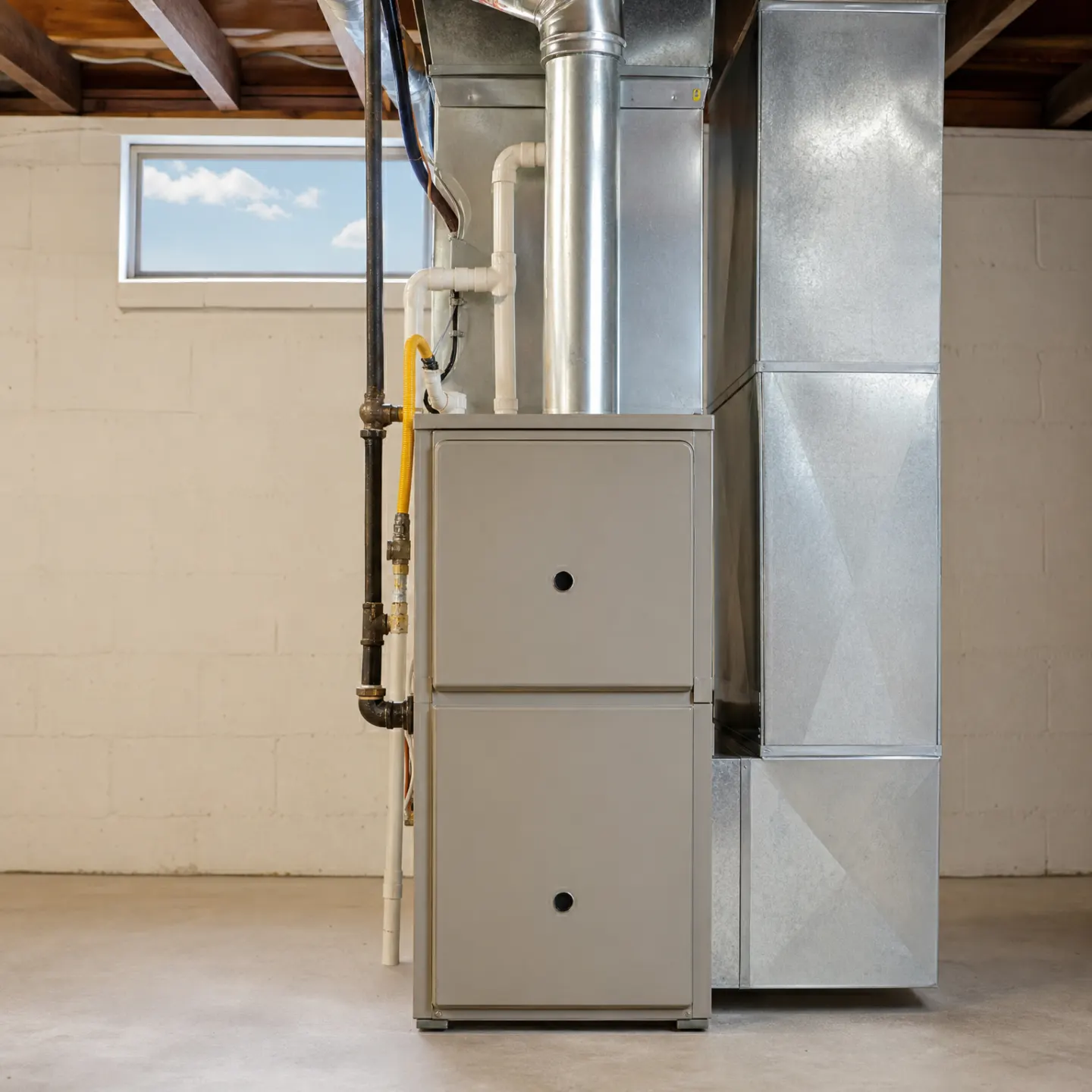
A gas furnace with attached ductwork, gas piping, and condensate lines installed in a concrete-block basement.

What to check before you pick up the phone

Before you call anyone, a few things take two minutes and rule out the obvious. Check the thermostat is set to heat and the temperature is actually above room temperature, not sitting right where it is. Check the filter. Pull it out and hold it to a light. If you can't see light through it, that's choking airflow and can cause the furnace to shut itself off partway through a cycle. Go to the furnace itself and look for a light on the control board, usually visible through a small window on the front panel. A steady or blinking light pattern means something, and the manual taped inside the cabinet door will tell you what. Check that the switch on or near the furnace, the one that looks like a light switch, is flipped on. It's easy to bump off during other work nearby. If your furnace has a standing pilot, check whether it's lit. If it's gone out, there's usually a relight procedure printed right on the unit. Last, make sure nothing's blocking the vents or the return air grille in the house, and that the exterior vent pipe outside isn't blocked by anything. None of this fixes a bad igniter or a failed control board, but it rules out the simple stuff before someone comes out to look at the rest.

Most failures start with ignition

The igniter is the part that gives out most often. It's a thin strip that heats up to light the burners every single cycle, and that heating and cooling, over and over, is what eventually cracks it. A flame sensor can fail the same job in a different way, coating over with a film until it can't tell the burners are lit, so the control board shuts things down as a safety measure.

The blower motor wears on a longer clock

A blower motor fails on a different timeline than the igniter. It's running a bearing and a motor housing through every single heating cycle, so the wear is slow and mechanical rather than sudden. A motor on its way out usually gives some warning first, a grinding noise, a squeal on startup, air that comes out weaker than it used to, before it quits outright.

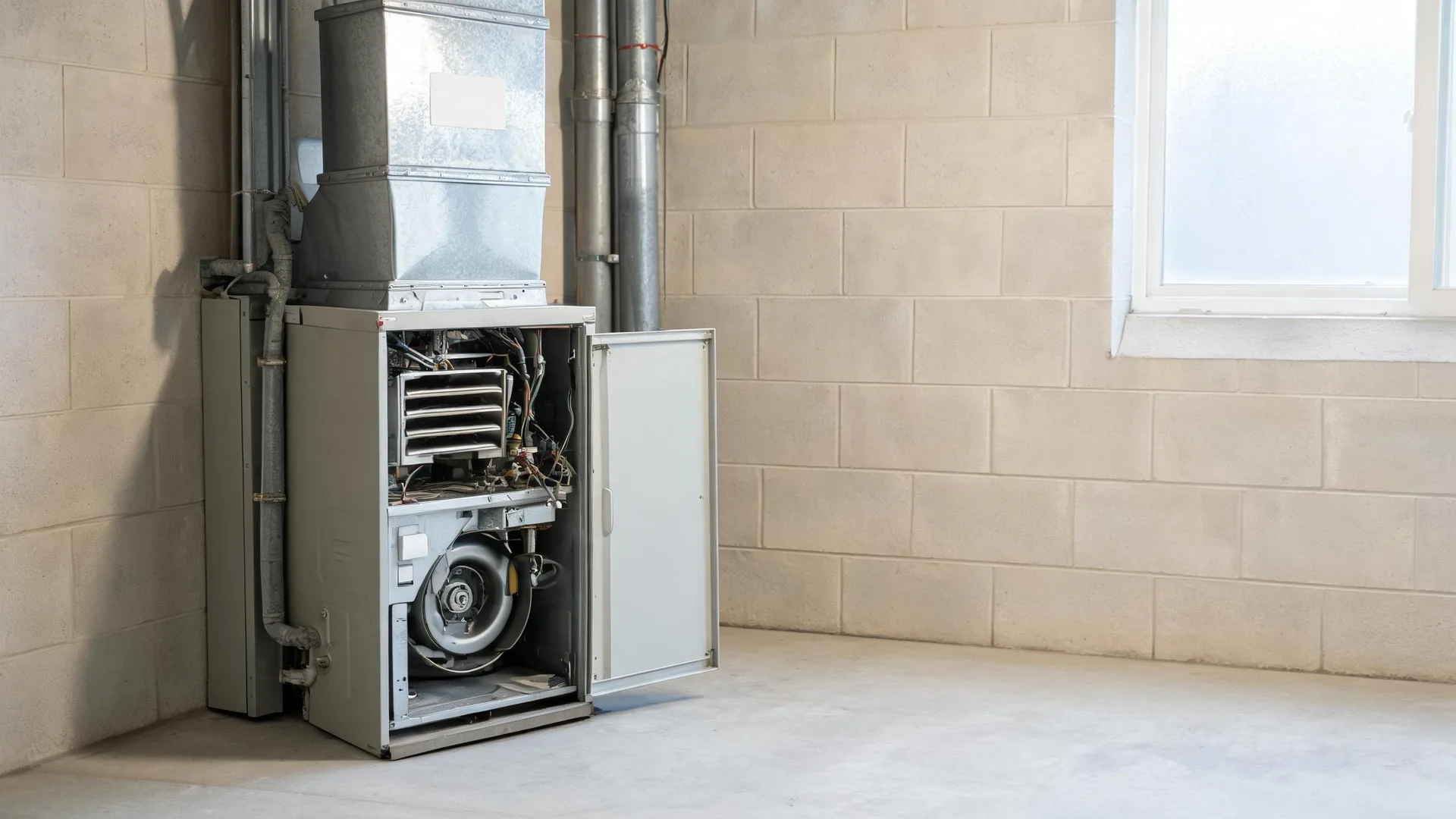
A gray forced-air furnace with ductwork stands in an unfinished concrete basement surrounded by storage items and clutter.

A new furnace would cut about $150 a year off heating for a typical Boone County home.

  • A new high-efficiency furnace$640 a year
  • An older furnace$790 a year

Estimates for a typical Boone County home, compared with an older unit built to the previous federal minimum, from EIA household energy data, Illinois fuel prices and NOAA climate normals. Your home will differ.

Repair makes sense when one part has failed and the heat exchanger is sound.

Replacement makes sense when the heat exchanger is cracked or the furnace keeps needing parts.

A diagnostic visit starts before any panel comes off. A tech asks what the furnace was doing: short cycling, blowing cold air, not starting at all, making noise. That tells them where to look first instead of checking every part in order. From there it's the control board, since most furnaces store a fault code as a blink pattern even if the homeowner never noticed a light flashing. That code narrows things down to a system, ignition, airflow, limit switches, before any tool touches a wire. Then it's hands on the likely part: pulling the igniter to check for a crack, cleaning or testing the flame sensor, checking the pressure switch with the blower running. A full visit also means checking gas pressure and looking over the heat exchanger, since a cracked one is a safety issue and not just a repair decision. The part causing the trouble usually gets found this way, by narrowing it down, not by replacing things one at a time and hoping.