



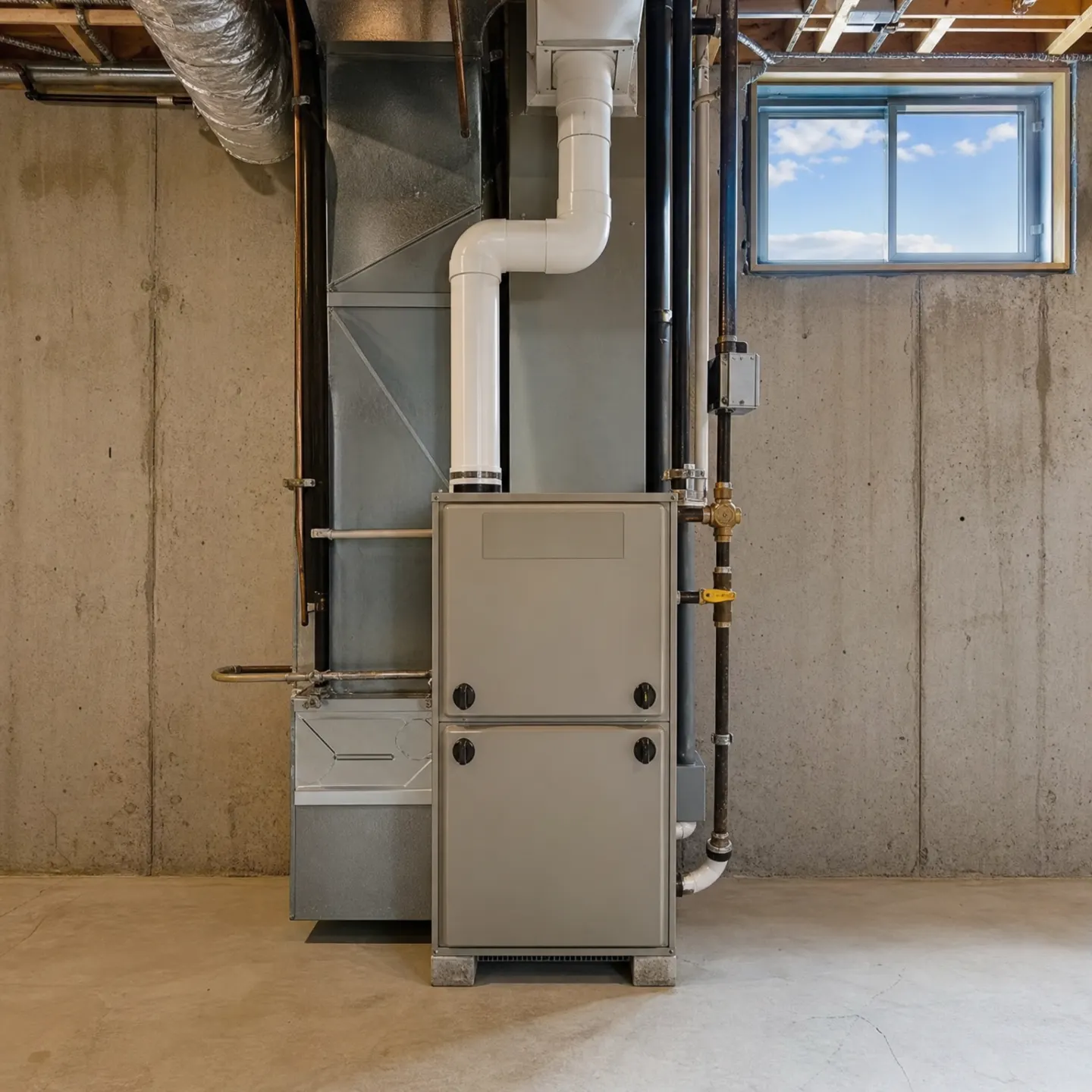
An unfinished basement interior showing a gray furnace unit beneath a bare incandescent bulb, surrounded by exposed joists, concrete walls, cardboard boxes, and utility pipes.

Furnace Maintenance in DeKalb, IL

Tell us about the job

Takes about a minute. No obligation.

Step 1 of 3: Equipment

Eight months of the year, a furnace in DeKalb County is running. October through May, it's the thing standing between your house and the cold outside. That's longer than a tune-up sticker or a filter box assumes, and it adds up inside the cabinet. The igniter cycles more times. The blower motor logs more hours. A furnace that runs that much shows its wear earlier than one that only kicks on a few times a week somewhere milder. Small problems don't stay small when the system barely gets a break.

A furnace that short cycles, turning on and off in quick bursts, is working against a clogged filter or a cracked heat exchanger, not with it.

A tune-up catches the short cycle before it burns out the blower motor.

October is when it starts working. September is when it gets checked.

Heat runs October through May
Climate zone 5A
Winter nights average 17°F

Most houses in DeKalb County heat with gas, better than seven in ten. A handful run on propane, and both work the same way: a burner lights, and the exhaust has to vent outside the house. That burner and that vent are where a gas furnace runs into trouble, not just the filter slot. A cracked heat exchanger or a clogged vent doesn't show up as weak heat, it shows up as carbon monoxide in a house that's sealed up tight for winter. A tune-up checks the flame sensor, the igniter and the venting, the parts a filter change never touches. Electric furnaces, the other fifth of homes here, skip the combustion side entirely, but gas is what most of DeKalb is heating with.

Have It Checked Before It Has to Run

A furnace that runs eight months straight does not get much downtime to reveal a weak igniter or a tired blower motor on its own. A tune-up before October finds those parts while they are still easy to fix.

Find a contractor
A gray gas furnace with attached ductwork and piping installed in an unfinished concrete basement.

What the Cabinet Doesn't Show You

A flame should burn steady and blue. Let a burner run dirty or out of adjustment and the flame turns yellow, and that means it's not burning clean. A technician pulls the burner assembly to look at it directly, something no homeowner does between service calls. The blower wheel is another one. Dust and debris build up on the blades over time and most people never see it, because looking means pulling the panel off the cabinet. A wheel caked with buildup moves less air for the same effort, so the motor runs longer to push out the same heat. Amp draw on that motor tells its own story. A motor pulling more current than it should is working harder than it used to, and that shows up as a number on a meter before it ever shows up as a breakdown. Static pressure in the ductwork is checked the same way, with a gauge, not a guess. None of this is visible from the thermostat on the wall. A furnace can sound fine and heat the house fine while a part inside it is already most of the way to failing.

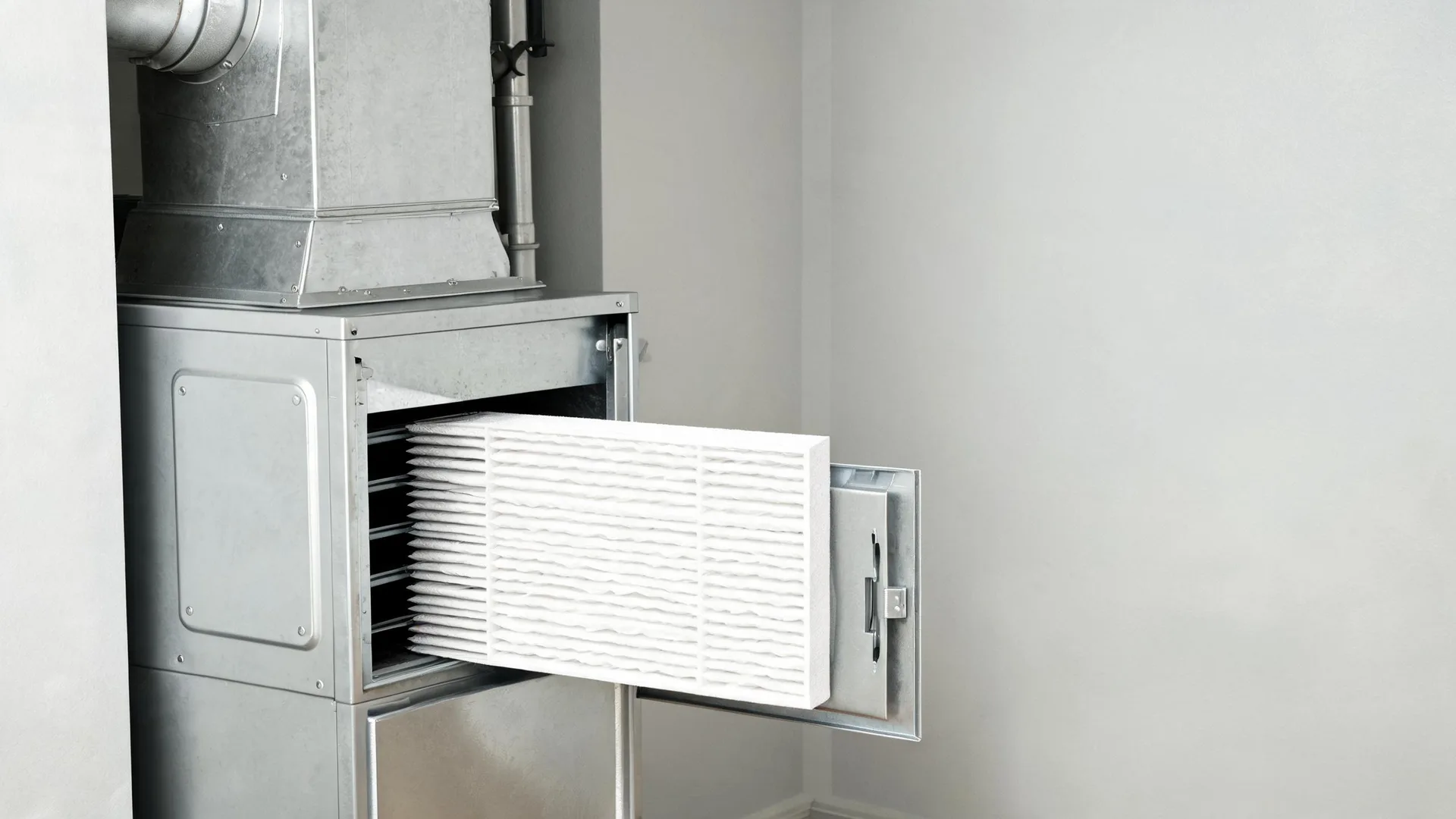
Change the Filter

A dirty filter is the one thing a homeowner can actually check without tools. Pull it out, hold it to a light, and if you can't see through it, swap it. A filter that's choked down starves the furnace of airflow, and that makes the blower motor work harder and can run the heat exchanger hotter than it should get. This is the one job that's yours between visits. Past the filter slot, the cabinet is a technician's job, not a homeowner's.
Know What Shouldn't Happen

Between visits, pay attention rather than open the cabinet. A burner flame should be steady and blue, visible through the little window on the front panel. Yellow or flickering means something's off with the burn. A furnace that cycles on and off in quick bursts, instead of running a steady stretch, is struggling with something, not warming up normally. A burning smell that doesn't fade after the first run of the season isn't normal either. None of these call for a wrench. They call for noticing, and knowing when something's worth a call before the next scheduled check.

A quick tune-up and a thorough one can look the same on the invoice. The difference is whether anyone actually tested anything. Swapping a filter and glancing at the flame through the window takes a few minutes and tells you almost nothing about whether the furnace will make it through winter. A real tune-up means the panel comes off. The flame sensor gets cleaned or replaced, not just looked at. The igniter gets checked for cracks, since a hairline crack there won't show until the day it finally gives out. The blower wheel gets inspected for buildup on the blades, and amp draw gets measured on the motor, because a motor pulling too much current is already working harder than it should. Gas pressure gets checked at the manifold, not assumed. If nobody opens the cabinet and nobody writes down a number, it wasn't a tune-up. It was a filter change with extra steps.

A tune-up follows a set order because failures follow a set order too. The filter gets checked first, since restricted airflow strains everything downstream of it. Then the burners, pulled and cleaned if soot or dust has built up on them, because a dirty burner doesn't burn clean no matter how good the igniter is. The flame sensor gets cleaned next. A thin film forms on that rod over time, and once it builds up enough, the sensor can't tell the furnace a flame is lit, so the system shuts itself down a few seconds after startup. The igniter gets a visual check for hairline cracks, since it either glows and lights the gas or it doesn't, with nothing in between. Belts don't come into it on a furnace like this. The motor connects straight to the blower wheel, so what matters there is the wheel itself, how much resistance the motor is working against, and whether the bearings still turn quiet. Gas pressure gets set at the manifold last, after everything upstream of it is already clean and tight.