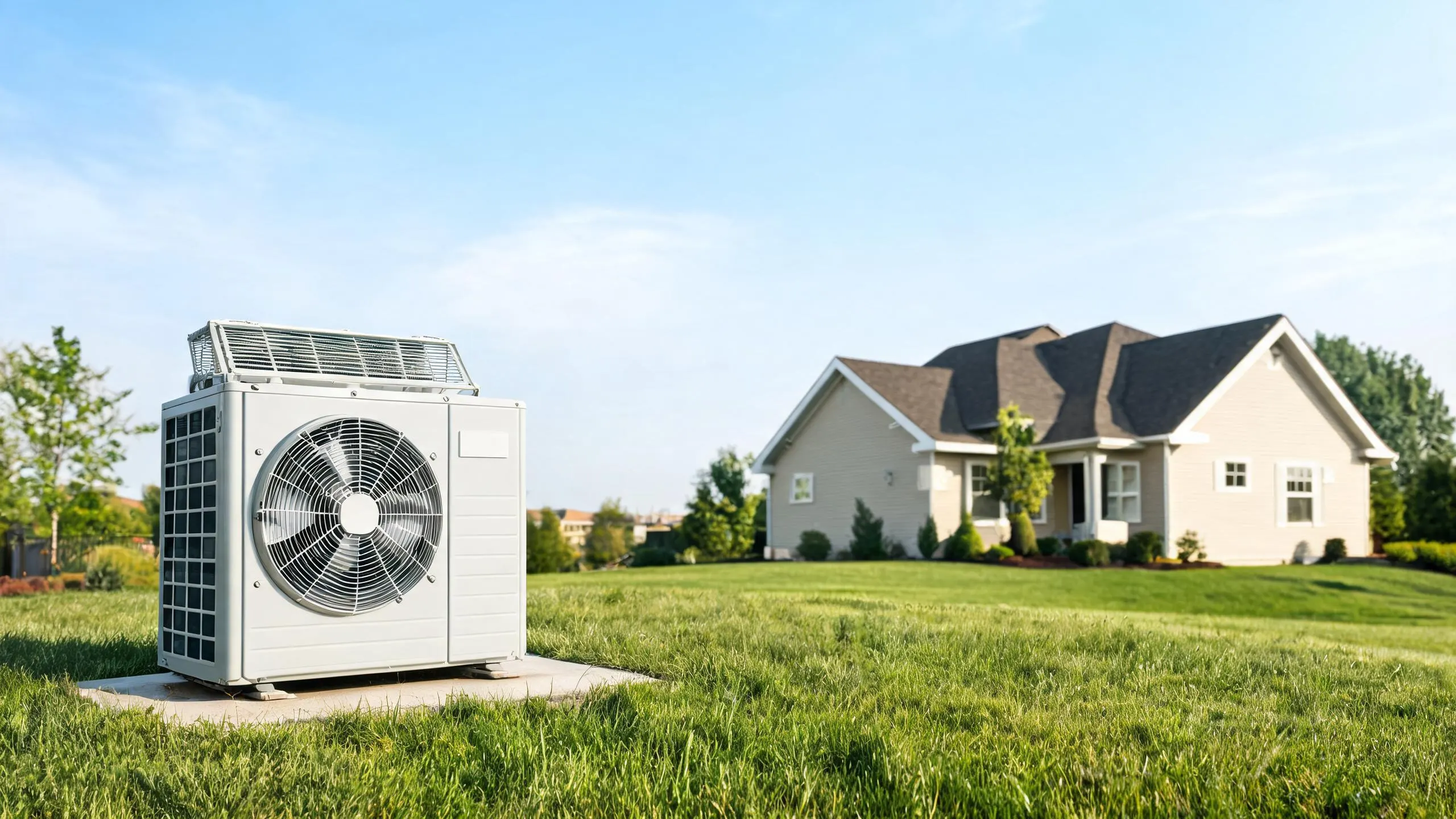




An outdoor air conditioning condenser unit mounted on a concrete pad in front of a single-story suburban house.

Heat Pump Installation in Oswego, IL

Tell us about the job

Takes about a minute. No obligation.

Step 1 of 3: Equipment

A heat pump runs on electricity, and electricity here averages 17.94 cents per kilowatt-hour, higher than most US counties pay. That rate applies to every kilowatt the compressor pulls, all year long. Summer adds to the load. The dew point in Kendall County averages 63°F across June, July and August, heavy enough that the system has to work to pull moisture out of the air along with the heat. A unit with a higher efficiency rating moves that same heat and humidity using less power to do it. On a meter already charging more than most places pay, that difference shows up on every bill, not just the ones that stand out.

8 months
October through May, your system heats
3 months
June through August, it cools
19°F
the average winter night it heats against
83°F
the average summer afternoon it cools against
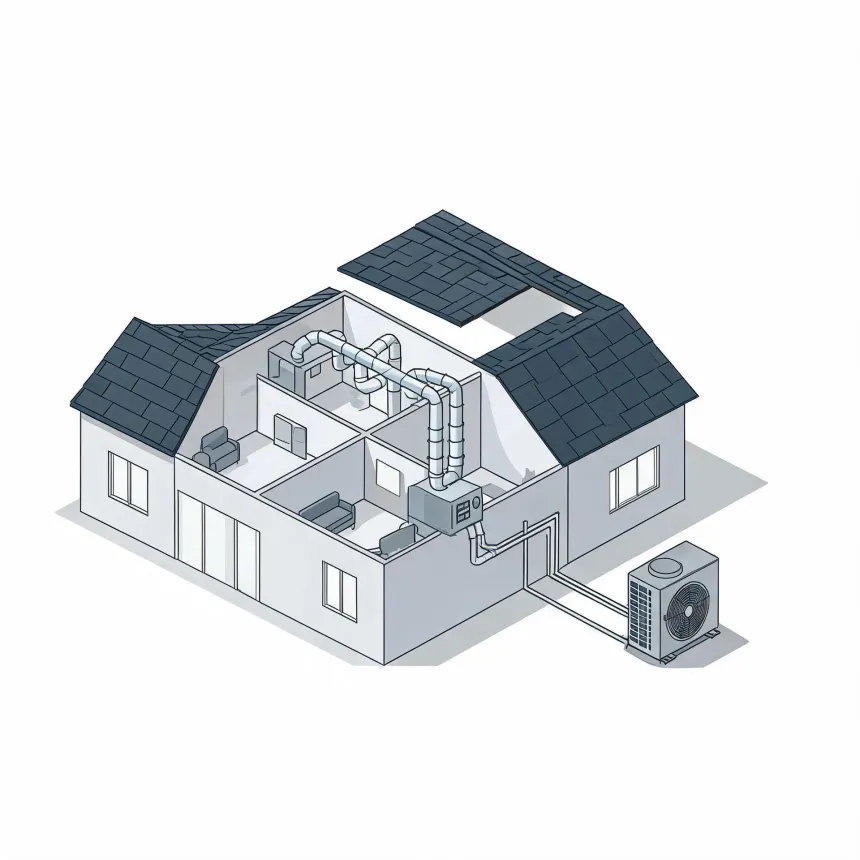
Isometric line illustration of a cutaway single-story house showing interior rooms, ceiling ductwork connected to an indoor air handler, and refrigerant lines running to an outdoor condenser unit on a pad.
Your system heats October through May and cools June through August.

NOAA nClimDiv, 1991–2020 normals

A heat pump sized too big cools the room fast, then shuts off before it pulls the moisture out of the air.

The right size runs longer at a steadier pace, so the install starts with a load calculation on this house, not a guess based on square footage.

Eight months of heat, three months of cooling: get it done before the season needs it

Cooling runs June through August
Heat runs October through May
70 damaging wind events from 2015 to 2024
Built for a gas furnace county86.7% of homes here heat with gas, so a heat pump is usually new ground, not a swap

Kendall County falls in climate zone 5A, a zone where heating carries the bigger share of the work over the year. Any split-system heat pump installed here has to meet the federal minimum for that zone: at least 14.3 Btu of heat moved per watt-hour of electricity over summer, and at least 7.5 Btu per watt-hour over winter. That floor applies to every unit built since the start of 2023, so it is not a feature to look for, it is the baseline a contractor is already working from. What is worth comparing is how far above that floor a given system sits, since a unit closer to the minimum will lean harder on a power rate that is already high here. A federal tax credit is available on qualifying installations, which offsets some of the cost of going beyond that baseline.

On a meter this expensive, the system's rating is worth as much as its price

The efficiency floor is the minimum, not the target. Ask what rating the installer is proposing above it, and weigh that against what you pay per kilowatt-hour here. A system you pick for its rating keeps paying you back after the install is done.

Find a contractor
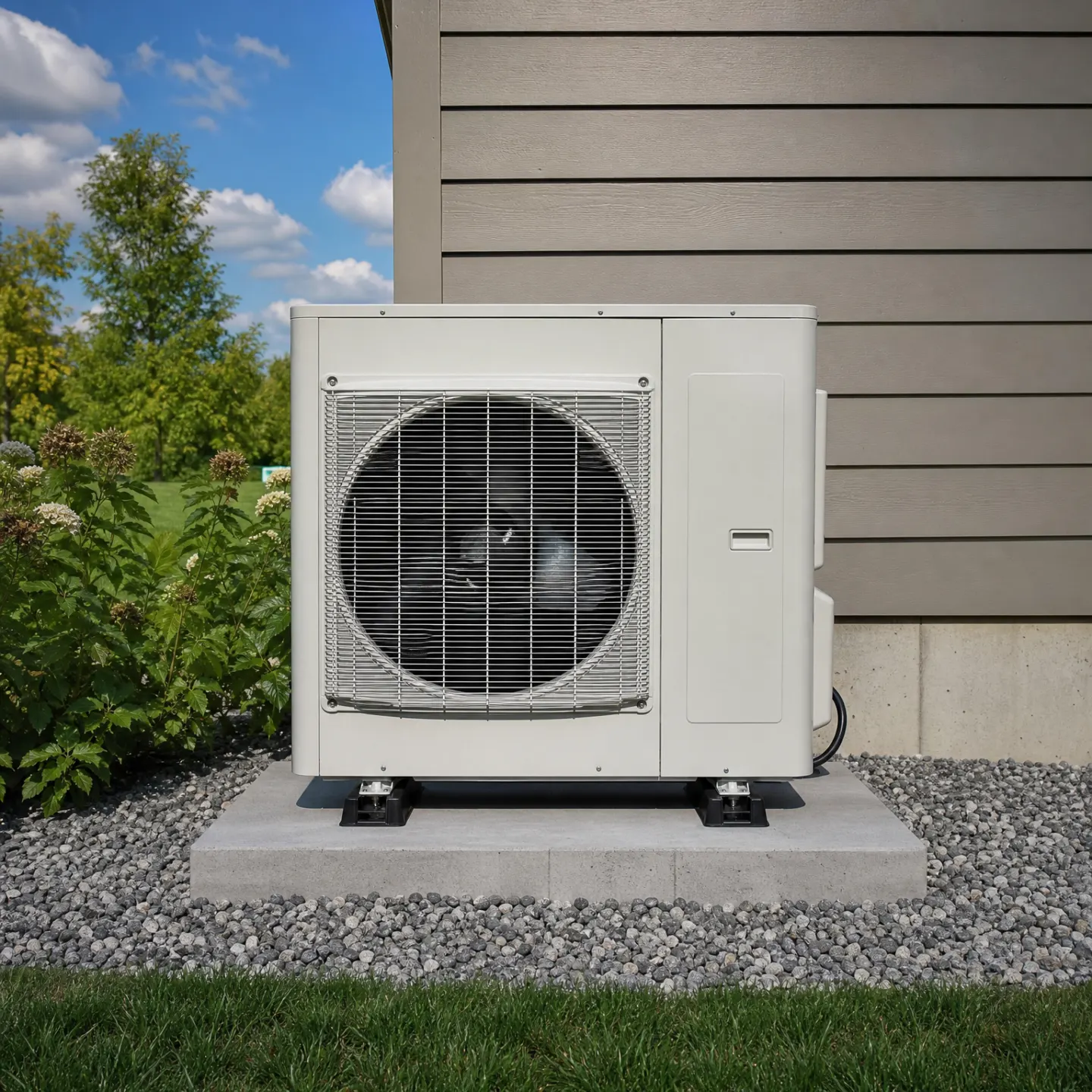
A white mini-split heat pump outdoor unit mounted on a concrete pad beside a gray-sided house, surrounded by gravel and green shrubs.

The install work decides what the rating actually delivers

What you pay for in an installation is labor, not just the equipment in the box. A heat pump has an outdoor unit and an indoor coil, and both have to be matched to each other and to the ductwork already in the house. If the ductwork is too small for the airflow a heat pump needs, that has to be fixed or the system never performs the way its rating says it should. Line sets get run between the outdoor unit and the coil, and refrigerant gets weighed in. That charge has to be exact, not close. A unit running on the wrong charge works harder than it should for as long as it's installed that way, and that extra effort shows up on the meter long after the crew has packed up.

Ask for the same rating on paper, not just the brochure number

The rating printed on a brochure is tested under fixed lab conditions. What matters is the AHRI certificate for that exact outdoor unit paired with that exact indoor coil, since mismatched pairs perform below their rated number. Ask the installer for the AHRI number for the combination they are proposing, not just the model names.
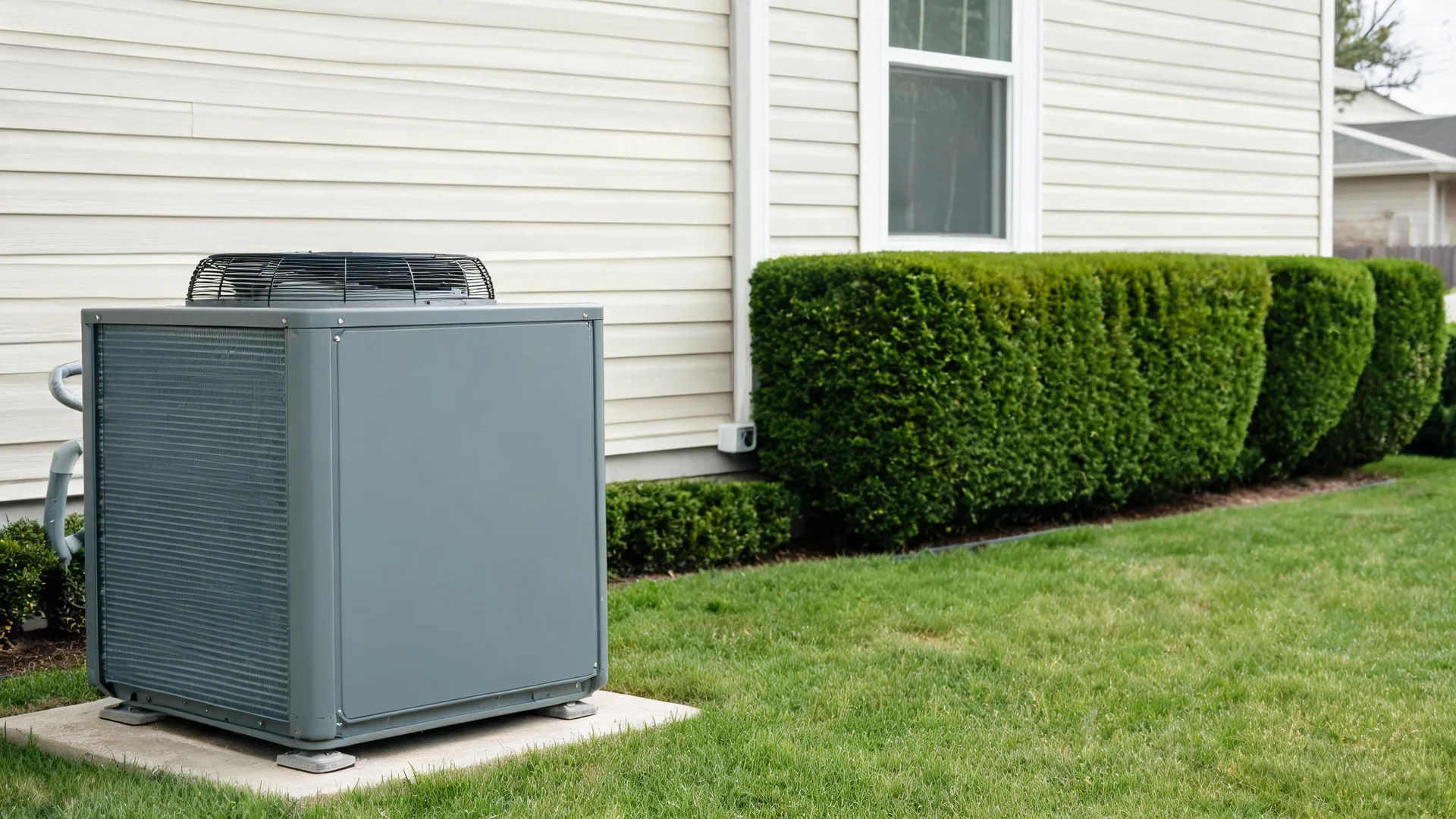
Ask what happens on the coldest day, not the average one

Every heat pump loses capacity as the air outside gets colder, and each model has a different curve. Ask what the unit can still deliver at the lowest temperature the area sees, and what backup heat kicks in below that point. A system that quietly leans on backup heat all winter will cost more to run than the rating on the box suggests.

The rating on the label, the SEER2 and HSPF2 numbers, comes from a lab test run at fixed conditions, not from your house. SEER2 measures cooling output against the power drawn over a range of summer conditions, and HSPF2 does the same for heating. Neither number tells you what the unit draws on any single hot afternoon or cold morning, only an average over a season of lab-simulated weather. Two units with the same rating can still behave differently in a real house, because the rating doesn't account for duct losses, a mismatched coil, or a system sized wrong for the space. It's a fair way to compare one unit against another before you buy. It's not a promise of what your meter will show once the thing is installed and running.

Installation day starts outside with the old equipment coming out, if there was any, and the new outdoor unit getting set on a pad or bracket where it won't be buried in snow or clogged with debris. Line sets run between that unit and the indoor coil, usually through a wall, and those lines get brazed, pressure tested, then pulled down to a vacuum to clear out air and moisture before any refrigerant goes in. Skip that step and moisture sits in the system, which corrodes parts and ruins the charge over time. The indoor coil goes in above or beside the furnace, and the furnace's own blower often stays in place to move air for both systems. Electrical work comes next, since a heat pump needs its own dedicated circuit and disconnect, sized for the compressor it's running. Once everything is connected, the crew charges the system to the exact weight the manufacturer specs, not by feel, and checks that charge against the line length and outdoor temperature that day. Last comes startup: running the system in both modes, checking airflow at the vents, and setting the thermostat to control the heat pump and any backup heat correctly. A job done right ends with the installer walking the thermostat settings with you, not just packing up tools.