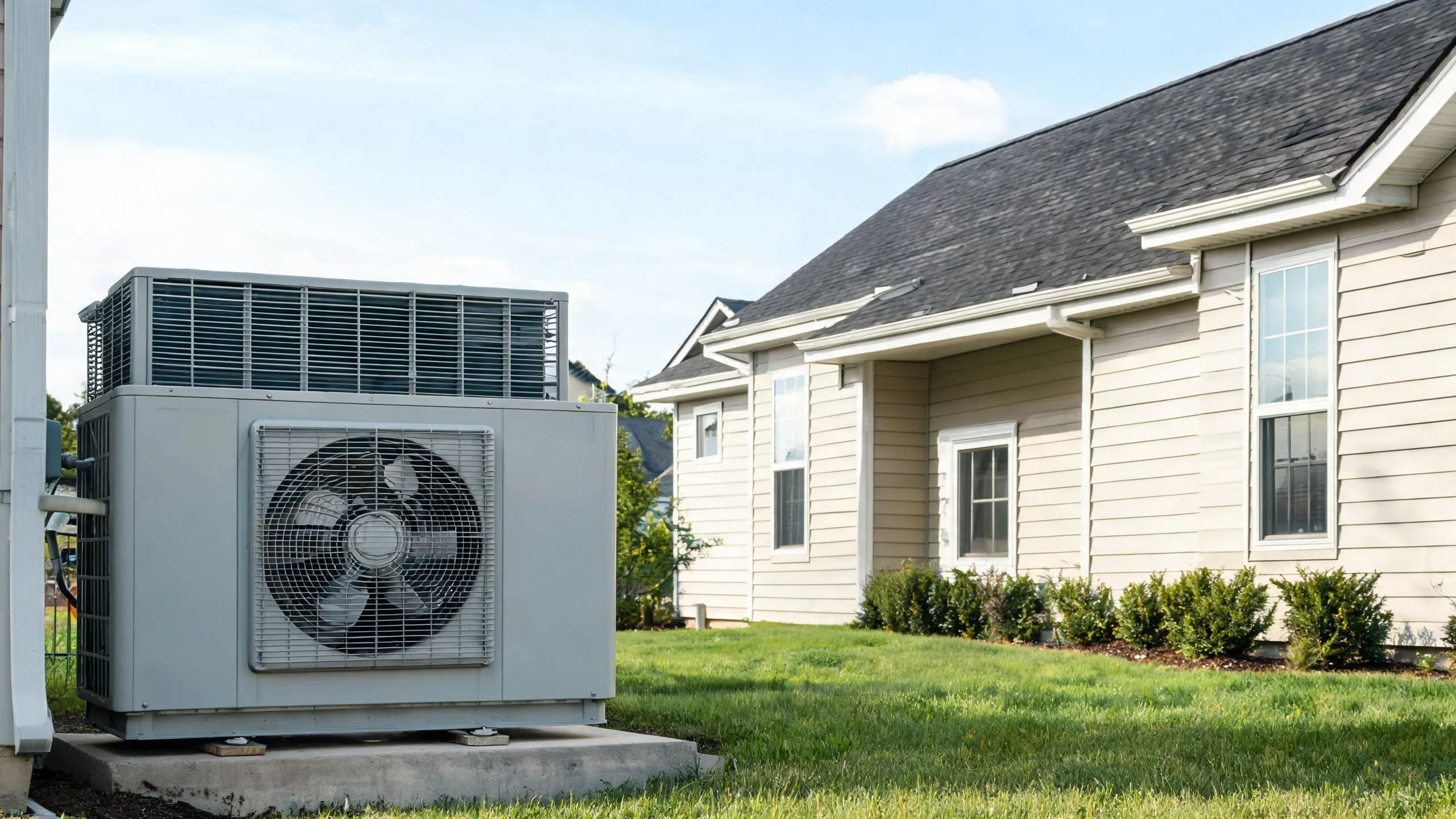




An outdoor HVAC condensing unit on a concrete pad next to a beige single-story house with a dark shingle roof.

Heat Pump Installation in Ottawa, IL

Tell us about the job

Takes about a minute. No obligation.

Step 1 of 3: Equipment

Electricity in LaSalle County averaged 16.82 cents per kilowatt-hour in 2025, higher than most of the country pays. A heat pump runs on electricity to both heat and cool, so that rate follows it year round, not just in summer. Summers here add their own load. The dew point averages 63°F across June, July and August, which is heavy, sticky air, and the unit has to pull that moisture out along with the heat. Every kilowatt it uses costs more here than it would somewhere with cheaper power. A unit that does the same job on less of it keeps that difference off the bill, month after month.

8 months
October through May, your system heats
3 months
June through August, it cools
19°F
the average winter night it heats against
83°F
the average summer afternoon it cools against
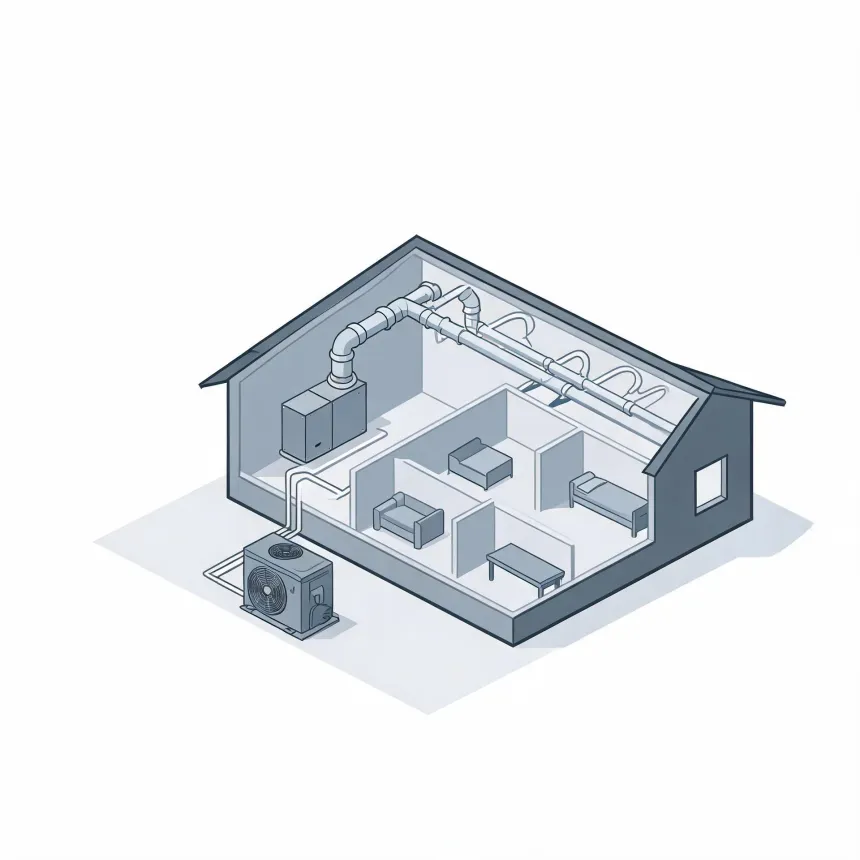
Isometric line illustration of a cutaway house showing interior rooms with furniture, a furnace or air handler with overhead ductwork, and an outdoor condenser unit connected by lines outside the wall.
Your system heats October through May and cools June through August.

NOAA nClimDiv, 1991–2020 normals

Heat pumps here run heat from October through May, about eight months a year.

A system going in before October starts the winter on a schedule you picked, not one a breakdown picked for you.

Half these homes were built by 1963. A new heat pump has to work with what's already there.

Half the homes here were built by 1963
124 damaging wind events from 2015 to 2024
39 hail events from 2015 to 2024
Most Homes Here Already Run On GasUtility gas heats 76.1% of homes in LaSalle County, and a heat pump has to work alongside it or replace it.

LaSalle County sits in climate zone 5A under the 2021 energy code, a cool zone on the humid side where heating is the bigger job for the system. Any split-system heat pump built from 2023 on has to clear a federal floor: at least 14.3 Btu of cooling for every watt-hour it draws over the summer, and at least 7.5 Btu of heat for every watt-hour over the winter. That floor is the same everywhere in the country. What changes here is how much it matters, since winter is the longer season and power costs more to run it on. A unit built right at the minimum still qualifies and still heats the house. One built higher pulls more heat from the same watt-hour, all winter long.

Pick The Efficiency Before The Install, Not After

The efficiency rating on the unit going in is the number that follows you onto every bill, winter and summer, for as long as it runs. A system built right at the federal minimum still heats and cools the house. One built above it pulls more out of every watt-hour, and power here costs more than most places pay for it. That difference is worth settling before the unit goes in, not after.

Find a contractor
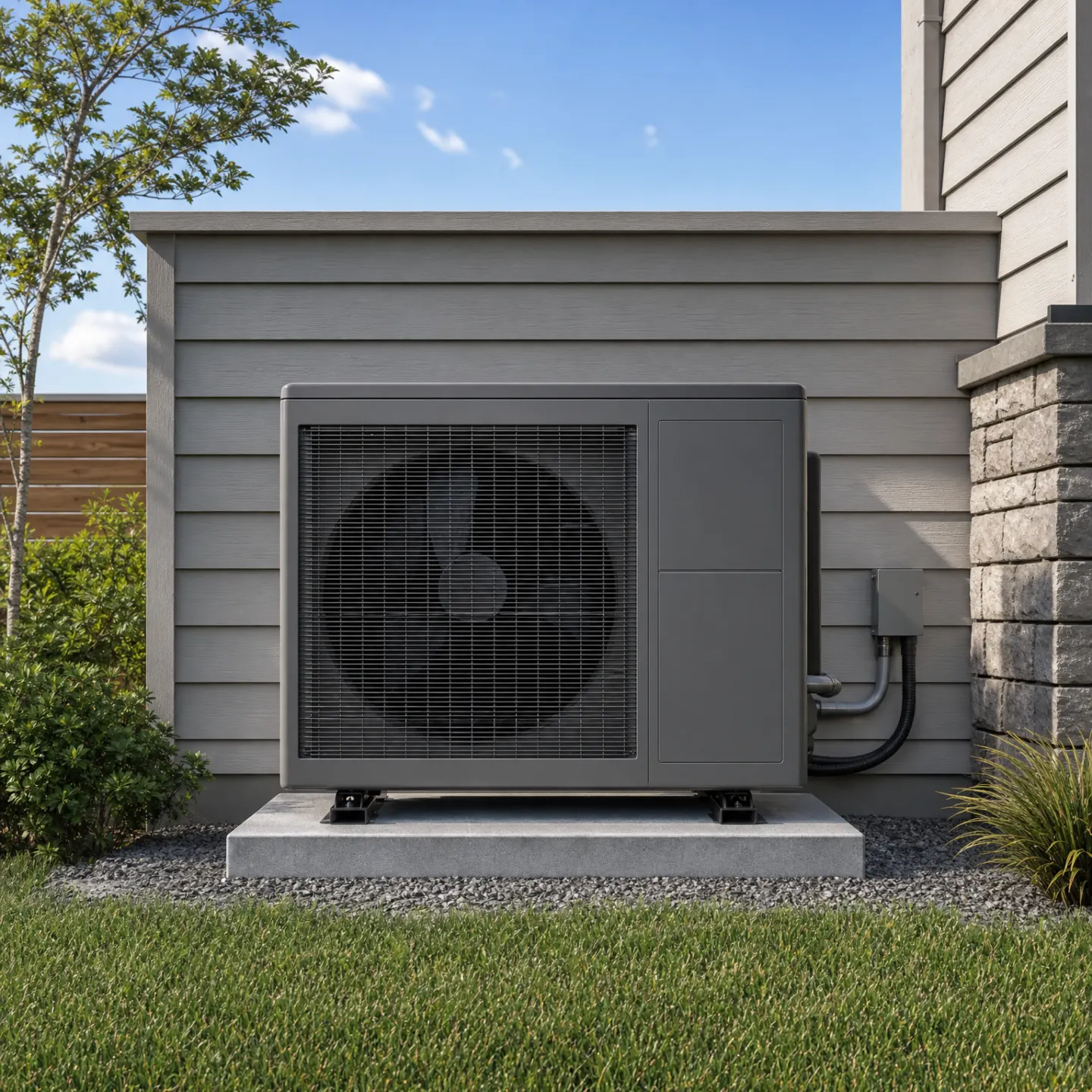
A gray heat pump outdoor unit mounted on a concrete pad next to a residential house with lap siding and stone accents.

Installed Once, Running For Years After

The day-and-night clip beside this shows one stretch of running time. Multiply that by the months this machine works, and by the years it sits in the house before anyone replaces it again. Whatever gets installed now is what the house is stuck with for all of it. A unit that fits the ductwork and the panel it's matched to runs the way it was built to. One that doesn't fit runs longer than it should to hit the same temperature, and every extra hour draws power at a rate that's already high here.

Sizing Decides How It Runs

A heat pump has to be matched to the house, not just bought by tonnage off a chart. One that's too big short cycles, switching on and off before it ever pulls the moisture out of the air or settles into a steady heat. One that's too small runs flat out and still falls short on the coldest or stickiest days. Getting the size right takes a load calculation on the actual house, room by room, not a guess based on the old unit.
The Install Sets the Ceiling

The unit has a rated efficiency, but what it actually delivers depends on the install. Refrigerant charge has to land exactly where the manufacturer specs it, not close. Duct connections have to be sealed, not just fitted. Airflow across the indoor coil has to match what the system was designed around. Skip any of that and a high-efficiency unit performs like a cheaper one, quietly, for as long as it runs.

Two systems can carry the same efficiency rating and still work differently in a house. Ask what the rating is actually built on, since one number covers both the heating side and the cooling side, and a unit can lean stronger in one than the other. Ask what refrigerant it uses, because that affects what service options look like years from now. Ask about the sound rating, since the outdoor unit runs across all four seasons, not just summer, and it sits close enough to the house to notice. Ask how the manufacturer backs the compressor versus the rest of the parts, since those terms are rarely the same length. Ask what the lowest outdoor temperature is where the unit still pulls heat without leaning entirely on backup, because that number tells you more about a cold-weather system than the headline rating does. None of that shows up on a price sheet, but all of it shows up after the unit is running.

Install day starts with the old equipment coming out, if there is any, and the new coil, air handler or furnace pairing, and outdoor unit going in. The line set gets run between indoor and outdoor units, then pressure tested to make sure there are no leaks before anything is charged. Once the lines hold pressure, the system gets evacuated to pull out moisture and air, because either one left behind damages the compressor over time. Refrigerant goes in after that, weighed to the exact charge the manufacturer specifies, not eyeballed. Electrical hookup follows, tying the outdoor unit and any backup heat into the panel on its own dedicated circuit. Before anyone leaves, the system gets run in both directions, heating and cooling, with airflow and temperature checked at the vents to confirm it's doing what it's supposed to.