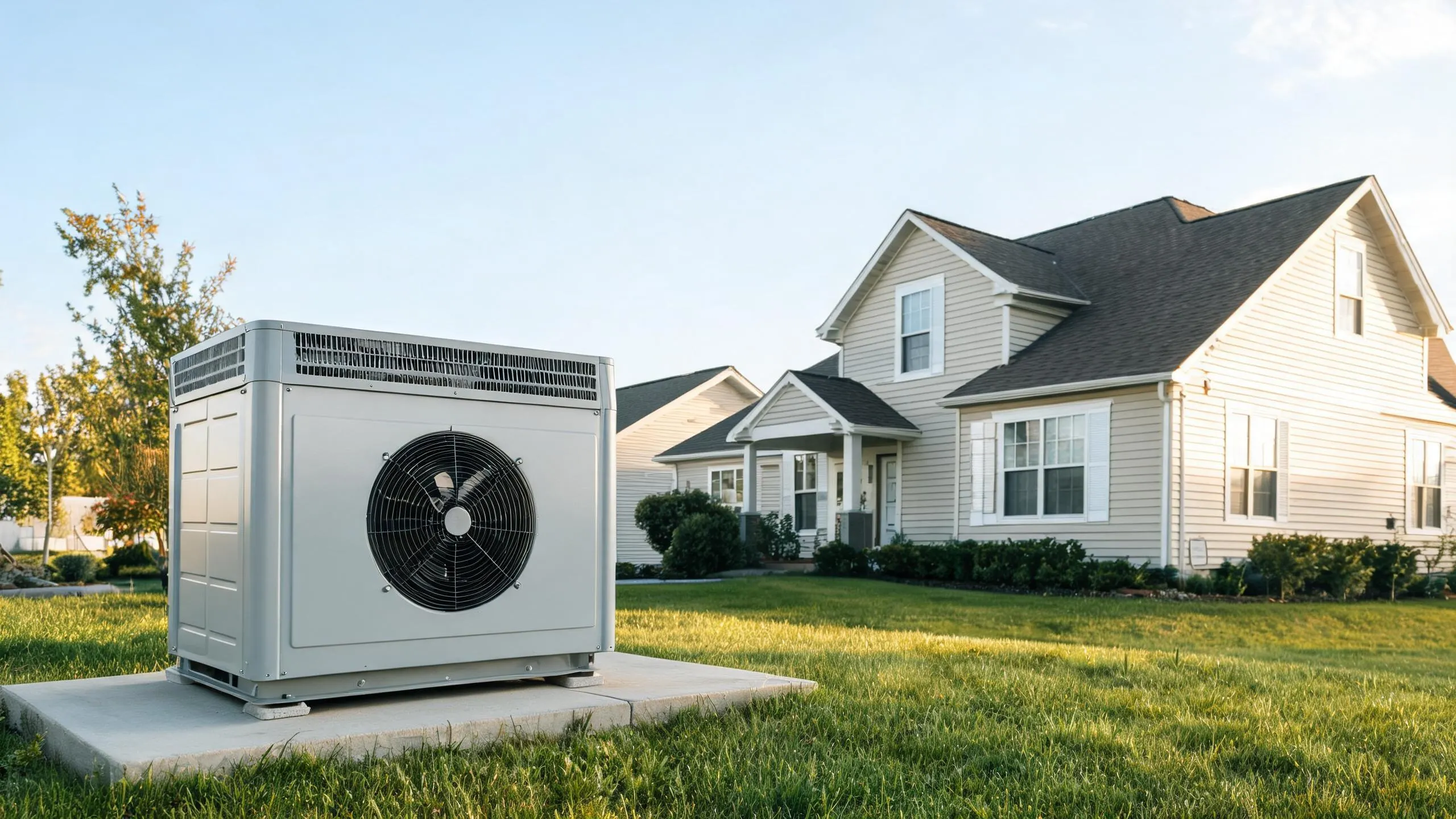




An outdoor heat pump unit mounted on a concrete pad in the front yard of a gray suburban house.

Heat Pump Repair in Ottawa, IL

Tell us about the job

Takes about a minute. No obligation.

Step 1 of 3: Equipment

A heat pump that's struggling doesn't fix itself by staying on. Take a refrigerant leak. The system keeps trying to move heat with less charge than it needs, so the compressor works harder and runs longer to get the same result. That extra strain is what burns out a compressor early, and a compressor is the hardest part of the unit to replace. Ice on the outdoor coil is the same story. A little frost is normal, but if the defrost cycle isn't clearing it and the system keeps running anyway, that ice builds, blocks airflow, and can keep the coil from ever defrosting on its own. A strange noise or a breaker that keeps tripping is the machine telling you something is already wrong. Shutting it off and calling someone before it runs again is usually the safer move.

8 months
October through May, your system heats
3 months
June through August, it cools
19°F
the average winter night it heats against
83°F
the average summer afternoon it cools against
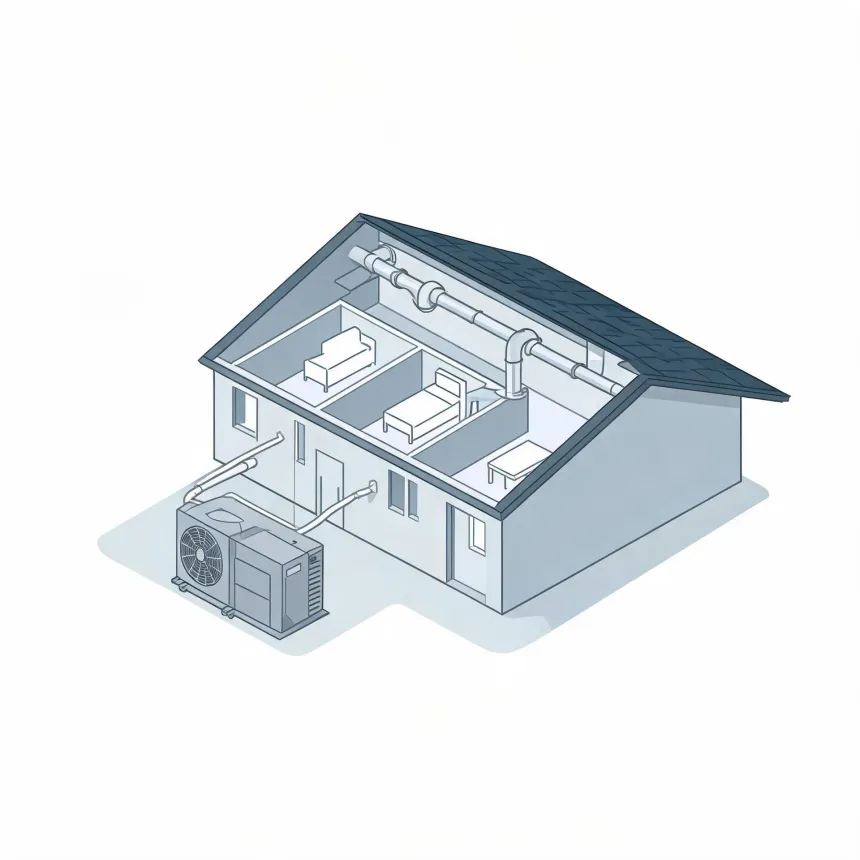
Isometric line illustration of a cutaway single-story house showing interior rooms with furniture and attic ductwork connected to an outdoor condenser unit beside the building.
Your system heats October through May and cools June through August.

NOAA nClimDiv, 1991–2020 normals

A heat pump fails most often at the reversing valve, the part that switches it between heating and cooling.

Once that valve sticks, the system can get stuck blowing cold air in the middle of winter.

Half the homes in Ottawa were built by 1963, and so was the heat pump in plenty of them

Half the homes here were built by 1963
124 damaging wind events from 2015 to 2024
39 hail events from 2015 to 2024

Nothing about LaSalle County pushes a heat pump harder than normal. Winters here average 19°F overnight, which is cold but well within what a heat pump is built to handle. The county sees its share of wind, hail and winter storms, same as most of the region, but that's weather hitting the cabinet and the coil, not strain from the climate itself. So when a heat pump in Ottawa needs a repair, it's rarely because the county asked too much of it. It's almost always a part that failed on its own schedule, like the reversing valve or a weak capacitor, and that part needs finding and fixing either way.

A struggling heat pump costs more to run every day you wait

Illinois electricity ran 15.87 cents per kilowatthour in 2024, and a heat pump stuck on a bad reversing valve or running long on a weak charge pulls more of it every day it keeps going. That cost doesn't pause while you decide.

Find a contractor
A man in a dark shirt, tan work pants, boots and a cap walks up porch steps toward a navy front door, carrying a canvas tool bag.
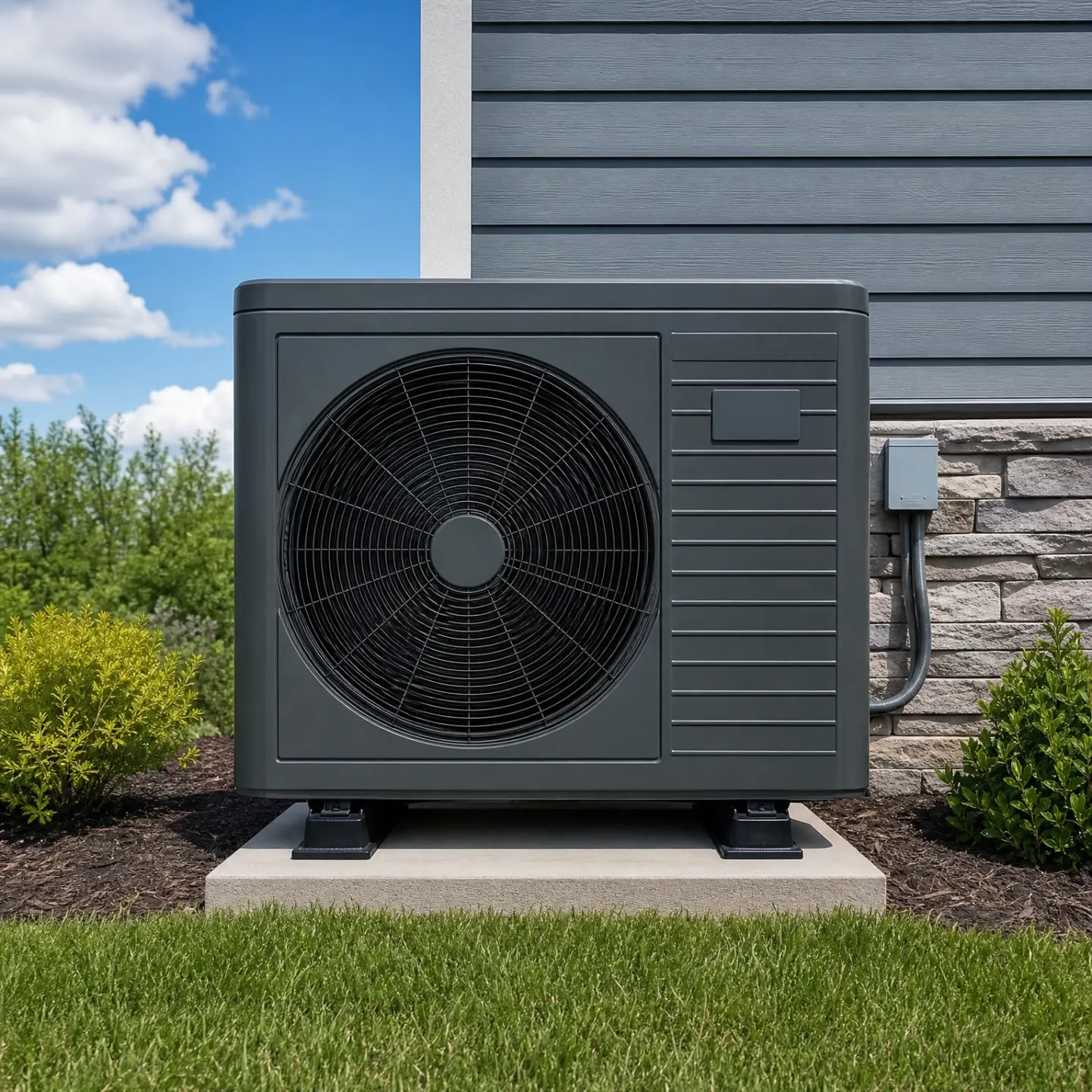
A dark gray heat pump unit mounted on a concrete pad next to a house with gray siding and a stone veneer wall.

The first cold week finds what was already weak

Heat here runs October through May, about eight months of the year. September is the one month the system sits idle before that load starts. A lot of repair calls come in those first cold weeks, right when the reversing valve or a weak compressor gets asked to work hard after sitting. If a part was already marginal, this is when it shows itself.

What you can check yourself

Look at the outdoor unit before you call anyone. Clear away leaves, mulch or anything stacked against the cabinet, since blocked airflow around the coil can look like a bigger failure than it is. Check that the indoor filter isn't clogged. A dirty filter starves the system of airflow and can be mistaken for a refrigerant or compressor problem. Check the thermostat batteries and settings too. It sounds basic, but a thermostat stuck in the wrong mode will make a perfectly healthy heat pump blow the wrong temperature air.
What to leave alone

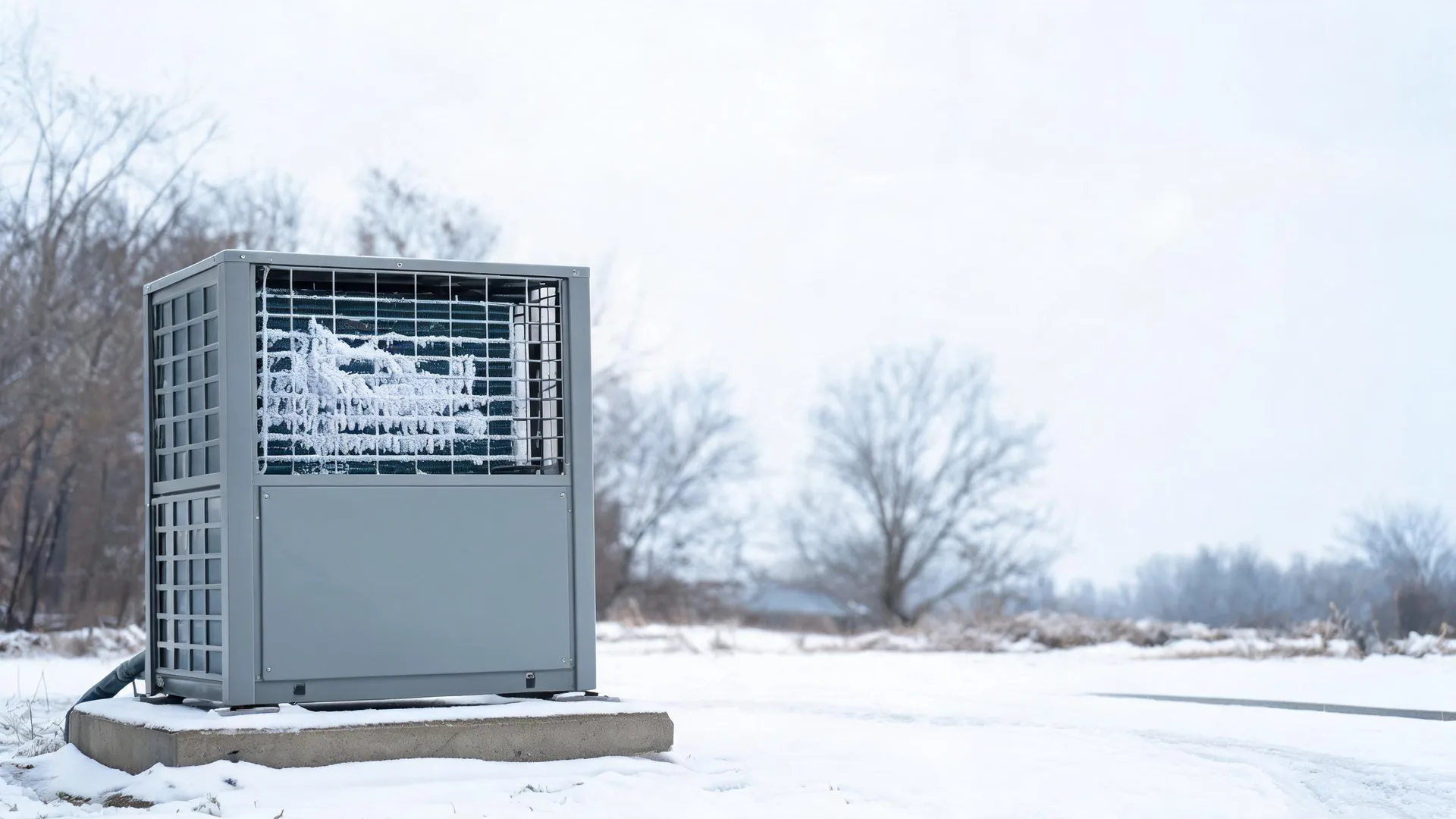
Don't open the outdoor cabinet or touch the wiring. The refrigerant lines run at high pressure and the electrical side can hold a charge even with the power off. Don't keep resetting a breaker that trips more than once. That breaker is doing its job, and forcing the system to restart can push a failing part to fail completely. If you see ice building on the coil or hear grinding or squealing from the unit, turn it off at the thermostat and wait for a contractor rather than letting it run.

Short cycling is one of the easier signs to catch. The system kicks on, runs for a bit, then shuts off before the house ever gets to temperature. That usually means the compressor is overheating or a sensor is telling it to stop early, and it wears the compressor down faster than normal use would. Weak airflow from the vents is another one. If the outdoor unit is running but the air coming inside feels thin, the problem could be the indoor blower motor or a coil that's iced or dirty enough to choke airflow. And if the air coming out is warm when you set it to cool, or cold when you set it to heat, that's the reversing valve failing to switch, not the thermostat lying to you. None of these get better by running the system longer. They get worse.

A diagnostic call starts outside, at the unit itself, before any panel comes off. A tech will check the refrigerant pressure and the temperature split between the air going into the system and the air coming out, since that split says a lot about whether the charge is right and the compressor is doing its job. Electrical testing comes next. The capacitor, the contactor, the windings in the compressor itself all get checked against what they're supposed to read rather than guessed at. If the complaint is warm air in heating mode, the reversing valve gets tested directly, usually by checking its coil for power and feeling whether the valve is actually shifting when it's told to. None of this is guesswork. Each test rules something in or out, and a tech will keep working through them until the readings point to one part instead of several.